Sari Lightman Steps Outside Herself on ‘The Way I Saw You’
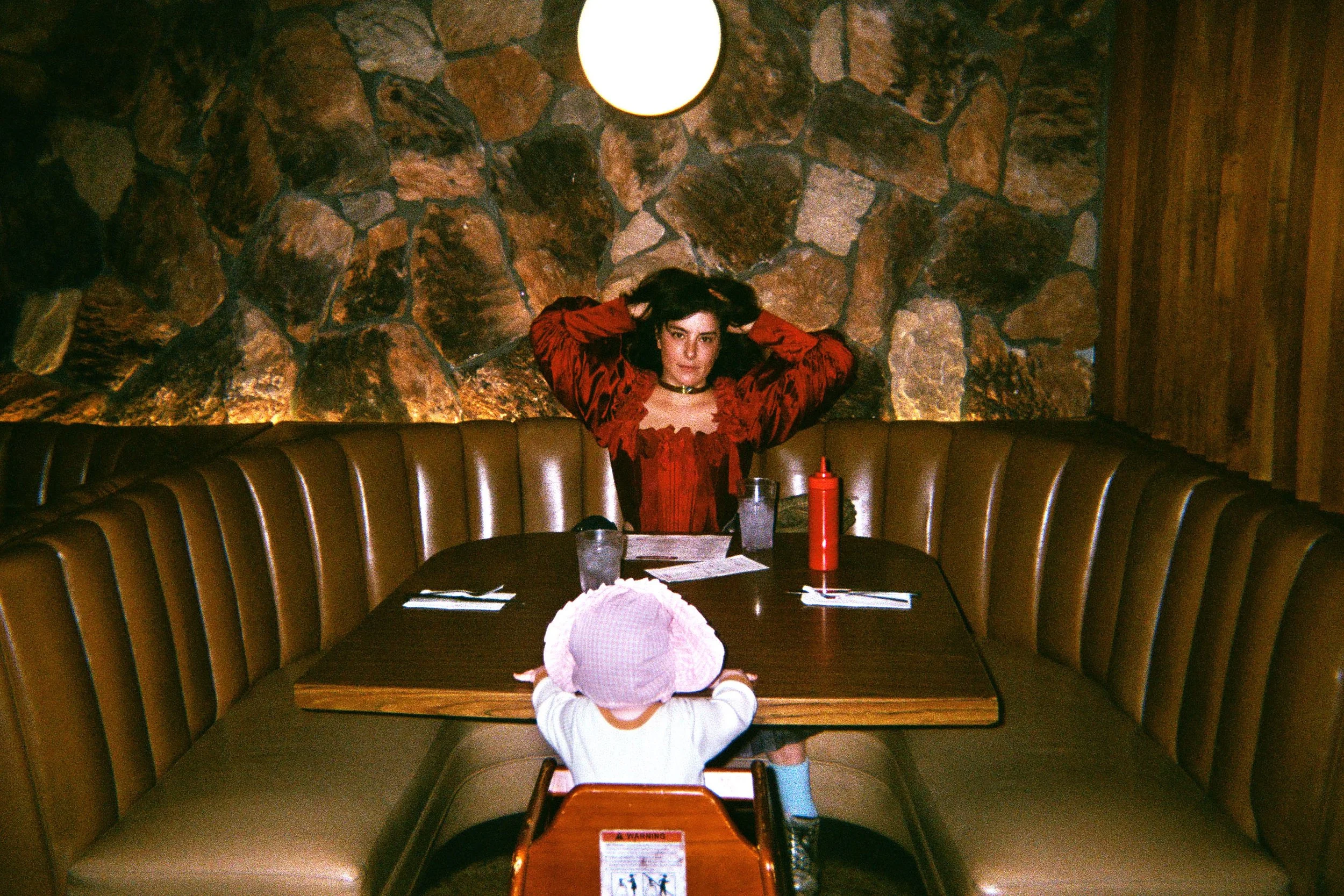
Photo: Sari Lightman
Los Angeles-based singer-songwriter Sari Lightman, Originally from Toronto, first became known alongside her twin sister Romy through the experimental folk project Tasseomancy. She later evolved into Lightman & Lightman and, most recently, Lightman Sisters. Across those projects—and through collaborations with artists including Austra and Jennifer Castle—Lightman has developed a sound shaped by close harmonies, folk traditions, mythology, spirituality and familial ties.
On her debut solo album, The Way I Saw You, Lightman leads with her own name while stripping her sound back toward the tradition of the folk troubadour. Inspired by songwriters including Leonard Cohen, John Prine and Judee Sill, the record trades some of the experimental textures of her previous work for intimate, character-driven storytelling, with the warmth of her adopted California home lingering around its edges.
Produced by close friend Meg Duffy of Hand Habits, The Way I Saw You is populated largely by women: friends and family, historical figures, mystics and imagined characters whose lives Lightman observes from unusual angles. Across its eight songs, she reflects on womanhood and grief, written through the complex lens of looking at another person closely enough to turn them into a song.
We caught up with Lightman to trace the path from her collaborative beginnings in Toronto to her life, the influences that shaped her approach to songwriting, and what it meant to introduce Sari Lightman as a solo artist for the first time.
REVERIE: For listeners discovering your music for the first time through 'The Way I Saw You,' how would you describe your artistic voice and what feels different about introducing yourself through a solo record?
I would say that my artistic voice is often driven by collective possibility. I love the union of voices and pairing the strange with something familiar. For this record, I leaned more into the traditional folk canon, adding my own little paths here and there. It feels good to lean into something intimate and sparse, even more casual like leaning over the table and having a conversation.
REVERIE: You've spent much of your career creating music alongside your twin sister, Romy. What inspired you to step into a solo project at this point?
This is something both of us have explored in recent years. Romy made an experimental album a few years ago and was involved in a lengthy dance residency. I wanted to not have to pass the rock back & forth for this one and just see what transpired on my own. She was of course supportive. Even with my solo record, she’s there in songs. “ Day of the just cause” is about our intertwining. It’s invigorated our project too as we’re currently working on a new record together. It feels good to use different voices and step out as a solo show for this round.
REVERIE: You've worked under several musical identities over the years—Tasseomancy, Lightman & Lightman, Lightman Sisters, and now your own name. Do you see these as distinct chapters, or as different expressions of the same artistic journey? Was there anything you wanted to explore differently?
I think we’re just moving more and more towards feeling comfortable in our creative skin. Using our own (last) name felt right. The exhilarating thing about persisting in music is that you tend to care less and less about what you should be doing. Especially now, when artists are being paid in dust - why not just do what you want? When we were younger, people were always telling us to braid our hair together and emphasize the twin thing for it’s novelity. We refused, but now we can create with zero opposition or rebellion in mind which is also liberating.
REVERIE Storytelling has always been central to your work, but these songs feel especially cinematic, almost like short stories. Where does your fascination with character-driven songwriting come from?
I’ve always been obsessed with a good story. It doesn’t matter the medium. Even the most insidious TV show - I become fixated on certain characters’ arc and need to see how their story ends. I love John Prine and how he was able to make the complex brief and powerful. I tend to overcomplicate and I think good songwriting is the art of only telling what is needed. Just a sketch or a brief slice of life that tells a bigger picture.
REVERIE: The album draws inspiration from songwriters like Leonard Cohen, John Prine, and Judee Sill. Were there particular lessons you took from their approach to songwriting that shaped this record?
I mentioned Prine above and his mastery with storytelling. I’ve always felt a bond to Leonard Cohen. He was the first eccentric Jewish Canadian I discovered in my youth. What I learned from these songwriters is that they weren’t interested in dismantling the form, but adding their unique style that is singular and personal. Experimentation met with reverence for what came before you.
REVERIE: Many of these songs revolve around women: friends, family members, historical figures, and imagined encounters. What drew you to building an album through these interconnected portraits rather than telling your own story directly?
It felt natural to want to write about feminized characters. In song, women still get a very flat rendering as the romantic/sexualized pursuit. Attempting to write from someone’s interior - be it an entirely projected perspective felt more interesting than my own confessional lense.
REVERIE: You've described your songwriting as a form of voyeurism. How do you balance observing someone's life with creating something that feels empathetic rather than purely documentary?
Being the voyeur in a creative sense enables a lot of freedom to delve into deeper into empathy. It’s not same the as a documentarian who needs to keep a bit of distance. Instead it’s all about mining your own feelings and perceptions of what it feels like to be in someone else’s life, which I think leads to a lot of compassion and relational care.
REVERIE: You've assembled collaborators whose work spans artists like Perfume Genius, St. Vincent, Mega Bog, Cola, and Adrianne Lenker. What was it like hearing these intimate songs take shape through such a collaborative process?
Meg was my central collaborator for this project. They were the producer, recorded guitar as well as sound engineer for most of the songs, so they wore a lot of hats. Ultimately, it felt like the collaborative dance was between the two of us was natural as we are close friends and trusted their vision. They’re also one of my favorite guitarists. The players were all amazing, but they came in a bit later once the songs were more baked.
REVERIE: The record feels rooted in California, yet it's also connected to your Canadian musical history. Did making this album in Los Angeles change the way you write or think about your music?
I think daily rhythm and surroundings shapes sense of self and alters the creative process. LA is filled with so much myth and it left an impression on me, like the writer Eve Babitz, whose work is quintessential to the Los Angeles artist lore and who I wrote the title track about. When I wrote these songs, it was pre-motherhood, so I had a lot more time to sit at the window and look at flowers outside and write and I know that spaciousness, the endless sun had an effect on these songs.
REVERIE: What's next for you?
I have a new batch of songs done for a record with my sister for our project. We both have baby & toddler respectively, so we’re finding fragments of time to slip away and reconfigure into harmony.
The Way I Saw You is out everywhere now, follow Sari Lightman here.