

Somaya Finds Herself in the Many Nights of ‘LAYALI’
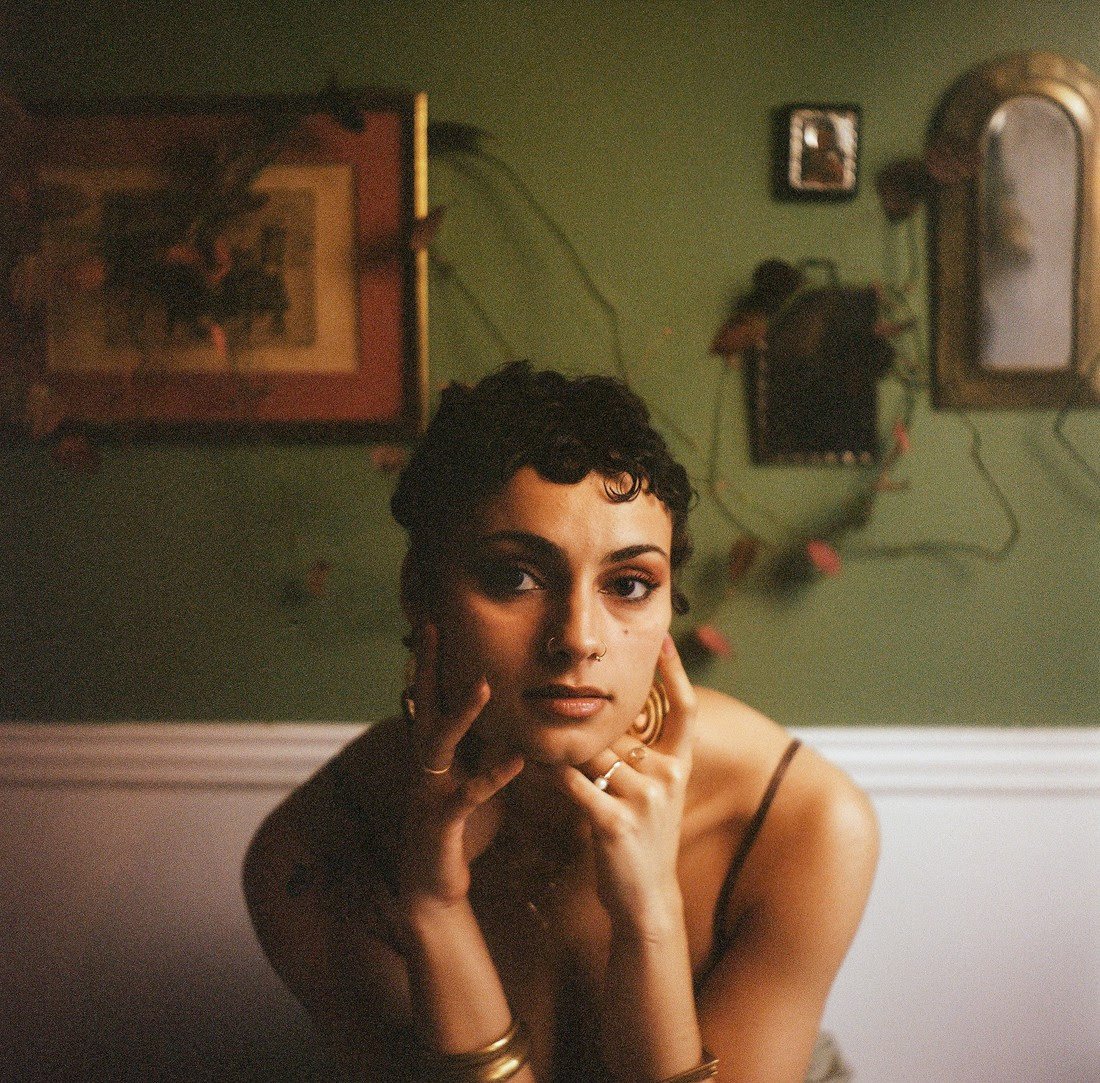
Photo credit: Pavel Navarro
There are many layers of Montreal singer-songwriter Somaya contained within her new album Across LAYALI, meaning “nights” in Arabic, songs about loneliness, desire, self-destruction and femininity reveal themselves over the course of nine tracks. LAYALI ultimately documents what Somaya describes as “a search inwards” — an attempt to understand what she was feeling and make something beautiful from it.
With LAYALI out now, Somaya speaks with REVERIE about her Egyptian heritage, the subconscious nature of songwriting, building the album’s dreamlike visual world, and the confidence she found while making her debut.
REVERIE: For anyone discovering your music for the first time, can you introduce yourself and tell us a little about where you come from and how you first found your way into making music?
I’m Somaya. I’m a Montreal-based artist and I make alternative R&B music that also blends soul, reggae, experimental productions and my Middle Eastern roots. Music has always been a part of my life :) I took some piano lessons at age 6 and have been singing since I knew how to talk. I started writing songs in high school and that’s when I found my love for performing and songwriting. I then moved to Montreal from Gatineau in 2021 to pursue music production and start my career as an artist.
REVERIE: What are artists, sounds, or musical traditions that shaped you growing up? When did you begin to understand what you wanted Somaya to sound and feel like as an artist?
I’ve always listened to a variety of music when growing up. My dad introduced me to lots of R&B, soul, rock, Motown, hip-hop, etc. My mom showed me lots of Arabic music as well, so both of those musical worlds were quite important for me to share in this project.
I think Somaya got her sound as we were making the album. The songs were written pretty intuitively, so there’s definitely a very personal sound to them as I don't really follow specific “rules” as I’m writing. I also base myself on songs and artists I’m listening to at the moment of the songwriting, so there are lots of influences like Solange, Saya Gray, Nina Simone, etc. in this specific album, but the vibe that came as we were producing the album and researching different sounds shaped how Somaya sounds today. She’s feminine, dark, ethereal, witchy, eclectic at times, raw at times. An agglomeration of all my facets.
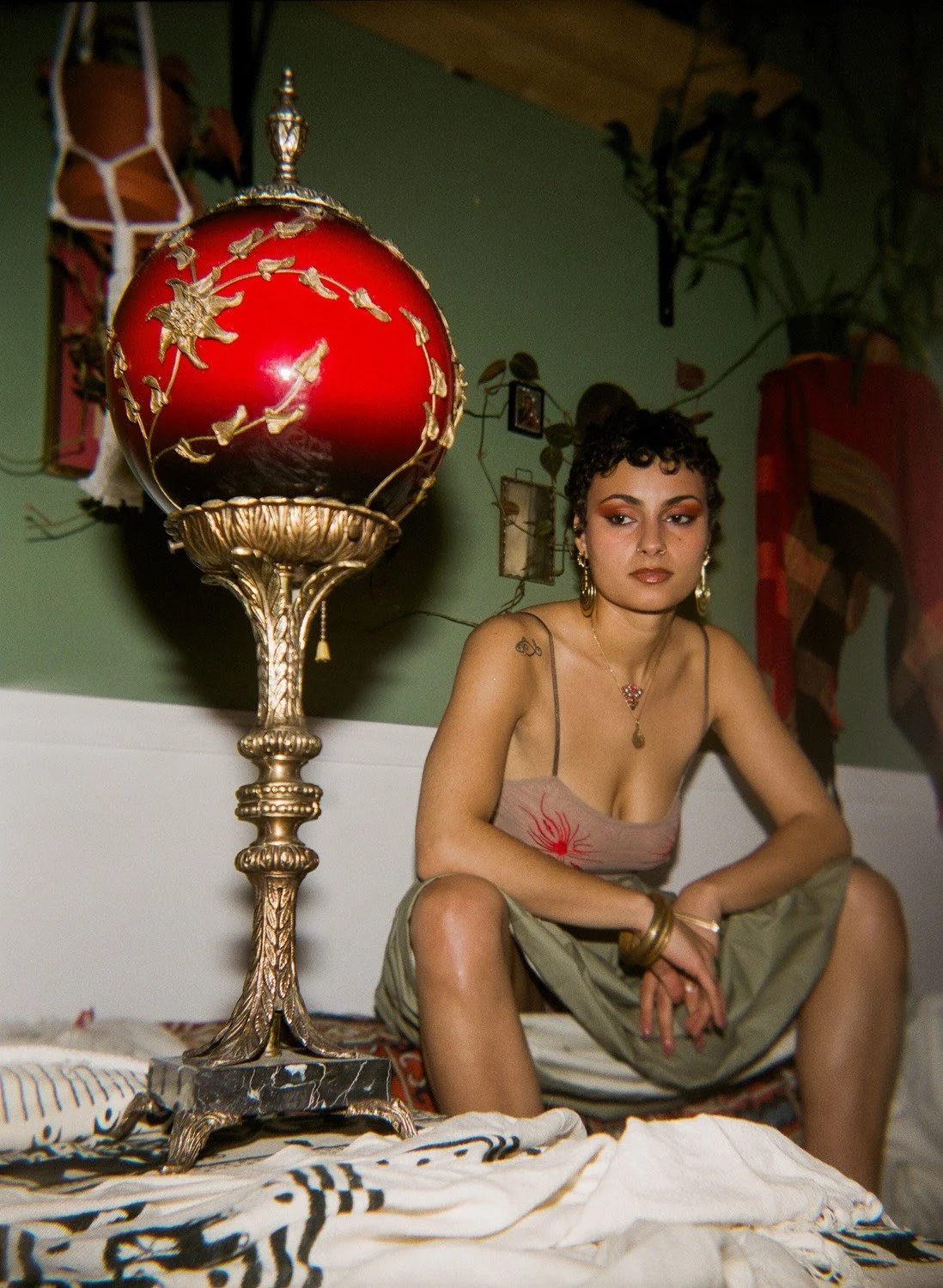
Photo credit: Pavel Navarro
REVERIE: Your debut album, LAYALI, bridges your North African roots with your Western upbringing. What has your relationship with your Egyptian heritage looked like throughout your life, and how did that relationship find its way into the record?
I’ve always been quite proud of my Egyptian heritage and my mom made it so that we were always connected to that part of ourselves. Either through food, music, travel, or through the values that she taught us growing up like the importance of community and family, the power and strength in being able to laugh at yourself and not take yourself too seriously, and the beauty in having a loud voice. Since I didn’t grow up speaking Arabic, but still felt so connected to the culture, I wanted to communicate through music what I couldn’t with words. I wanted to celebrate all the different sounds and feelings I grew up with and blend them into something super personal and true to me.
REVERIE: The album is titled LAYALI, meaning “nights” in Arabic. Where did that title come from, and what does the idea of “nights” represent within the world of the record?
Funny enough, my middle name is Leila which means “night” – singular. I’ve always loved the nighttime and felt connected to the stars and the Moon, which is portrayed in a few songs in LAYALI. The Moon is a very feminine archetype to begin with and I think this album is just a blend of many feminine feelings, many vulnerable and witchy and ethereal feelings…many “nights”.
REVERIE: “RHINESTONES” started as a song about being angry at somebody else before you realized it was really about your relationship with yourself and learning to be your own lover and friend. How often does songwriting reveal something to you that you didn’t realize you were trying to say when you began?
Goodness, so often! The fun thing about songwriting is that it’s often your own subconscious spilling out onto a page, so there are so many layers to uncover as you analyze and listen back to a song you’ve written. It can be compared to dreams, where your subconscious kind of rules that state. When you wake up, you’re very matter-of-fact about it, but it’s often after a bit of reflection and symbol analysis that you understand what a dream meant. Same thing with songs. If I’m super upset about something and write a song while I’m in a flow state, the song will kind of unfold itself without me thinking too much about it, and I might initially think it’s simply about whatever was upsetting me. But often, the most meaningful and important messages are the ones that come out when you’re not consciously thinking about them.
REVERIE: There’s an interesting connection between “RHINESTONES,” where you talk about becoming your own friend, and “MARY,” where weed became a form of friendship during a period of loneliness. Do you see LAYALI as documenting different ways you searched for companionship—whether through other people, substances, or ultimately yourself?
I don’t think I was necessarily looking for companionship, no. There was definitely a period of loneliness, but I think it was more me documenting getting to know myself. Not because I was searching for companionship, though I found it along the way, but because I was searching for meaning, I was looking to understand certain feelings, I was looking to feel things and make something pretty out of those feelings. It wasn’t a search outwards, it was a search inwards.
REVERIE: There’s such a distinct visual language surrounding your music: smoke, stars, beaches, chaotic bedrooms, ancestral references, and this almost witchy or dreamlike quality. Where does that world come from for you, and how closely do the visual and musical sides of Somaya develop alongside one another?
The thing about my songs is that they already describe worlds and feelings in a very detailed way. Some more than others, obviously, but I often see myself somewhere very specific when I’m writing a song. I can almost see the colours, the textures, the lighting, the environment, or even the way I’m moving through that space. So by the time I’m thinking about a video, a photo, or another visual, I often already have a pretty strong idea of what I want it to look like. In that sense, the visual world of Somaya doesn’t really exist separately from the music, it kind of grows out of it. I then give my ideas to my amazing visual team, Ophélie Anna & Pavel Navarro, and they make it a beautiful reality.
REVERIE: When you look at the person who began writing these songs versus the person releasing LAYALI now, what changed? What did making your debut teach you about yourself?
So much has changed. In the beginning of the LAYALI process, I didn’t have much trust in myself, my musical and writing abilities, my organisational skills…Making this album and finishing it gave me lots of confidence in myself and in what I’m capable of doing on so many levels. It gave me lots of patience, made me better at solving problems, coming up with different solutions, and made me better at working alongside others… It also made me love what I do, it made me want to do this for a living. It’s so thrilling to be able to live things, write about them, and make art with them. It makes you notice things with more awareness, feel more deeply, and live more freely. I also gained a lot of trust in others, in the people that were working with me. It was very fulfilling to be able to trust in people’s desire to help me. It made the whole process so much more fun, too, to not do it alone.
REVERIE: Anything else you'd like to plug, like tour dates? Upcoming music videos or sneak peeks? What's next?
Yes!! LAYALI’s launch show is on September 16th at Sala Rossa in Montreal! It’s gonna be tons of fun and anyone who’s in Montreal on that date should be there ;) I’ll be playing the album live, front to back, with special secret songs and with my wonderful band.