

Lorg is the Artist They Always Wanted to be on New Album ‘I Fell for Fantasy’
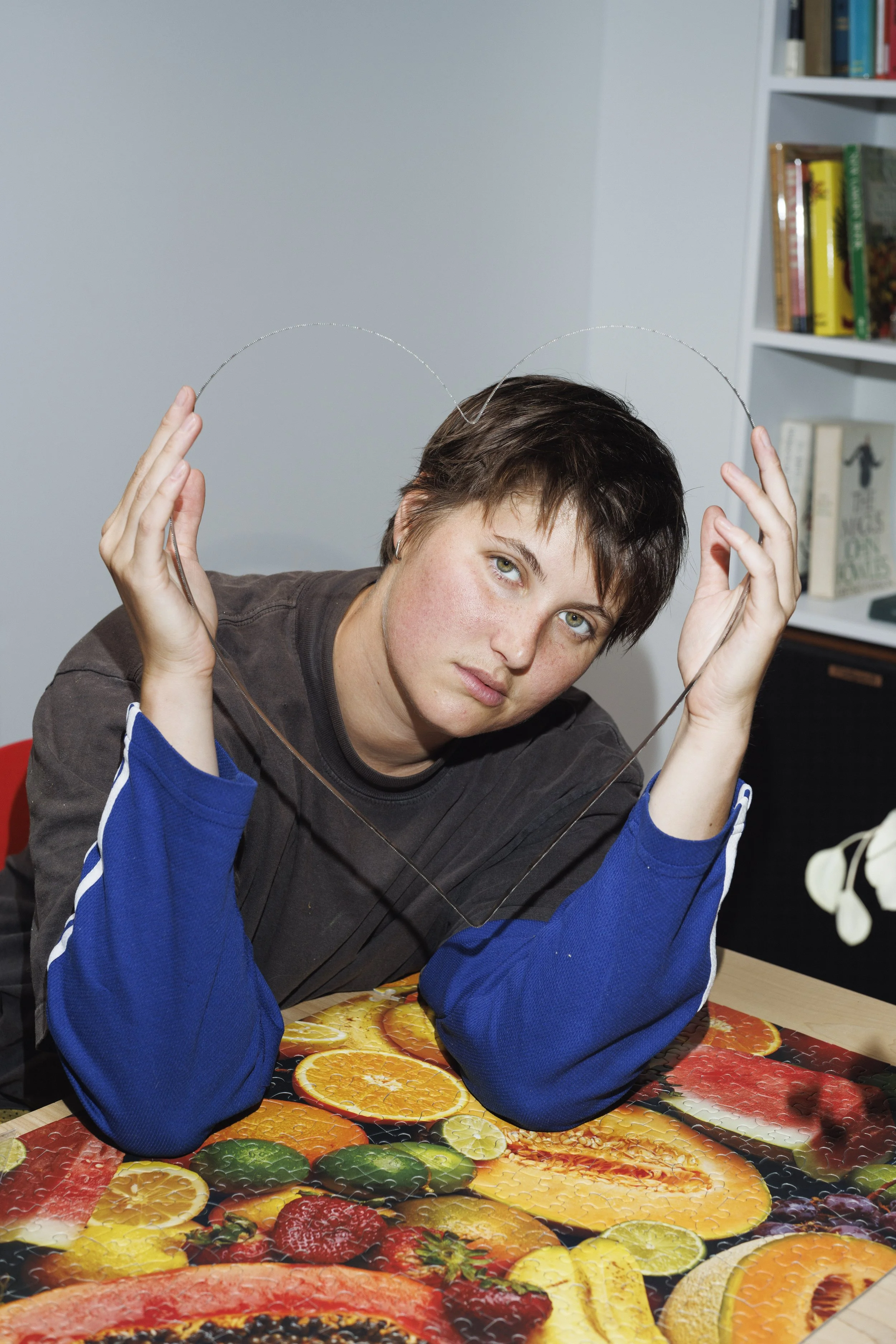
Photo credit: Dallas Houston
Long before I Fell For Fantasy, L Morgan was known as one-half of SALES, the beloved indie-pop project they co-founded with Jordan Shih. For many listeners, myself included, SALES soundtracked some of our most formative years, making the chance to speak with Morgan, now creating under the name Lorg, feel especially significant. Their Debut album out today, I Fell For Fantasy, is not simply the next chapter in an established career. It's a record born from transformation, self-discovery, and the difficult process of learning to trust oneself again.
Recorded at Drop of Sun Studios in Asheville, North Carolina, and Lorg's home studio, the album was co-produced with Adam McDaniel (Angel Olsen, Wednesday, Animal Collective) and arrives as a powerful statement of resilience. Across its songs, Lorg confronts heartbreak, creative doubt, identity, and the lingering weight of past versions of themselves. Framed through a fantastical world of curses, shadow monsters, and heroic journeys, the album explores what it means to break free from cycles of despair and step into one's own power.
I chatted with Lorg about the emotional challenges of pursuing a solo project after a decade-long career in a band. navigating gender and selfhood, finding inspiration amid personal and collective upheaval, and the internal battles that shaped the album's creation
REVERIE: Who is Lorg?
LORG: Who me? I have been going by the name “Lorg” for about 5 years now. I’ve had inner conflict about my gender and sexuality since I was very small – and I think I’ve been able to bring that all together as Lorg (they/them/he if you’re feeling fun) with the help of a lot of people who love me. It’s such a relief to be allowed to be myself.
REVERIE: Your Lorg lore on your website frames you as a counterspell to a curse and uses fantasy imagery throughout. How did you develop this narrative, what does the “curse” symbolize, and why did fantasy feel like the right language for telling this story?
LORG: This Lorg Lore narrative was spun by a close friend, who I admire, Marcyanne K. They also made the single and album artwork. They are what I would describe as a Fantasy expert, and I'm so glad they agreed to interpret my experiences.
I made these creative decisions years ago. And I have to say, I’ve felt spooked lately. It seems like Fantasy with a capital “F" is rippling through the collective unconscious (I’ve been seeing a lot of art direction with armor, jesters, campy sci-fi artwork).
And it makes sense, if you consider that we’re all going through this massively chaotic disillusionment. So yea, we all fell for fantasy. I shiver to quote the author of Eat, Pray, Love but seeing Fantasy motifs litter my feed makes me think back on Big Magic (a book recommended to me because, well, I was in a creative rut and cursed with an enormity of self-doubt):
“Ideas are driven by a single impulse: to be made manifest. And the only way an idea can be made manifest in our world is through collaboration with a human partner.”
This book was corny. But I took this all to mean that ideas do not belong to you or me. They float around like hungry spirits looking for a host, and if you don’t manifest this idea, someone else will. And today answering this question I can see that a lot of us have got the same idea. What felt really intentional, and novel, now feels like I have inadvertently plugged directly-in to something else, a lot bigger than me.
REVERIE: You describe Doubt and Despair as monstrous twins. How do you find yourself reconciling with those twins in your own life?
LORG: We all have these voices in our heads. It can be hard to differentiate if those voices are keeping us down or keeping us safe. How safe? Why safe?
And do we need to be safe? How safe? No pain?
I want to be up on a stage. Someone told me once that listening to my music was like standing naked on top of a mountain, with ice cold wind blowing through your body.
REVERIE: You mentioned that going solo was "spiritually difficult." What was the biggest challenge in stepping away from previous collaborations and creating under your own name?
LORG: In a macro sense– there is a lot in the way of making art right now. Hurricane Helene happened in the middle of recording, that was tough to get through– recording music felt frivolous and self-indulgent. And there is a lot going on in our world, that has BEEN going on, things that really weigh on me.
And on the more personal side, I was working through a heartbreak. I was doubting myself as a producer. My band (kind of my whole identity for the past decade) was feeling really stagnant, and I know I felt so upset over the years that I couldn’t make a difference in that project and a lot of my attempts to resuscitate it were ineffective, and sometimes caused more problems.
Starting Lorg on the heels of what felt like a mountain of failures didn’t feel promising. Going solo I got to learn what challenges/blocks belong to me as an individual. I think I’ve got the chance to let a lot of baggage go that wasn’t mine and face some that was.
REVERIE: Why did you choose "Cowboy Songs" as the final single before the release of I Fell For Fantasy?
LORG: This song started it all for me; it’s near and dear. Sometimes I sit in my home studio and all that goes through my head is “I just need a win.” Early on I knew my pie in the sky goal was to write a solo album but I didn’t even have a solid finished song. All my good stuff was kind of in reserve for my band. But this was the first song I wrote without the intention of sharing it with my band. This song restored my belief in myself as an artist.
REVERIE: You describe the song as being about looping personal patterns. What personal experiences inspired that concept?
LORG: I needed to close some loops! The album, and this song, revolves around more than one break-up. I had a romantic relationship that was gutting me like a fish. There was the band stuff. And I wanted to live my life more publicly as Lorg, which was tricky because of my public persona (not huge or anything, but still strange).
So there is a lot in this album about giving myself permission to move on from these loops, and having enough bravado to take what works and leave what doesn’t.
REVERIE: You said the song's lyrics contained feelings you didn't want to admit to yourself. How vulnerable did it feel to leave those moments in the finished recording?
LORG: It was hard to listen back! And at first I didn’t like the song. I had to show it to a few other people to get confirmation that it was alright. My lyrics have always been personal admissions of my innermost thoughts, trying to figure out my feelings, and that can be awkward to publicize. It can be awkward to people close to me. I listen back to songs I wrote 10 years ago and think, “ah! How prescient!” I think that’s all a part of being an artist; it’s not not freaky!

Photo credit: Dallas Houston
REVERIE: The album seems centered on overcoming internal struggles. What did you learn about yourself while making it?
LORG: I learned I can definitely write a solo album, which was a major doubt the past couple of years (my band only released two albums over a decade). And I love writing albums. I started writing a second album immediately after finalizing the first one. And I am the artist I always wanted to be.
REVERIE: What can listeners expect from I Fell For Fantasy that they haven't heard yet from the singles?
LORG: The singles are kind of random, a few of them were proof of life! In my opinion there is a lot more to discover on the album that the singles may not allude to.
REVERIE: When fans listen to I Fell For Fantasy from start to finish, what do you hope they take away from the experience?
LORG: Recording this album brought me back into my passion. I hope it brings people to their passion, or at least lights a way. It’s my hope that my work reminds people of their personal sovereignty, and the existence of their own powers.
REVERIE: If I Fell For Fantasy were turned into a fantasy novel, who would be the main villain, and what would be the final lesson of the story?
LORG: The villain would probably be an awful shadow monster who looks an awful lot like the protagonist, and maybe you’d come to find that the villain is the protagonist. The lesson is you have to confront your part in your own shit and always, whatever comes, face it on your feet.
Lorg’s debut album I Fell For Fantasy is out everywhere now, follow here.