

Filipiñana Is a Colourful Commentary on Capitalism
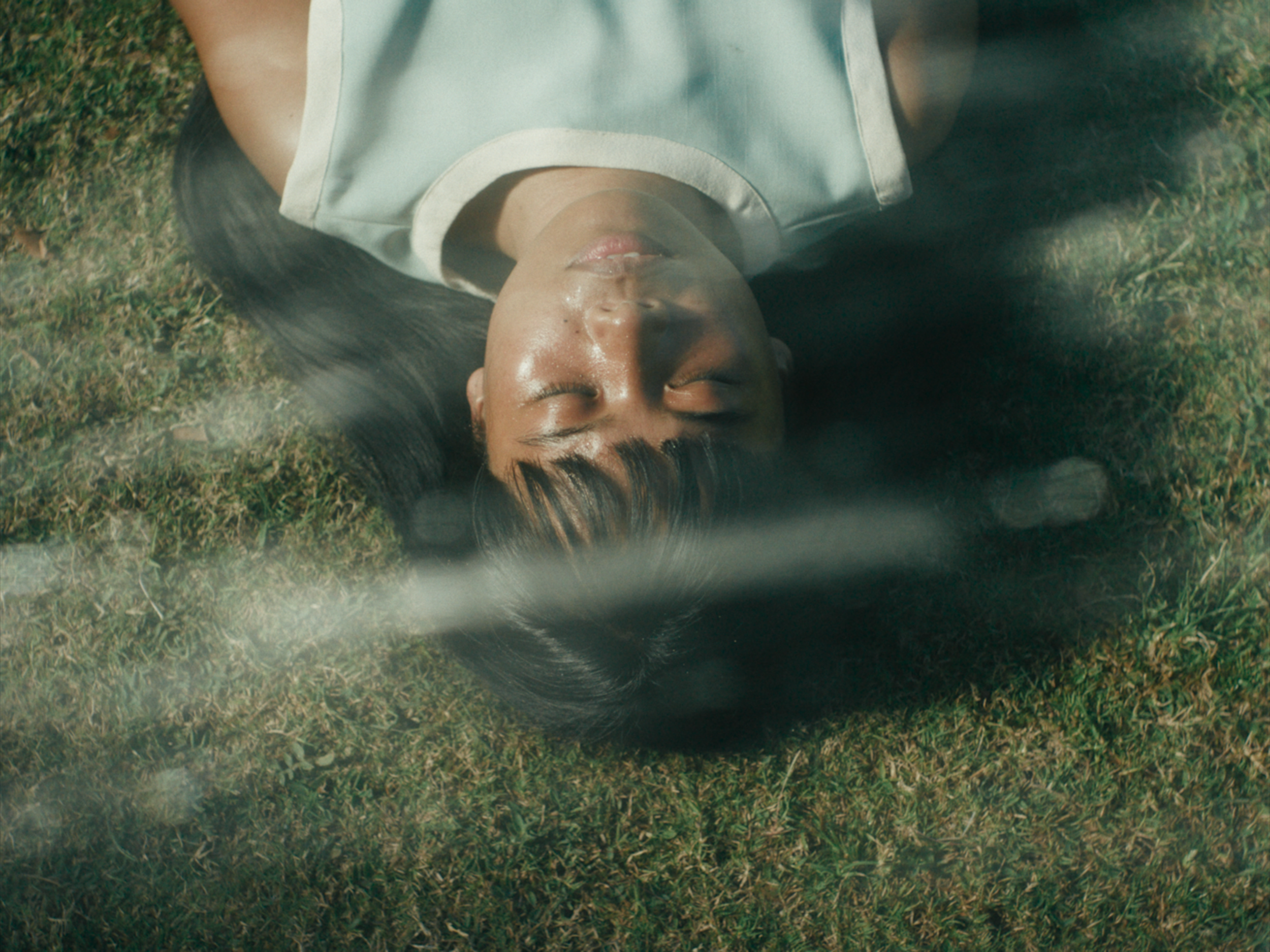
Still from Filipiñana. Photo courtesy of the Calgary International Film Festival.
When the Film Academy of the Philippines announced that Rafael Mendoza’s Filipiñana would represent the country in the Best International Feature Film category at the 99th Academy Awards, I couldn’t help but feel some sort of pride regarding the film.
Filipinos are known for being extremely supportive of one another– they embrace anyone who carries the flag of the nation onto the world stage, treating individual achievement as a collective triumph. The term to describe this is called “kapwa” or in English, “shared identity.” It is safe to say that for me, I wanted to support someone who has a “kapwa” with me.
It is unsurprising that multiple screenings of Rafael Mendoza’s Filipiñana during Calgary International Film Festival are already sold out. The film has become a breakaway hit for the festival, which kicks off on September 24, 2026.
Rafael Mendoza explains that the dictionary definition of Filipiñana means “anything that refers to Filipino culture.” Commonly, the term is a style of clothing stemming from the country’s colonial Spanish roots, but you also see it in libraries in the Philippines regarding Filipino literature. But for Mendoza, it alludes to the Philippines’ colonial roots in Spanish and American — the title of the film is a reversal of the term “Americana.”
A common misconception regarding the film is that the feature is based off of Manuel’s 2020 short of the same title, which received the Silver Bear for Best Short Film at the 70th Berlin Film Festival. But actually, the roles were reversed. “The treatment for the feature was written before I did the short. It was always consumed as a feature. I was still in school, I was very naive and I thought I could raise the finance to film a feature film in like six months. I realized that was not the case.” In order to secure more funding, he was advised by producer Armi Cacanindin to create a short film as a “proof of concept,” then build the profile for the project from there.
He explains that, “the short and the feature are two very different films. My approach is that I don’t want to be one of those filmmakers who views short films as a stepping stone for feature films. I feel like both forms are independent of one another and they’re both important to express certain things in different mediums.”
For those who are not Filipino, the pacing may feel a little slow in the film, and that is a choice that transports viewers into the Filipino world. Manuel has been explicit about this intention, framing the film's deliberate tempo as a representation of two intertwined dimensions of Philippine reality. The first is environmental: the heat and humidity that act as a “quagmire,” making action feel futile and encouraging a kind of enforced stillness. The second is experiential: the Filipino experience of waiting for something that never seems to arrive. “When it’s hot out, all you want to do is go inside and lie down in the air conditioning. It makes both personal and political action so difficult.” And finally, slowness as resistance.
Slowness as resistance is what Manuel sees as the “resistance to the Hollywood paradigm, the Tiktok, the Instagram.” With such narrative mediums that are so story and plot driven, you are taken so quickly from one plot point to another, and then another. Manuel sees this as a kind of “tyranny and gentrification of artistic form.” To combat this, slowness is a form of persistence,
The topic of “brain drain” is heavily emphasized in this film, as it is a relevant topic in relation to the culture in the Philippines and many global south nations. Because of the Philippines’ American colonial background, you get the “trickle down" effect of the American dream, where in order to make it, you first need to move to Metro Manila from the provinces. It becomes a funnel point for the rest of the world.”
Manuel reflects on this, as he moved from the Philippines to London to go to film school a decade ago, and now is based in the Netherlands. “The opportunities in the west are so much more competitive than back home. This is a conversation I always have with Filipinos living abroad. The feeling of guilt for being able to chase our dreams here while the rest of our peers cannot.”
Manuel counts multiple reasons as to why he chose to film in 4:3, which “is not the obvious choice, especially while shooting at a golf course.” But after discussing with his cinematography team and production designer, what they lost in width was a gain in verticality. Verticality is a tool for communicating power, distance and hierarchy. “You can put characters up in a frame, below in a frame, you can crush the frame, you can also shoot through characters.” Verticality was a way to communicate distance.
Another reason was that he wanted a frame to be a part of the visual language for the film, “because when you shoot in 4:3, there is automatically a frame in your film.” During Manuel’s studies of landscape, protest, painting and photography, he explains that “Susan Sontag’s book ‘On Photography’, talks about how the American West was colonized through photography. While looking at archival photos in the Philippines, only Americans had cameras.”
“You’d see Filipino rice fields, tobacco fields, photos of farmers. English academic Simon Schama says that a landscape is a projection of human imagination, but the question is, "whose imagination? Having a 4:3 frame is a reminder to both the audience and to myself as a filmmaker the privilege of being able to film on this land, and for viewers to be able to see it.”
Two languages are spoken in the film, Tagalog and Ilocano. Jorrybell Agoto, who plays protagonist Isabel, is Ilocano. Ilocano is a language spoken in the northwestern region in the Philippines. Historically, it is also an incredibly important region in the country sociopolitically, as it is the home of the Marcos family, who ruled the nation from the 1960s to ’70s and presently rule the nation. Incorporating Ilocano into the film was important to represent Isabel in full, while also providing a background of the sociopolitical regionalism that many Filipinos face in their day-to-day lives.
The film was shot in 40 days, and Manuel and his crew were only allowed to film on golf courses during their maintenance days. The shoot was deliberately stretched to forty days, an unusual luxury in the Philippines, where feature films are typically completed in ten or eleven days, allowing the crew to shoot just one scene a day while working only three or four days a week. But the decision was not only creative: many of Manuel's heads of department were Western friends from film school who, because of the cost of living in Europe and the earning gap between the global market and the global South, were paid far more than the below-the-line crew, who were Filipino. By extending the schedule, Manuel and his producers found a way to narrow that gap, since below-the-line crew and cast are paid per shoot day while above-the-line crew are paid the same regardless of the schedule's length. “What we were preaching about in the film is also being practiced in our production," Manuel said, describing the approach as an attempt to offer an alternative, more sustainable way for films to be made in the Philippines.
“Anywhere in the world, this film is divisive—because it deals with anti-gentrification, and because of that, its form isn't conventional. It's not a Starbucks Mocha Frappuccino that everyone's going to like, and that's by design.”
Closing off, Rafael Manuel wants viewers to take away that there is an alternative way of structuring a narrative, one that isn’t so focused on traditional structure. Because of distribution realities in the Philippines, Filipinos are used to only getting Hollywood films, the kind that are very plot-driven. “What I'd like Filipino viewers to take away is that this is an alternative way of structuring. So what I'd like to leave audiences with is a question. People say they're tired of formulaic Filipino filmmaking and want something different. When they say that, do they really want different expressions of how films can be made—or do they just want Hollywood-style films with brown faces?”