

Tristan Oliver on a Life in Stop-Motion: The Art Behind Fantastic Mr fox, Wallace & Gromit, Paranorman, & More

Photo Courtesy of Tristan Oliver
Ever since I was a child, stop-motion animation has intrigued me, as I find it incredibly fascinating, especially in how it's filmed. Tristan Oliver is one of the top cinematographers working in stop-motion animation. He has an impressive resume in stop-motion animation, having worked on multiple short films and feature films with Aardman, such as The Wrong Trousers, and Wallace & Gromit: The Curse of The Were-Rabbit, Wes Anderson’s two animated films Fantastic Mr. Fox and Isle Of Dogs, and Laika’s ParaNorman. Recently, REVERIE chatted with Oliver about his experience working as a cinematographer in stop-motion animation.
Aardman
So, how exactly did Oliver get into cinematography for stop-motion films? “It’s not something that you set out to do because it's quite a niche discipline,” he says. “I was out of film school and was shooting music videos, and I had a friend working at Aardman. Aardman, at the time, was really just 3 people. I rang him up because I wanted to borrow some lights to shoot a music video. He said ‘Yeah, you can do that. That’s fine. What are you doing next week? We've got this commercial to shoot, and we haven’t got anyone to shoot it. Do you want to come down and do that?’ I went ‘Yeah, of course.”
After that commercial, Oliver continued to work with Aardman on many projects. He ended up shooting a couple more commercials with Aardman, as well as some short films, including Creature Comforts, The Wrong Trousers, and A Close Shave. “I started working very regularly with Aardman, and at the same time, I had a child very early on, and I had to grow up and earn some money instead of thinking I was going to be out partying and clubbing, and what Aardman did was it provided a decent income for me,” he explains. “Creatively, it was a very exciting place to be, because they were really reinventing stop-frame, which, until then, had been like kids' TV, really, and it wasn’t really a cinematic medium.”
Oliver was also the cinematographer for Chicken Run and Wallace & Gromit: The Curse Of The Were-Rabbit. Since stop-motion animation involves moving physical objects in very small increments, which are then photographed frame by frame, one would think it takes forever to make a movie. However, this is not entirely true. “I think the misconception is that stop-frame is very slow,” he says. “It takes time, but it is not slow because everyone is working as fast as they can.” Sometimes, over 60 shooting units are running all at the same time. This allows the shooting crew to capture a lot of footage for the film each day. Additionally, everything needs to be set up for the animator so nothing needs to be redone. “If you don’t run your film like that, it can take ten years, and you obviously don’t want it to take ten years… Everything is brought to absolute readiness, and then the animator goes in and animates the shot on their own. That has to be absolutely right for them because you don’t want to turn around and say to the animator, ‘Sorry, you’ve got to do it again.’”
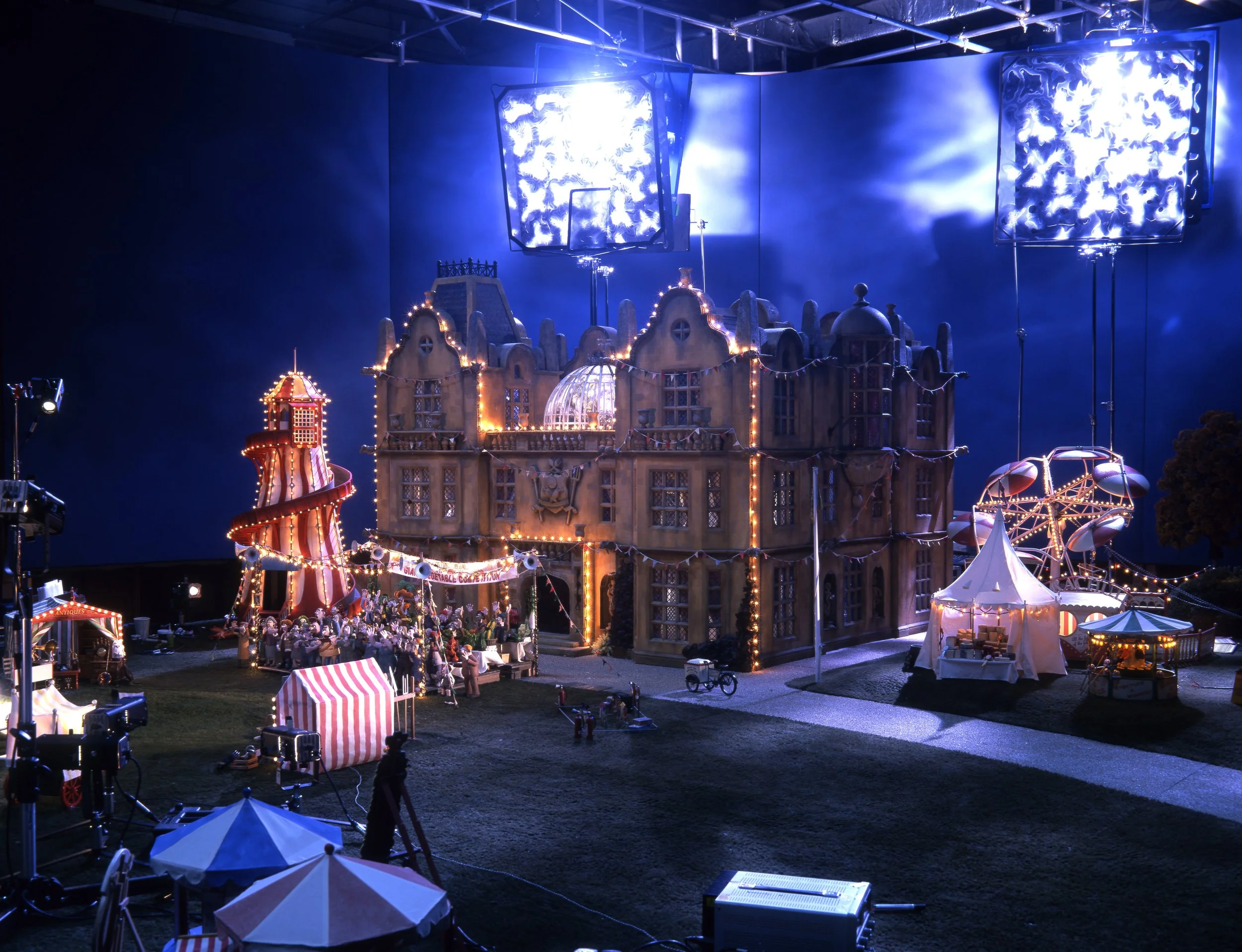
Photo Courtesy of Tristan Oliver
In stop-motion animation, matching the actors' and actresses' voices to the puppets takes time to get perfect. “The animation is built around the vocal performance,” he explains. “The voice track is analyzed, and there is a phonetic breakdown frame by frame of what people are saying, so when the animators animate the mouths, they know exactly what shape the mouth is making. If the character is saying, ‘Hello. How are you?’ that is maybe two seconds of dialogue. Two seconds is maybe 38 frames. That hello is broken down so that every aspect of the world hello is rendered phonetically, and how many frames it lasts. The h might be two frames. The e might be one frame. The ll might be three frames. The o might be four frames. That is all broken down so the animator knows exactly how many frames each bit of the dialogue takes up. They will manipulate the mouth or sculpt the mouth to match that. It has to be the final vocal recording; otherwise, the lip-sync won't work.”
Out of everything Oliver has worked on at Aardman, The Wrong Trousers really stands out to him. “It was so groundbreaking in terms of making something that was properly cinematic,” he says. “We would run to get our dailies, put them on the editing machine, look at them, and get really excited by what we were doing. Everything has rolled on from that. Really, every good stop-frame movie made since then sort of pays homage to the ground we broke with that.”
The legendary train chase scene in The Wrong Trousers is one of Oliver’s favourite shots he has done throughout his career. “That train scene is a work of art,” he says. “There are no VFX in that film. Everything you see on film is on camera. Absolutely everything was shot on the day on 35 mm film. In some shots, Gromit has three arms to give him the impression of laying the track very quickly. The track he takes out of the box is quite small, and the track that hits the ground is rather big, and to make the transition, they built a third arm for him, and everything is moving so fast that you don’t see that he has got three arms unless you freeze it frame by frame, but it but its all cleverly worked out.”
Wes Anderson Films
Oliver was the cinematographer for both of Anderson’s animated films (Fantastic Mr. Fox and Isle Of Dogs). He shares that working on Anderson’s films is much different from the other stop-motion animated films he has done. “Isle Of Dogs is a very different looking film [than Fantastic Mr. Fox] but still a Wes Anderson film, and you don’t sign up to a Wes Anderson film and think you’re going to make anything other than a Wes Anderson film. You don’t necessarily get to imprint much of yourself into the movie. I finished Fantastic Mr. Fox, and within 6 months, I was at Laika working on ParaNorman. ParaNorman is really my visceral reaction to having worked on Fantastic Mr. Fox, because what you see when you watch ParaNorman is you see my work and my brand of cinematography on the screen, and you see it at large. I was allowed to do it, and the directors gave me free rein over how the film looks. Whereas Fox, everything goes through the channel of Wes’ vision, which I found very frustrating at the time, but since then, I've come to realize it is just a different way of working. He still wants my skill; he just wants me to get what is in his head onto the screen.”
Trying to understand how Anderson worked and how he wanted Fantastic Mr. Fox filmed was a bit of a challenge. “[Wes] had never made an animated movie before, and we had never made a Wes Anderson movie before, so trying to find a language that we both understood was very difficult and caused a degree of frustration,” Oliver comments. “Everyone is really good friends now, but at the time, it was tricky and frustrating on a daily basis. Everyone who worked on that film was very, very experienced in stop-frame, but that wasn’t really what he wanted. He wanted to reinvent it, in fact, he kind of wanted to deinvent it. He wanted to create something more like what we would have done 30 years prior, and we had been kind of kicking and screaming, trying to get away from all that practical in-camera effect stuff and do something more polished. He wanted to go back to the cotton ball smoke and the fire made out of carved soap – stuff we were desperate to stop doing. We worked out much better ways to stop doing it.”
Oliver has also worked on some of Anderson’s live-action films. He shares that, for The French Dispatch, he shot quite a bit of model work. “There is a lot of set extensions done with models, like the whole opening sequence with the printing press, that’s a giant animatronic model that we shot for it,” he explains. Asteroid City also featured some model work integrated into live-action. “When they are shooting up those haybales – that’s all model work. It meant Wes could place every bullet hole in exactly the place he wanted to”
One of Oliver’s favourite shots from the films he has worked on with Anderson is the waterfall sequence in Fantastic Mr. Fox. “There were a lot of nice natural lighting effects that were quite fun to do,” he says. Furthermore, one of his favourite memories of working on Anderson’s films is getting the chance to collaborate with Mark Gustafson (who passed away in 2024), the animation director of Fantastic Mr. Fox. “That was a friendship I valued highly.”
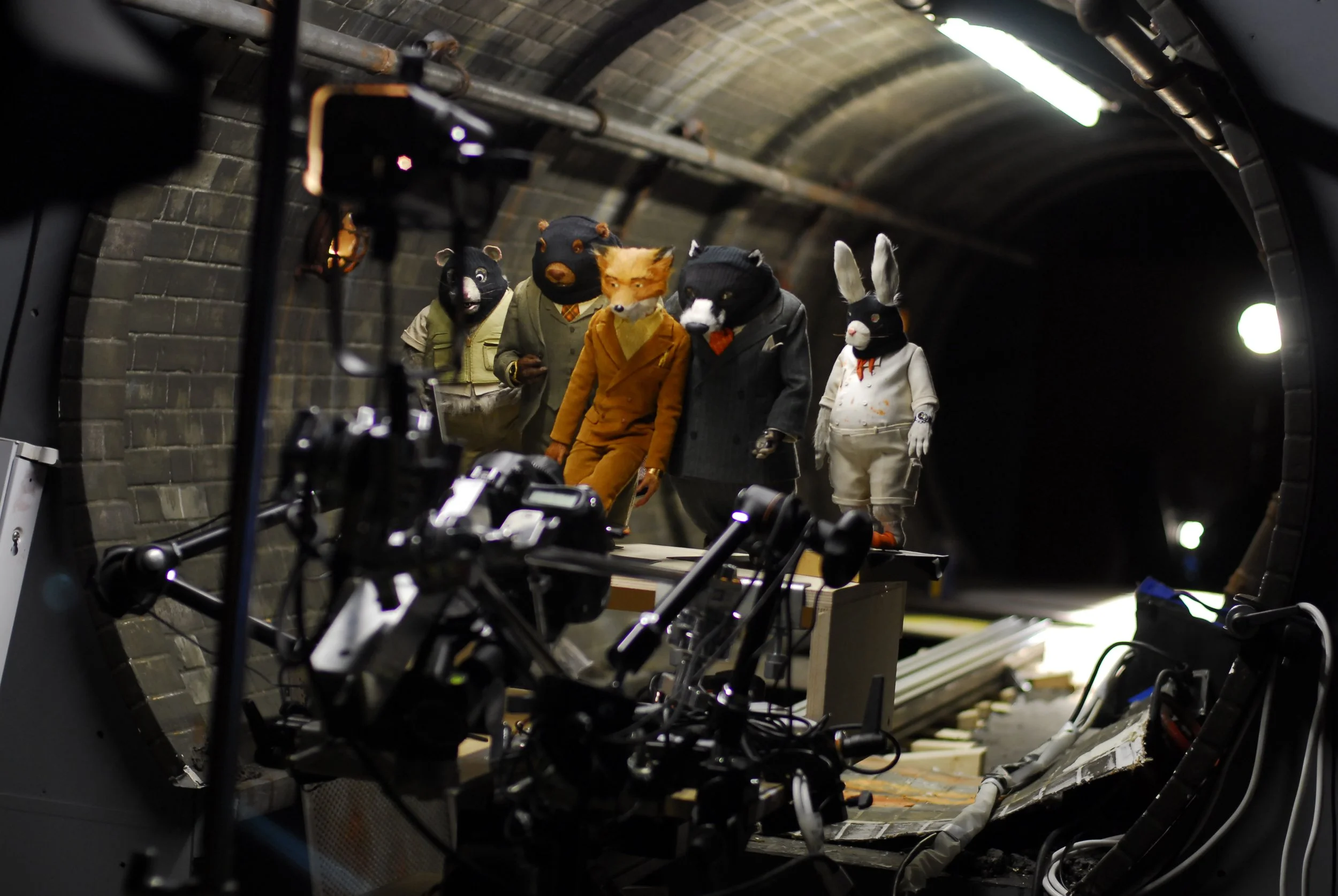
Photo Courtesy of Tristan Oliver
ParaNorman
Oliver is incredibly proud of the work that he did on ParaNorman. “ParaNorman is far and away the film that I was able to put the most into from a cinematic point of view,” he says. “I spent a lot of time making sure the look of the film was appropriate for what was happening in the script.” One scene that stands out to him is when Aggie reverts to a small child in the glowing meadow. “That is the kind of scene when you see that in a script, you get very excited because you think, ‘Yeah, I can make that look absolutely fantastic.’”
Filming the zombies in ParaNorman was a very enjoyable experience for Oliver. “You have to establish the rules of the universe that you’re living in so it can be as bonkers as you’d like,” he comments. “The zombies in ParaNorman are built up long before you see them. They’re from the 18th century and have an East Coast Massachusetts witch sailor vibe to them. The costume design team worked very hard, and did extensive research. They were all wearing period-appropriate clothing they just look a little decayed. We spent a lot of time with the zombie design and made sure they were kind of believable because you have to feel a degree of sympathy for them, because that whole thing of them being scary is flipped on its head.”
Oliver shares that they looked at many classic zombie movies, especially from the 1970s, for inspiration for ParaNorman. “Everyone thought that was going to be very useful, but actually they are largely terribly, they are universally very badly made and very cheaply made and are a bit shit to be honest,” he laughs. “We actually decided we wanted to do something completely different and make it far more stylish and blend the world of the zombies into that small town because they are all part of it and always have been. In all those old zombie movies, there is always green and red light. We thought, what can we do that is completely different but pays homage to that? So, we actually used very pale yellow and pale lilac light to give it that slightly unworldly look.”
ParaNorman was quite revolutionary too, as it was the first stop-motion animated film to use a 3D colour printer to create character faces. “Coraline had 3D printed faces, but they had to be hand-painted for colour,” Oliver explains. “It was a step forward for ParaNorman to have colour printing. I actually found it tremendously exciting to work with that because the printed face is actually much nearer to human skin in the way that the light reacts to it… It was a whole new, fresh look that we could exploit and make look good on camera.”
ParaNorman also contained one of the hardest scenes Oliver has ever had to film. “It’s actually quite boring doing something like setting something up very simply,” he says. Norman’s walk to school when he encounters all the ghosts is one sequence that was quite challenging to film and took multiple weeks to film. “That was technically exceptionally difficult. Norman is walking to school, and you are following him down the road. The camera goes round his head, during which you see a close-up of his head, and then it comes round to the back of his head, pulls away, and all these ghosts appear in front of him, and it’s a single camera move in a single shot. That was phenomenally difficult to shoot. The puppet is very small. It’s about as big as my hand. The camera and its lens are very big. That had to be flown around him without casting a shadow on him, and it’s a sunny morning, so the set had to be constructed so we could hide the camera shadow inside the shadow that the houses would be casting. That’s a conversation you have to have with the production designer to make sure you can do that. Also, the set is a long, quite narrow street, so the animator has to be able to go into it in order to animate without disturbing it.”
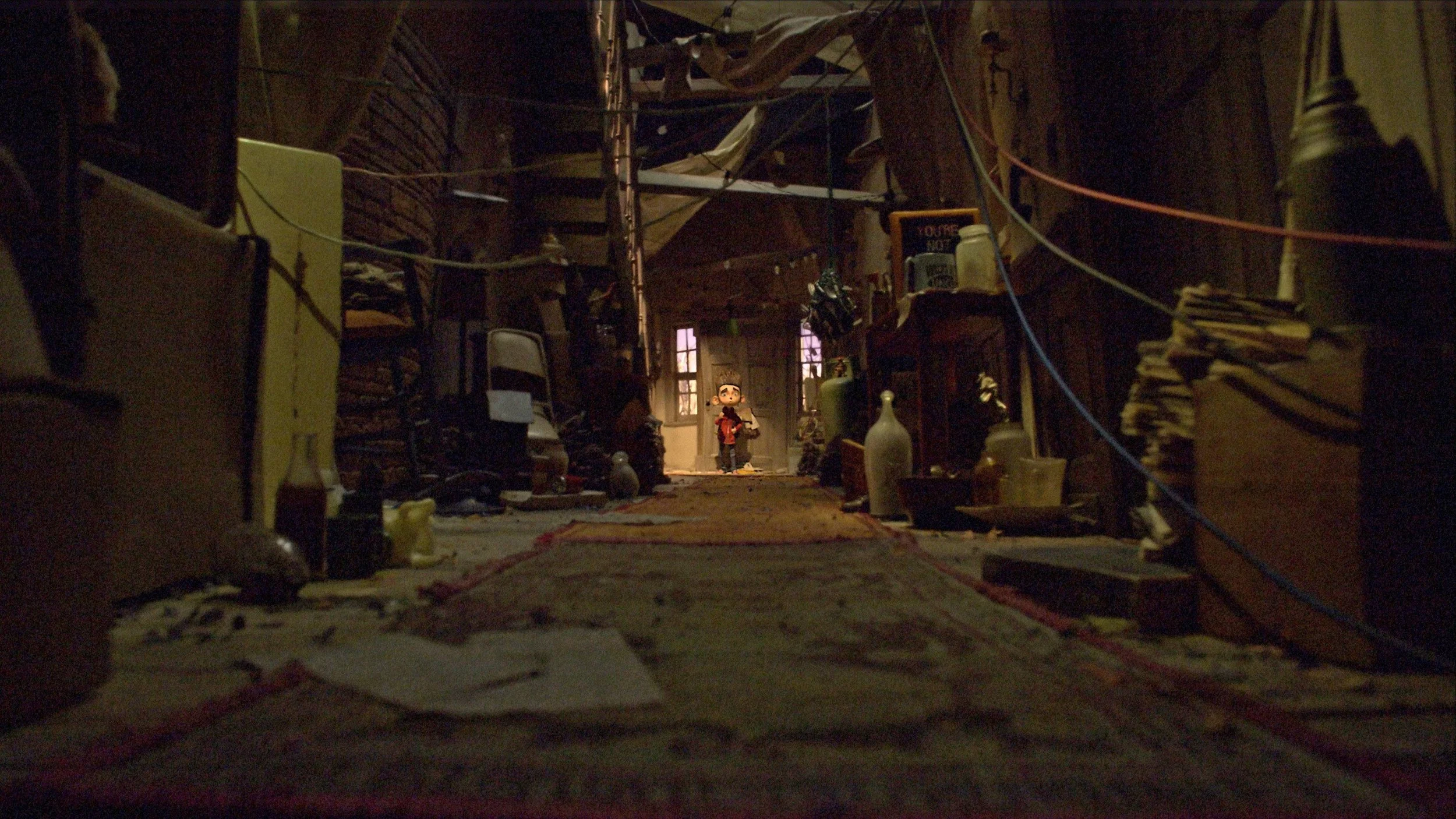
Photo Courtesy of Tristan Oliver