

How Visual Effects Supervisor Edward J. Douglas Helped Osgood Perkins Push Horror Into the Unfamiliar with Keeper
Photo Credit: Subtle Inspirations
With three films under his belt in two years, director and writer Osgood “Oz” Perkins has really been making a name for himself in the horror genre. In 2024, his psychological horror-mystery Longlegs became one of the most talked-about horror movies of the year, due in large part to Nicolas Cage’s unhinged performance as the titular serial killer, and a creepy, foreboding atmosphere filled with dread. He followed that up with the horror comedy The Monkey (in my opinion, one of the best horror films of 2025), an adaptation of Stephen King’s 1980 short story of the same name. Perkins’ latest film (also released in 2025), the surreal horror Keeper, is perhaps his weirdest film yet and features an impressive performance from Tatiana Maslany.
The film follows Liz (Tatiana Maslany) and Malcolm (Rossif Sutherland), a couple who travel to a secluded cabin to celebrate their anniversary together. Once they arrive at the cabin, very strange things start happening: Liz begins to have nightmarishly sinister visions, an ominous presence is felt, and it becomes apparent that they are not be the only ones there.
Recently, REVERIE chatted with visual effects supervisor Edward J. Douglas about his role in Keeper.
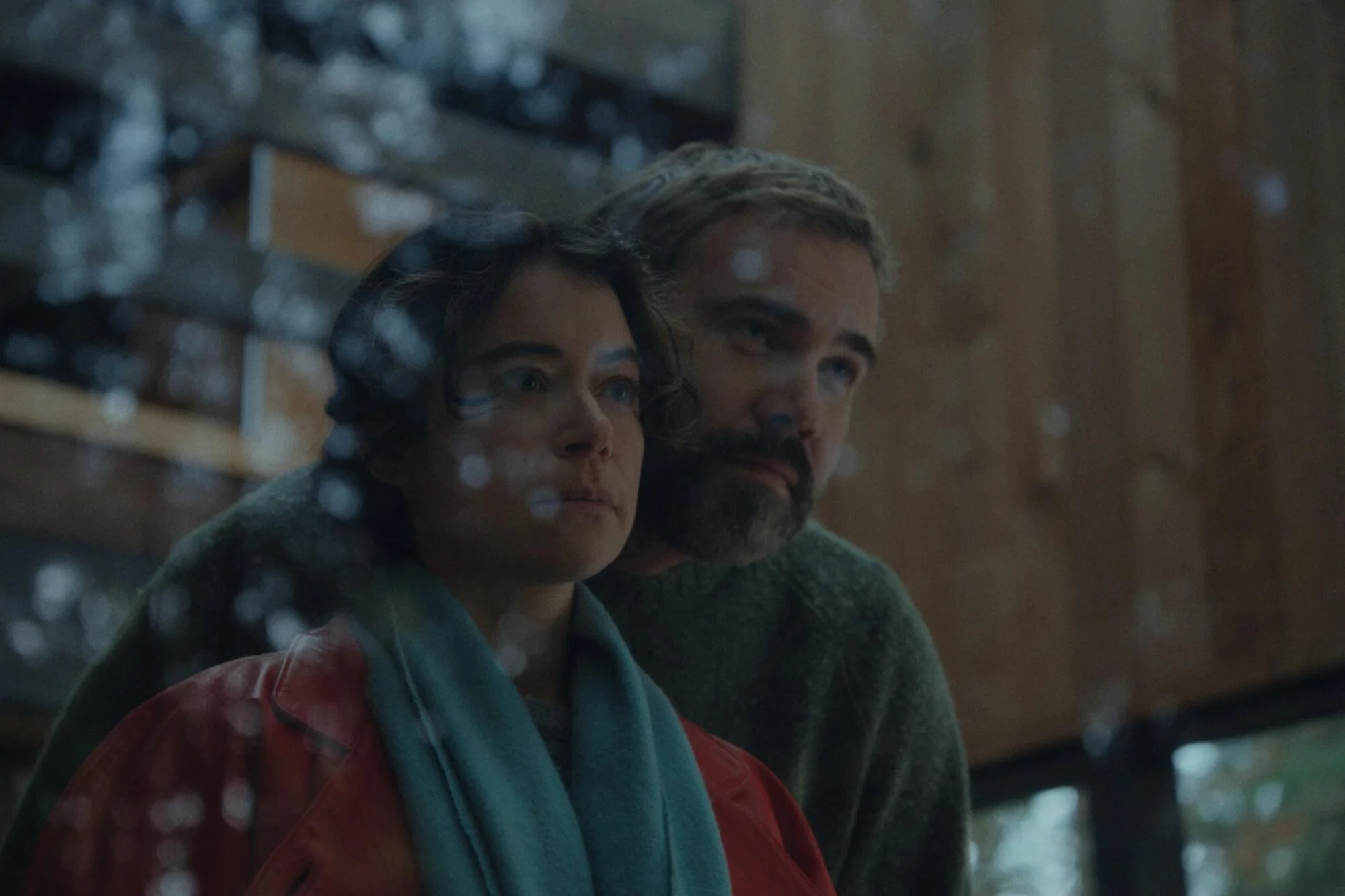
Photo Credit: Neon
The role of the visual effects supervisor varies depending on the stage of filming. “In prep, we can have a lot of meetings with different department heads,” Douglas says. “It’s all about helping the shooting crew best understand how to film things for visual effects and figuring out the methodology.” Once post-production on Keeper began, Douglas collaborated with editors Graham Fortin and Greg Ng. This collaboration leads to finding new uses for testing footage. “They start creating alchemy with the footage and finding all sorts of amazing opportunities of what they can do with the footage. It might be different than what is in the script, and oftentimes visual effects can help connect those different pieces together… Sometimes it’s adding things to shots, and sometimes it’s subtracting things from shots, but it’s the idea that footage is infinitely malleable, not just in how you put it together but how you can modify it to tell new stories.”
This is the third collaboration between Douglas and Perkins. Previously, Douglas served as the visual effects supervisor on Longlegs and The Monkey. Since Keeper was a lower budget film and had fewer resources than Longlegs and The Monkey, the creature designs were not fully explored until much later in the filming process. “Once we hit post-production with the support of Neon, we were able to go further with the creature designs,” Douglas states. “A big part of that job for me was putting together a little concept art team and understanding what Osgood Perkins’ visions were. I’m very grateful he let me play, explore, and design with a team something we haven’t really seen before. He really pointed us in a direction and said, ‘Show me something we have never seen before. Show me something new.’”
Most of the visual effects work for Keeper was creating the creatures. “When we were designing the creatures, we wanted to create a feeling of something, [based on] character motivation, the atmosphere, and building the mythology and history of these creatures,” Douglas shares. “We were looking at a lot of references outside of some of your traditional Western horror or alien action thing. We didn’t want any slobbering, drooling monsters that we often see in a lot of Western horror… [We went in the direction], what if Studio Ghibli did live action?”
Near the end of the film, the creatures of Malcom’s house are finally revealed. These creatures are witchlings and are previous victims of Malcolm’s. “We wanted to bring something honouring the legacy of those characters into it,” Douglas explains. “They were witchlings, but they are still in a formative state, trying to become themselves. We described them as larval witchlings at one point. They are these larvae trying to connect with Liz. Each of them would have a face that was a mask evocative of one of those previous victims. Each of the other actresses would get scanned, and we sculpted their faces into this larval head. That was then put into CG onto the stone performers who would play those witchlings. That was challenging, painstaking work to design and connect these live action performances with CG and make it feel really grounded and real. I really wanted it to look like the best possible prosthetic effect, and some reviews said that … It is always wonderful when people think it is completely real and don’t think its visual effects.”
For Douglas, it was vital to make the audience care for these witchlings too (and to not just make them scary). An example of this is the witchling Barfy, who had drooling barf coming out of her mouth. “For me, these aren’t scary characters,” Douglas shares. “These are beautiful, tragic characters. Each of the witchlings had some elemental aspect of them based on the characters [they represent]. Barfy was inspired by the victim character, the Gina Vultaggio plays, who, in her scene, was coming out of a club and barfing, so we wanted to connect with that. We called up the makeup team and said, ‘What’s your recipe for puke on set?’ and they said, ‘Creamy mushroom soup and chicken broth.’” From here that visual effects team and makeup department worked closely together to create a simulated version of CG creamy mushroom soup and chicken broth. “The first version is just perfect.”
One of the most challenging aspects of visual effects was creating the effects for the creature who had multiple faces. “We call her the face of many faces, who was played by Tatiana, and we enhanced her with so many faces around her, which was incredible, mind-bending work by the team that I work with at Image Engine,” Douglas explains. “Tatiana performed with gray larval witchling makeup effects on her. Again, we scanned the other four women with the same makeup. Then the amazing team at Image Engine, led by Jenn Taylor, took those faces and built probably the most complicated CG character facial rig I’ve ever seen. We kept everything of Tatiana’s performance: her eyes, nose, and mouth and then extended it with the other faces. Then we animated them and drove the animation from the other actresses' voice performances. They did incredible work lining that up, blending that, lighting it, and creating something that I have never seen before.”
The visual effects team also worked very closely with the makeup effects team in making Malcolm look very old at the end of the film. “We said to Werner Pretorius and his team, ‘Go as far as you can. Make him look as old as you possibly can with makeup,” Douglas says. “With visual we subtracted things… Bringing his shoulders in, making his face gaunt and skinnier, and making him very narrow. Rossif Sutherland is in his mid 40s. Makeup brought him to the mid 80s. Then visual effects brought him to what we imagine is over 200 years old.” Douglas, though, finds it incredibly important that the makeup team’s vision not be entirely changed. “It is quite easy for people on film crews to feel like a visual effects team might change their work later and that they won't have any say in it, but we are a very close team, and it's not something I ever want to feel or do.”
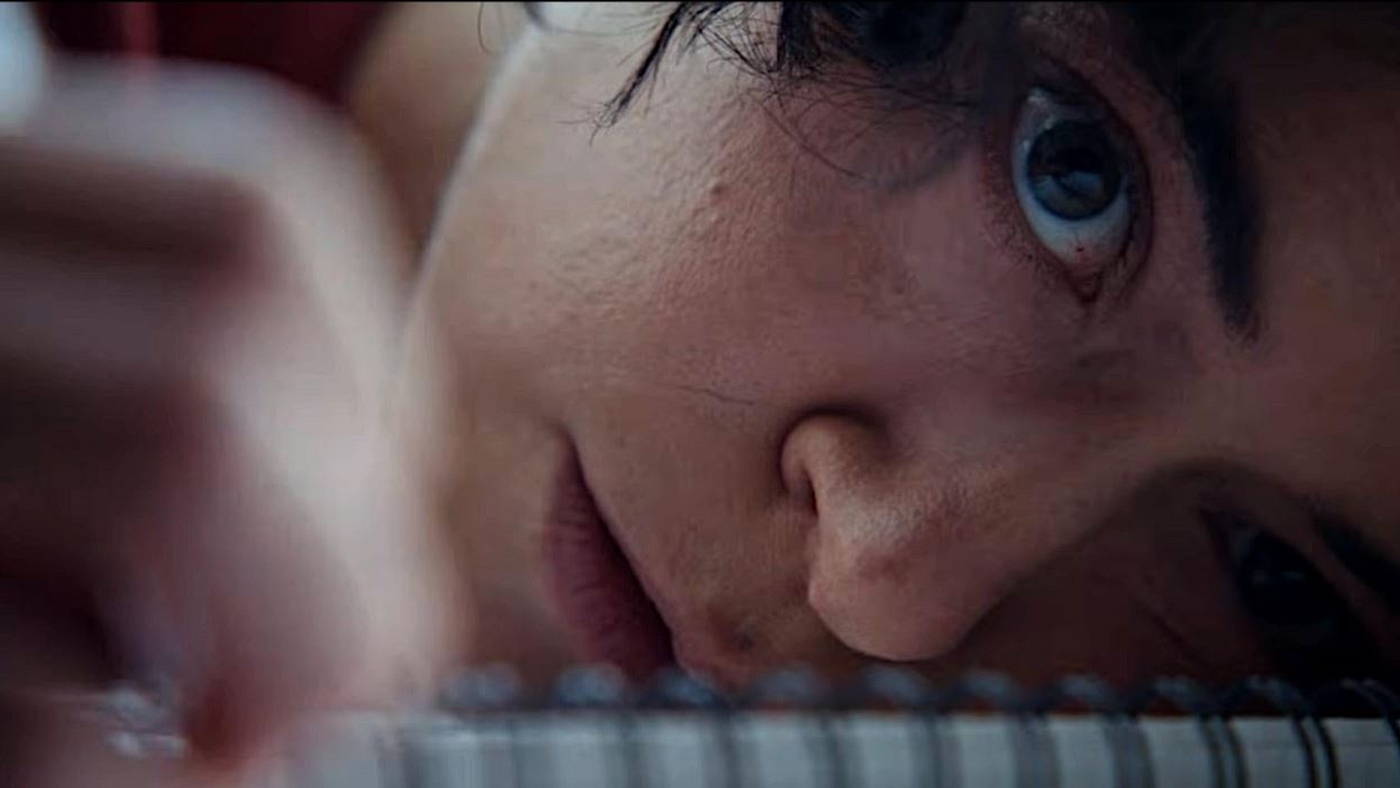
Photo Credit: Neon
Some visual effects were used to do some cleanup work in Malcom’s cabin to make the cabin feel more ominous and eerie. “We had this really amazing house in North Vancouver with this almost abstract geography,” Douglas says. “Watching the film and being confused about the geography was very intentional by Osgood. It felt like that being inside the house. We didn’t know where we were. We were trying to figure out all these floors and how these rooms connected. Enhancing that a little bit by making it cleaner and more streamlined, like painting out ceiling fans and painting out all these trappings to make it feel a little more haunting.”
Keeper is quite different than Perkins’ previous film, The Monkey. The Monkey was incredibly campy, featuring outrageously over-the-top, gruesome kills meant to elicit laughs from viewers. On the other hand, Keeper is more surreal and focused on creating a creepy atmosphere. “With The Monkey, it was what is the biggest laugh that we can get?” Douglas shares. “[We] wanted to go as big as possible. Whereas in Keeper, we wanted to keep it more subtle, and it was about creating and maintaining an atmosphere… Maybe you really want it to be something like enhancing a moment that’s not noticeable.” Douglas shares two examples of how visual effects were used to help shape tone in Keeper. “In the dancing in the forest dream sequences, we were very subtly changing how the smoke behaves. We’re creating almost like a theatrical persimmon around her dancing, which we wanted on set, but the weather wasn’t cooperating. Or how shadows behave in the background, where we filmed interesting shadows on set, but in editing, you know exactly where they need to go to create the flow. Many of the shadows in the movie moving around are me. I filmed myself, and then I would create a shadow of my movement so I could act and find my behaviour and use that to create moments.”
Overall, Douglas had a really wonderful experience working on Keeper. “In many ways, it became everyone’s favourite project [of Oz’s] because it really felt like an independent and really personal project,” he says.