

American Dollhouse Finds Horror in the Familiar
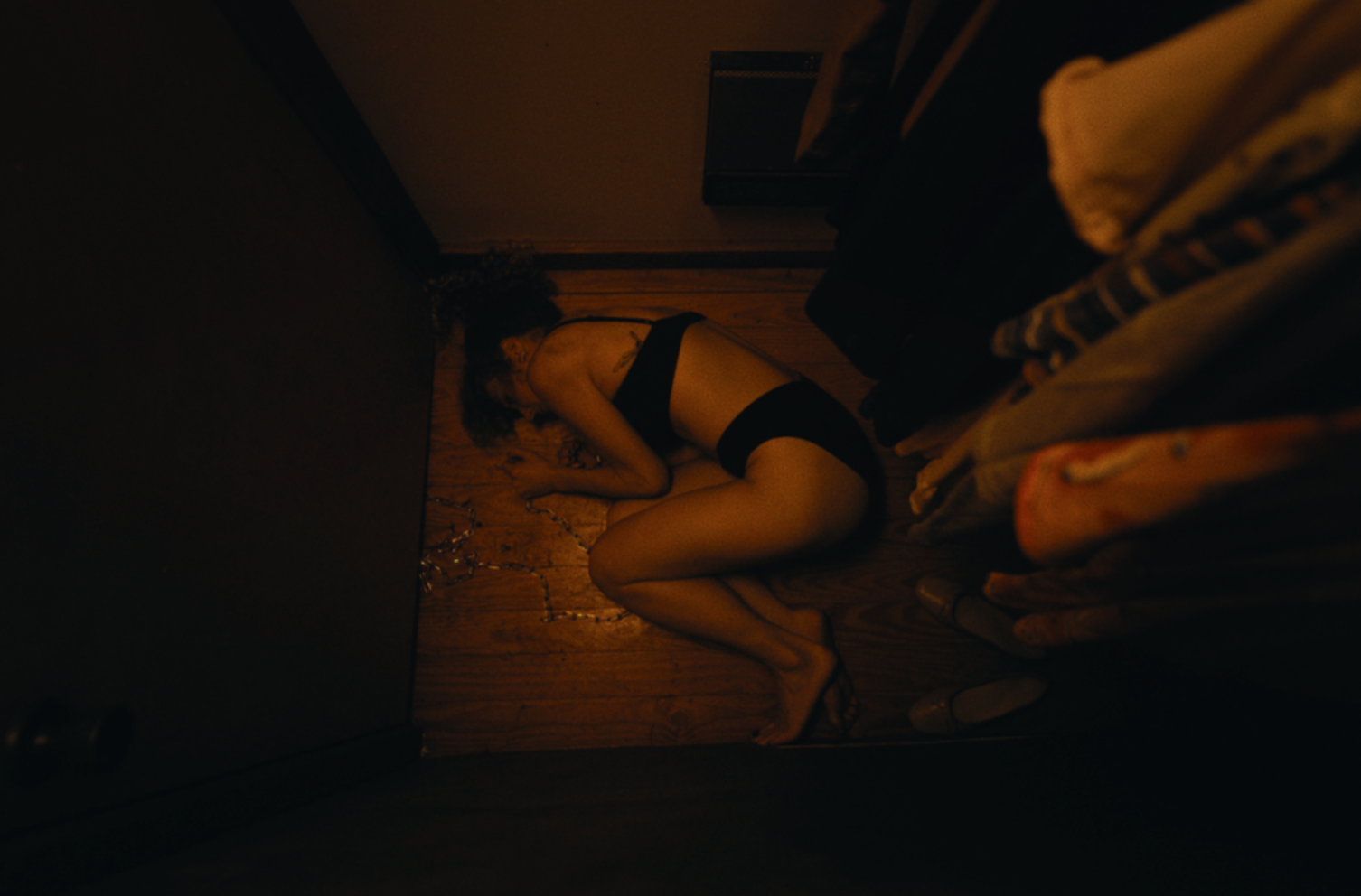
Still from American Dollhouse. Photo courtesy of the Calgary International Film Festival.
American Dollhouse follows Sarah, an addict deep in debt, as she moves back into her childhood home in search of respite and an answer to her mysterious childhood trauma. Instead, she finds an odd neighbour who isn't quite as harmless as the rest of the block insists.
With a limited cast, the actors have to make big impressions with limited dialogue. The film succeeds in making its characters feel relatable before putting them in harm's way. Horror movies have to work harder than most genres to establish this connection: audiences need to care about the protagonist and their friends before they start getting killed off. The director, John Valley, and the entire cast nail this despite the limited runtime (85 minutes)!
The characters also make the kind of choices real people might make in these increasingly bizarre situations. Getting followed down the street by a freaky neighbour? Yeah, turn around and tell them off! Someone broke into your house? That’s right, you better call the authorities! These moments of relatability make it easy for the audience to take the characters’ side.
Sandy, the aforementioned odd neighbour, enters the film with an aura of discomfort before gradually revealing herself as something much more sinister. Her performance makes you lean closer, then cover your eyes all within a few moments. What helps is Valley’s decision to keep her backstory grounded in tragedy and trauma, allowing the audience to feel some sympathy for her even as her plans begin to unravel.
It is clear that American Dollhouse is inspired by the classic slasher — the isolated house, the strange neighbour and the stalking killer are all very familiar. Instead of relying on the usual tricks of the genre, this film takes a different route to finding its scares. There is no villain suddenly appearing in the mirror behind their next victim or disappearing around a corner only to reappear somewhere impossible. Instead, we see Sandy trailing her victims, standing atop a roof that she has climbed and finding her way into Sarah’s house. We see exactly how she gets there, and that makes her presence feel all the more unsettling.
There is no mysticism surrounding Sandy’s killings. She does not need to appear out of thin air to be frightening; she simply watches, follows and waits. The film takes something familiar from the slasher genre and grounds it in a reality that feels uncomfortably possible. In doing so, American Dollhouse finds its scares in the known, instead of the unknown.
American Dollhouse is shot in a few natural locations, with simple lighting and little to no visual effects. This is contrasted by a repeating shot depicting a dollhouse model that evolves throughout the film. We see the model as is, then ablaze, lit up eerily, then, near the climax, we finally see it adorned with lights and Christmas decorations. The dollhouse is a beautiful addition to the film stylistically, and thematically it is a perfect visualization of Sarah’s increasingly unstable circumstances.
Ultimately, American Dollhouse is a film about family, grief and misunderstanding. Sarah returns to her childhood home hoping it will offer solace from the debt and addiction that plague her, but instead, the facade of her dream home falls away to reveal how your past trauma can follow you anywhere.