

On Memory, Loss and Grief in Verb Theatre’s Production of The Starling Effect
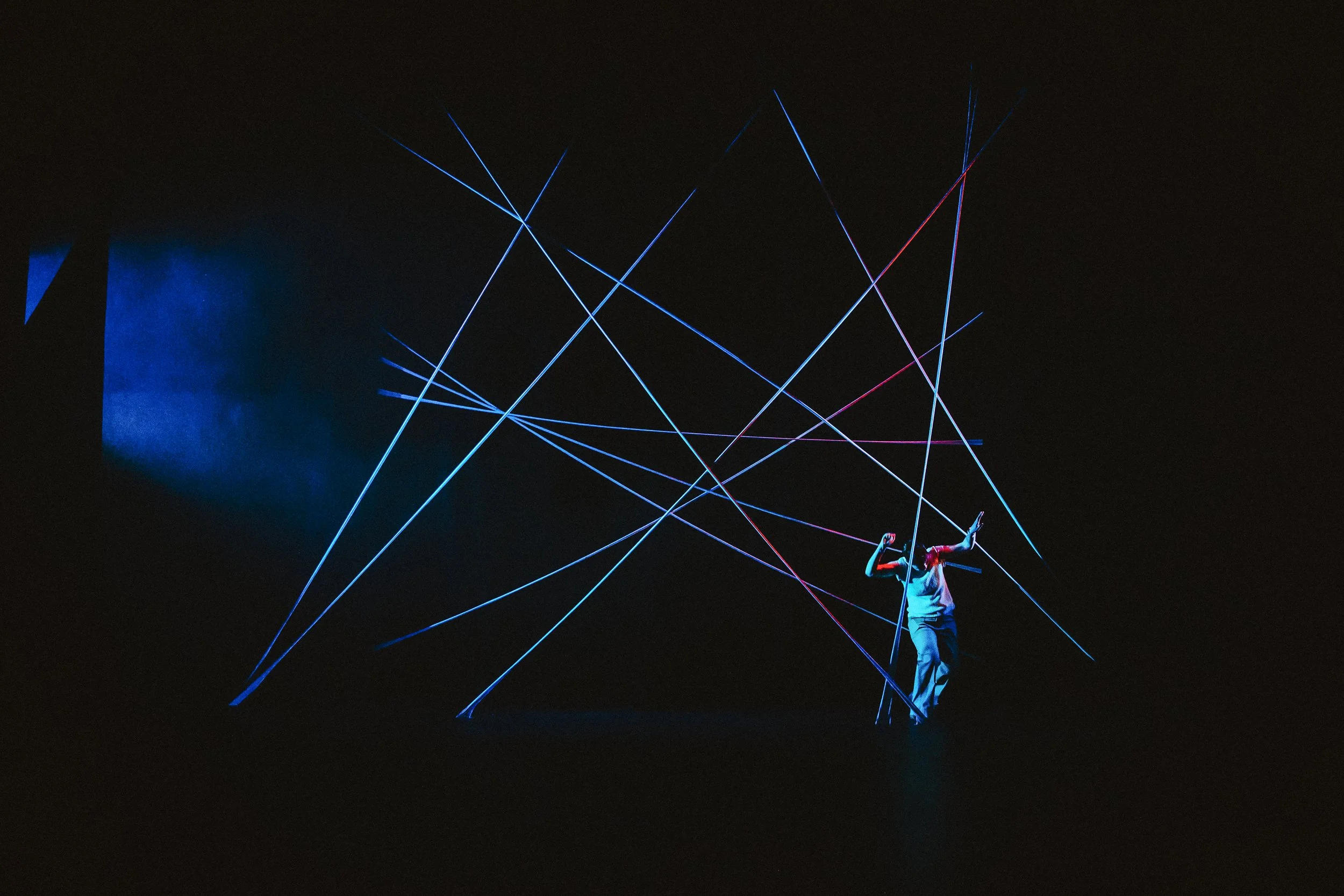
The Starling Effect. Photo by Jarrett Edmund.
What if science could mimic the very pathways of the human mind and in doing so, offer a way to outrun degenerative disease? What would that mean for our memories, our identities, and the people we love? It’s these questions that are at the centre of Verb theatre’s production of The Starling Effect, in partnership with Reckless Daughter Creative.
Calgary theatre veteran Lara Schmitz’s debut production of The Starling Effect arrives as a rare piece of theatre that is so deeply intimate and vast, a story that folds the personal into the speculative with ease. In her own words, the play began with “ideas around mortality” but what has emerged is a layered meditation on memory, guilt and the fierce — sometimes destructive — ways we love.
Schmitz’s excellent writing of a sci-fi thriller doesn’t rely solely on dreamy futurism or technological advancements, though they are a crucial plot element, rather the core of our story is a relationship between two sisters, Ravonna (Lara Schmitz) and Lark (Caleigh Crow), a bond Schmidt describes as the anchor of the entire piece. Lark, a prodigious young pianist forced into early retirement by a neurodegenerative disease, came to Schmidt in a dream.
The titular “Starling effect” refers to a scientific process in the world of the play, technology capable of mimicking neural pathways to prevent or cure degenerative diseases. Schmitz notes that starlings themselves mimic human voices “creepily… so well,” and that eerie natural phenomenon became the bridge between science fiction and emotional truth.
The Starling Effect imagines a world where two souls might share “the same non‑inanimate vessel,” a premise that opens the door to questions about identity, memory and what remains authentically you when your mind is reconstructed. It’s a story of grief and how we process it. It’s a crucial but unintentional reminiscing of Jeanette Winterson’s words: "why is the measure of love loss?"
One of the most intriguing aspects of the production is its structure. The scenes jump between multiple dream-like and realistic scenarios, all while Ravonna is stuck inside the vessel. Music becomes the thread that carries the audience through these transitions, echoing both Lark’s identity as a pianist and the swirling, synchronized movement of starling murmurations. Now this is a theatrical experience that feels fluid, disorienting and a deeply internal embodiment of how memory actually works. As Schmitz puts it, the play asks: “What do you remember? What are the details that stand out, versus what are the details that sort of are by the wayside?”
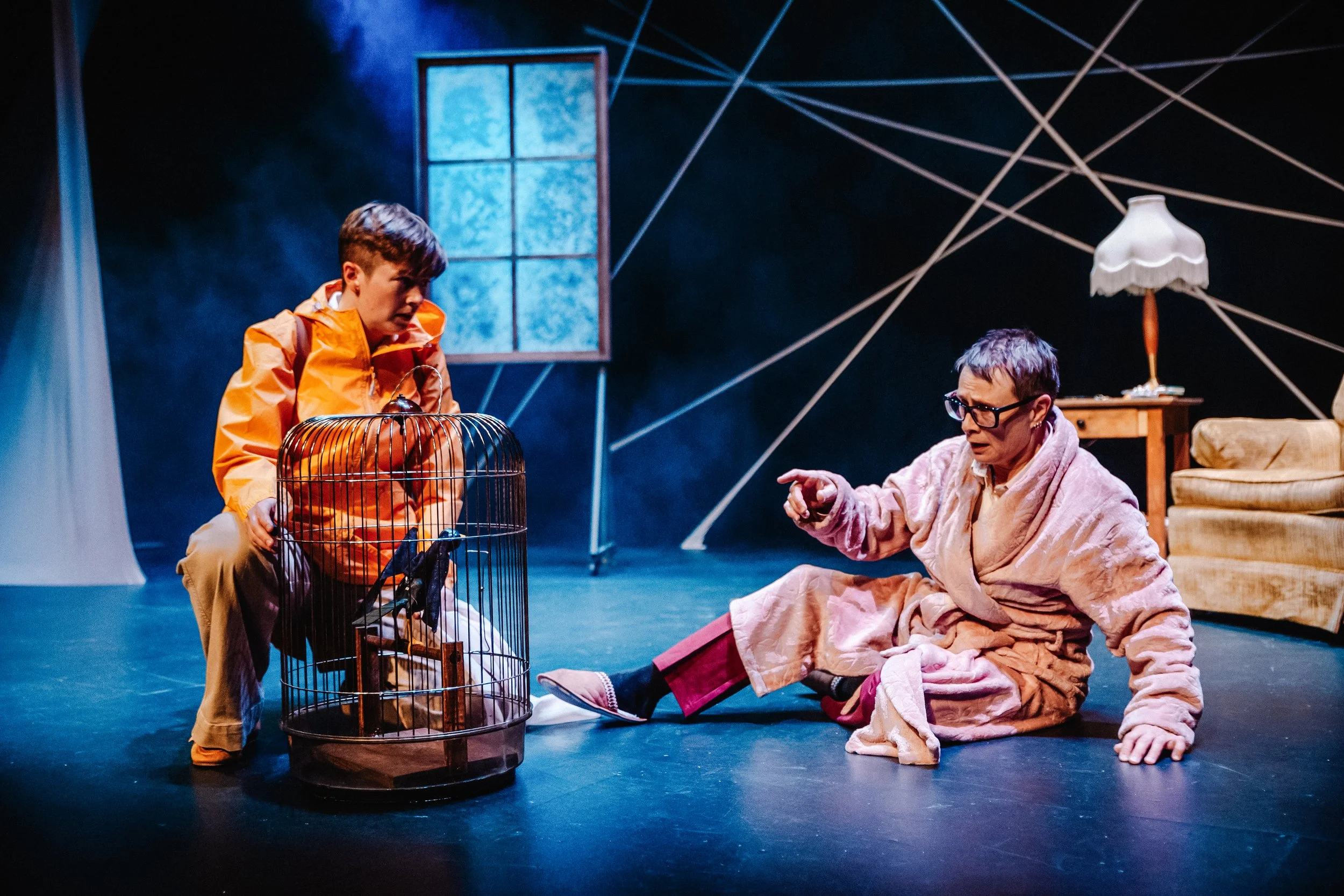
The Starling Effect. Photo by Jarrett Edmund.
Schmitz’ unfiltered, raw undertaking of Ravonna is nothing short of exceptional. Time after time, I would hear (and mutter my own) gasps throughout the progression of the story and the utterly painstaking journey Ravonna goes through. I mean, imagine having to learn that memories you hold so dearly are not as fond as you recall.
Ravonna carries the belief that she has “killed her sister,” she’s written as someone composed, capable and relentlessly functional—yet internally, she is unraveling. Schmitz describes her as the kind of person who thinks “I messed that up, I have to fix it at all costs.” Guilt can be a powerful motivator.
Ravonna’s mentor, Dr. Sandra Beetle, played by Esther Purves-Smith, is working on the technology driving the plot forward. Her relationship with Amelia (Bronwyn Steinberg) is not only is it responsible for helping her advance the research but Amelia’s “death” is what drives her to isolation.
It’s an intricately woven tale that’s been lived by many, both the artist and the muse, but Schmitz’s take on the dynamic explores how much more destructive it can be in the hands of science — show stopping.
Relationships are the driving plot of the story but one in particular stands out, Lark and Amelia’s. It’s hard to find true queer experiences portrayed in performance but The Starling Effect takes on the challenge gracefully. Right from the get-go, the production captures the essence of a gay bar in the most sincere motion — I mean, it’s playing “Staying Alive.” The relationship doesn’t just go through the happy moments, the play demonstrates wonderfully how the bonding, loving nature of queer relationships can also be the cause of grief.
Lark is a true highlight of the production. From the first time you meet her, you fall in love — perhaps it’s the rose tinted glasses from how Ravonna describes her. Though that’s not to discredit Crow’s performance, she’s the bridge between all the characters. It’s almost as if she's stuck in a mirror as everyone has their own version of Lark in their minds, but once you’re exploring all their memories, you understand why she is loved by so many.
Schmitz hopes audiences leave ready to debate “who was in the right, who was in the wrong,” because the play refuses to offer easy answers. Each character believes they are acting out of care, even when their choices clash violently. That moral ambiguity is the mark of a story that respects its audience enough to let them wrestle with it. Schmitz shared that she hopes the play inspires people to “reach out to someone they love to just be like ‘Hey, life’s short. Let’s reconnect.’”
It’s a simple sentiment, but in the context of a story about memory loss, identity and the fear of losing the people who define us, it lands with force.
The Starling Effect runs at Vertigo Studio Theatre until Saturday, May 9, 2026.