Angine de Poitrine Continues to Bring Their Cult Status to Sold-Out Montreal Show
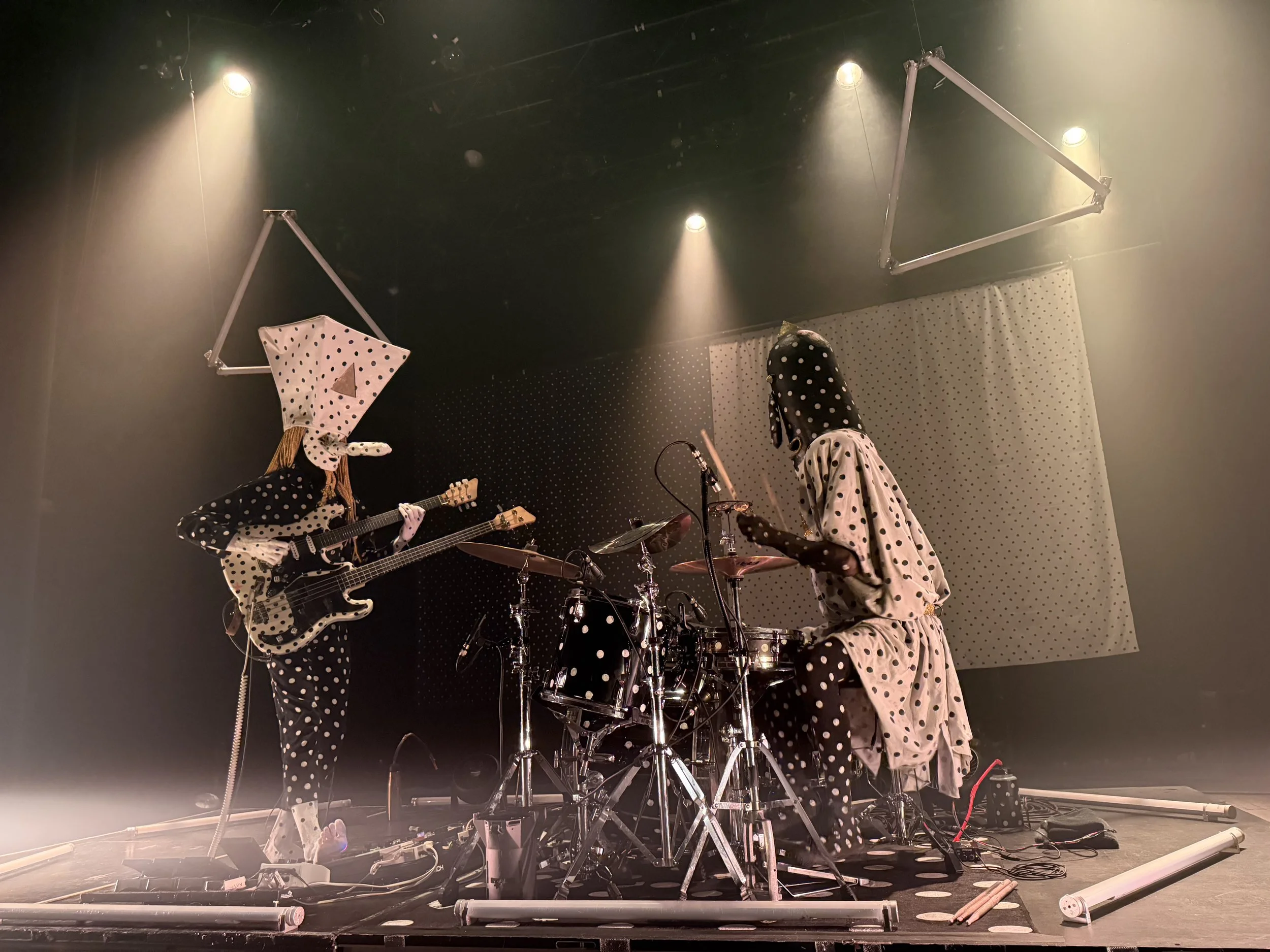
Angine de Poitrine. Photo credit: Jess Arcand.
There are bands that arrive with buzz, and then there are bands that arrive like folklore as they are passed hand to hand until it hardens into obsession. In Montreal right now, Angine de Poitrine feel like the latter.
I first heard whispers about the band during POP Montreal last year, when crowd-goers spoke with curiosity about a strange polka-dot duo from Saguenay, Québec. At first, I shrugged it off as the kind of festival mythology that often swirls around left-field acts: until I saw them live. But by November, when they played M for Montreal, that curiosity had begun hardening into momentum. From there, the ascent felt almost surreal: a breakout KEXP session that ricocheted online, sold-out rooms multiplying by the month, and eventually even a name-drop from Dave Grohl. What first sounded like rumour had started to look more like phenomenon.
A few days after announcing a surreal Toronto double-header, opening for Jack White before racing across the city to play their own sold-out headline show the very same night, the duo took over Club Soda in Montreal for a performance that felt unlike any show I’ve attended. Outside the venue, influencers and media personalities filmed themselves speaking breathlessly about the event before doors; in line, fans arrived in full cosplay, dressed head-to-toe in variations of the band’s now-iconic polka dot look. Even before stepping inside, you could feel the frenzy. I went partly out of curiosity, wanting to understand the collective excitement surrounding what many have called the internet’s most viral band, and left feeling I had witnessed something stranger and far more compelling than hype alone.
Angine de Poitrine do not present themselves as a band in any conventional sense. They arrive in papier-mâché headpieces and polka-dotted costumes that seem equal parts Dada theatre, children’s television fever dream and outsider-art provocation. They move with the logic of ritual rather than rock performance. Between songs they speak to each other in streams of gibberish — or what sounds like gibberish — constructing a private language that remains deliberately inaccessible to the audience, even as the audience appears to understand exactly what is happening. That contradiction sits at the heart of their appeal.
Before even stepping into Club Soda, I had already started sensing the aura around them in the city itself. Walking around Montreal, I kept spotting Angine de Poitrine shirts in the wild. Not casually — repeatedly. There was a kind of omnipresence to it, as if the band had temporarily overtaken the city’s visual vocabulary.
I followed the trend myself and bought a t-shirt. I’ll admit, the merch is slick, and even the person selling it commits to the lore, outfitted in a triangle-shaped headpiece of their own, which made me want to buy it even more.
A few days later, wandering through Little Italy, I stopped into a favourite market. The clerk, who didn’t speak English, noticed my shirt immediately, smiled, and raised their hands into the now-iconic triangle gesture the duo make onstage. No words were exchanged, just recognition through symbol. As someone who doesn’t speak French, but returns to Montreal often, that moment stayed with me.
Because what Angine de Poitrine seem to have built, perhaps accidentally and perhaps not, is something closer to iconography than fandom. There was something moving, too, in how that brief exchange seemed to bypass language altogether, as a shared recognition carried through image and gesture. In a place where questions of language and identity can feel so carefully held, that struck me as quietly profound. Angine de Poitrine’s presence seems to be creating a bridge between Québec and English Canada, not through translation, but through symbol, visually and musically.
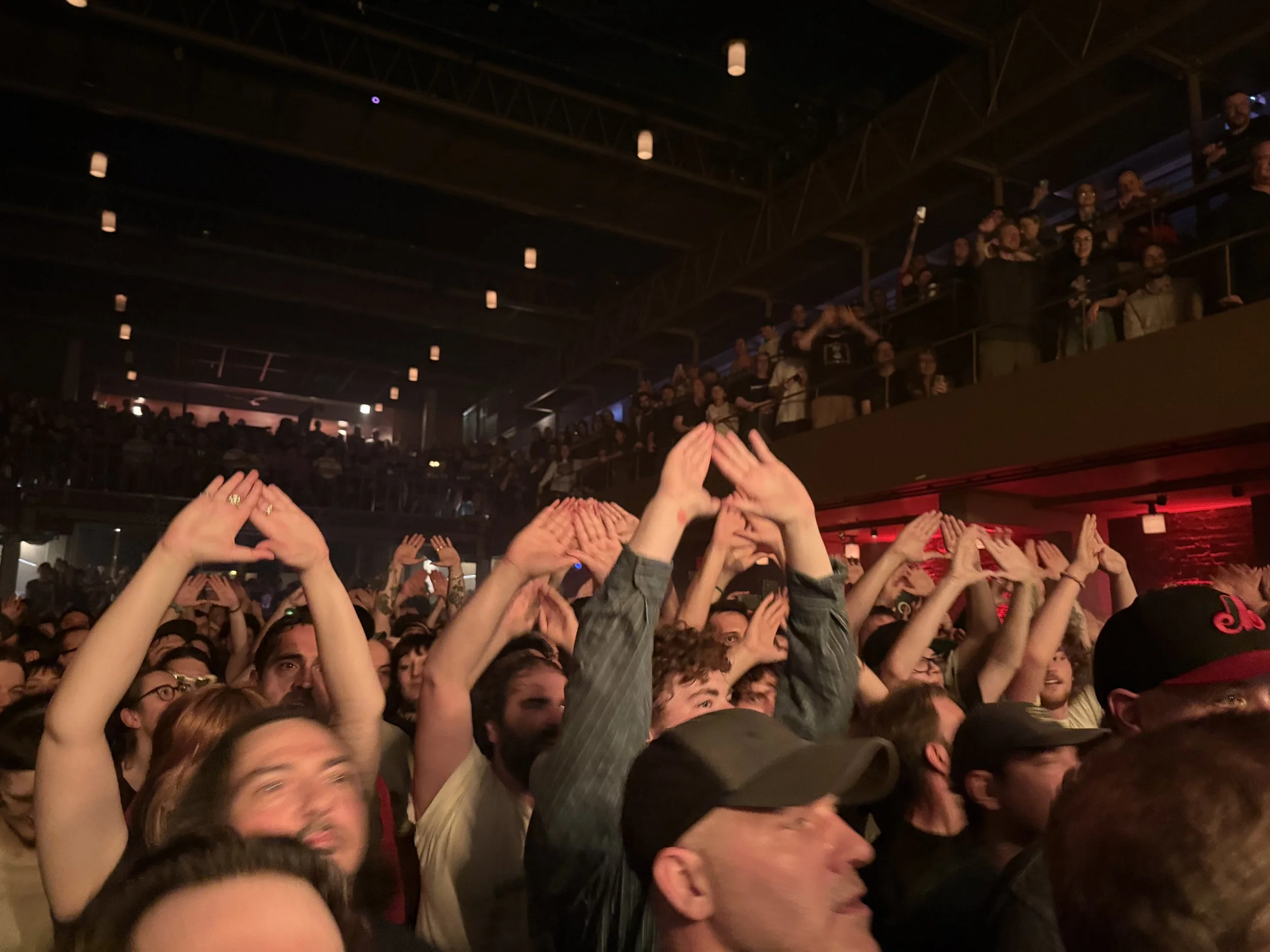
Crowd photo.
Inside Club Soda, that iconography became collective action. Bodies were moving in loose synchronized bounce to the duo’s wiry, microtonal guitar patterns, arms raised overhead in triangles for much of the night. It was hypnotic to watch and not because the crowd was passive, but because it was so participatory. Everyone seemed implicated in sustaining the illusion.
And musically, despite all the visual absurdity surrounding them, there is something genuinely destabilizing happening. Their guitar figures rarely resolve in expected ways. Riffs coil and repeat until they become mantra-like. Rhythms feel playful and jagged at once. There is a tension that keeps the whole thing from collapsing into novelty.
At moments it reminded me less of punk or art rock than of witnessing some invented folk tradition unfolding in real time. That is part of why the “gimmick band” dismissal misses the point. Yes, there is absurdity. Yes, there is theatre. But obscurity itself is part of the medium here. The duo’s refusal to explain themselves — pretending to be aliens, speaking in indecipherable tongues, communicating through repeated symbols — creates a vacuum the audience fills with interpretation. It invites myth-making and that’s where fandom can begin to resemble devotion.
That became especially apparent to me after posting a TikTok from the show that unexpectedly climbed past 200,000 views, pulling in hundred of comments. The discourse was immediate and deeply polarized. Some viewers saw a brilliant critique of spectacle and conformity. Others saw a literal cult. Others still dismissed it as empty irony or internet-era performance art masquerading as music. People seem to either surrender to Angine de Poitrine or recoil from them and that binary response may be what makes them so compelling because the “cult-like” framing — though exaggerated — points toward something real about how the band functions. Their repeated triangle gesture, their cryptic mythology, the almost ceremonial audience participation, even the way fans circulate symbols and references online, all flirt with the aesthetics of belief systems.
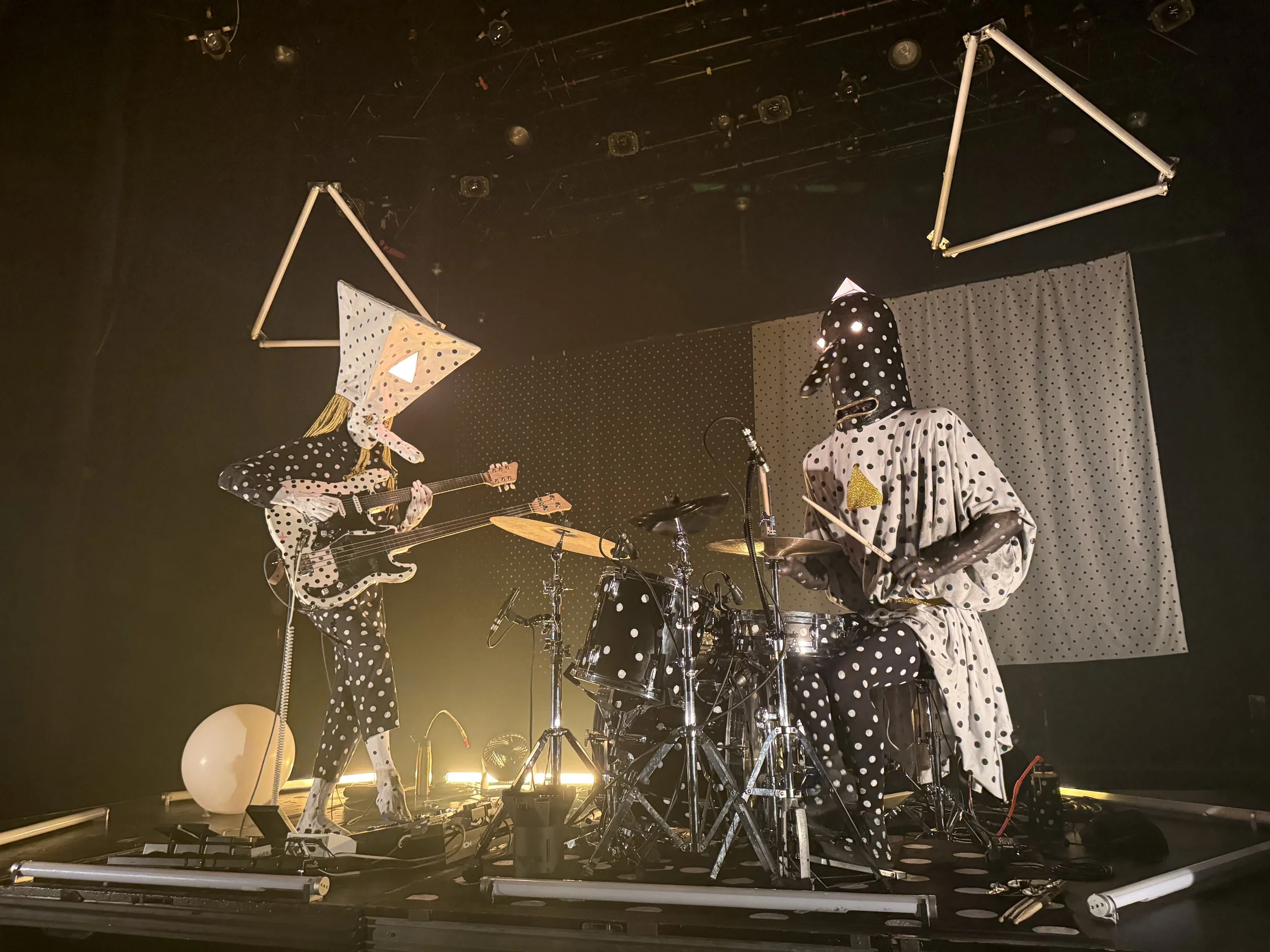
Angine de Poitrine. Photo credit: Jess Arcand.
And yet reducing that to cult panic feels too simple. After all, what is rock fandom if not ritual? What is the raised hand, the singalong, the dress code, the shared symbols, if not softer versions of the same impulse? Angine de Poitrine merely make those structures visible.
There’s also humour in it and a kind of absurdist generosity often missing from more self-serious experimental music. The band seem fully aware of the tension they provoke between sincerity and parody, and they exploit it beautifully. Their obscurity feels mischievous rather than alienating. Still, there is animosity in the work too. That word kept returning to me while watching them.
Curiosity and animosity are the two forces that seem braided through everything they do. The costumes invite wonder but also discomfort. The symbols evoke play but also control. The gibberish feels liberating and exclusionary at once. Even the music carries friction inside its repetition. Maybe it explains why the phenomenon around them has moved so quickly from internet oddity to genuine cultural event. It feels improbable. Improbability is exactly what people are responding to. In an era where so much independent music is flattened into algorithmic familiarity, Angine de Poitrine feel genuinely hard to assimilate. They resist easy legibility. They make mystery feel communal.
And for one sold-out night at Club Soda, that mystery hit me. I came expecting to understand the hype. I left more interested in what happens when a band becomes folklore and judging by the sea of triangles in the air, I wasn’t the only one.