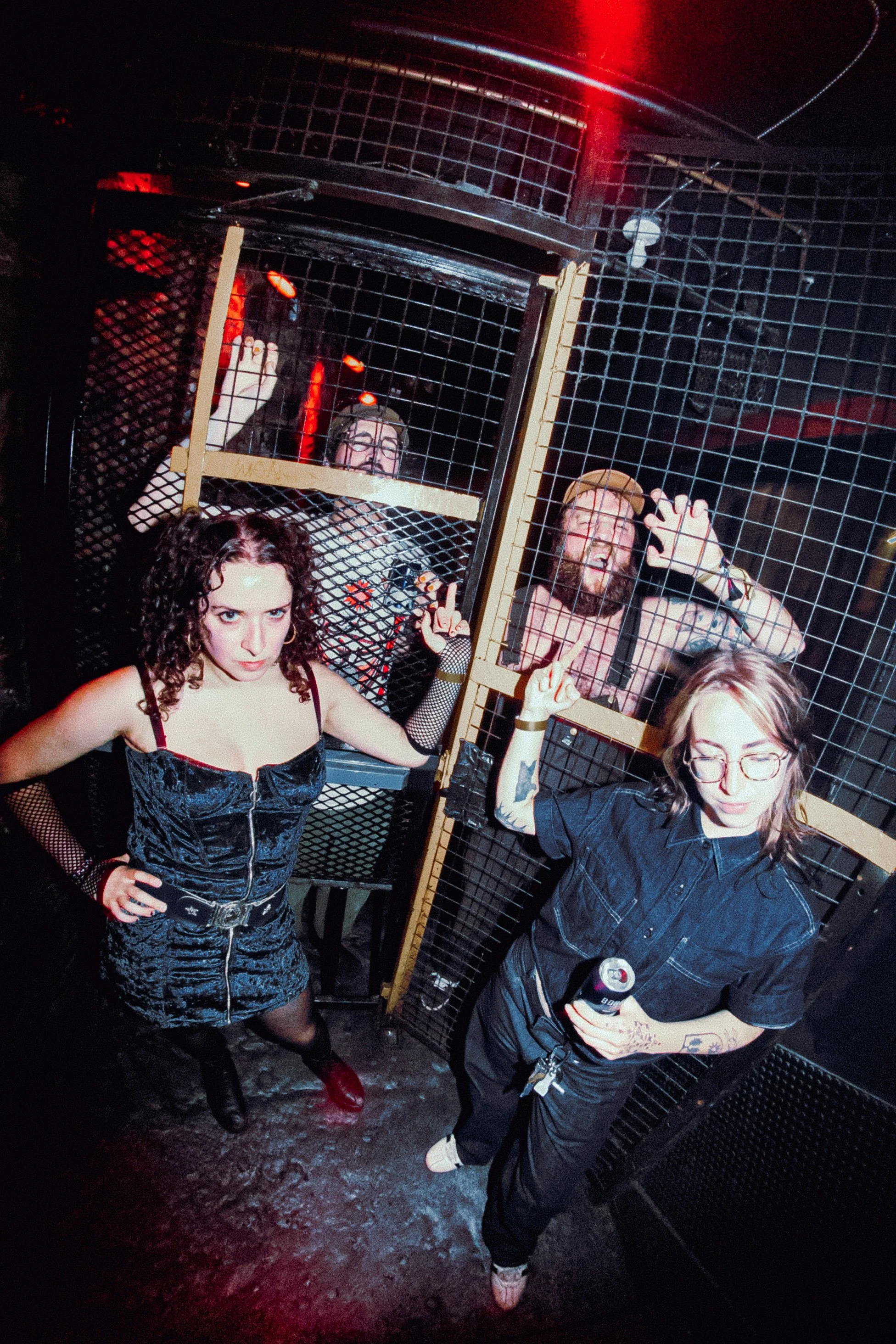
Photo credit: @lazercobrah
Montreal garage-punk outfit Thee Soreheads have never been ones to mince words. Armed with blistering riffs and an unapologetically feminist ethos, the band channels collective rage into something confrontational and sharply satirical. Following their 2025 debut EP I'm Not Your Fucking Sex Doll, the group is turning up the volume with “My Body My Choice,” the first taste of their forthcoming debut album Deseada, arriving in 2027 via Outhouse Records.
Premiering today on REVERIE, the accompanying music video, directed by Raph Cohen-Demers, transforms the song's message into a chaotic, satirical news broadcast. Vocalist Maria Jimenez takes on the role of a reporter navigating male-dominated spaces, all the while confronting misogyny, performative allyship, and the uncomfortable realities of consent along the way. It's a fitting introduction to Thee Soreheads' next chapter, where anger becomes a means of reclaiming one's voice rather than being silenced.
REVERIE caught up with Jimenez to discuss the making of the video, finding empowerment through punk and the collective resistance driving the band's music.
REVERIE: For those discovering Thee Soreheads for the first time, how did the band (and name!) come together, and was there a particular moment that inspired you to make feminist punk music?
MARIA:: We met at a venue called Bar L'esco in Montréal, where Ally and Hugh are sound techs. At the time I was not really involved in the punk scene at all but wanted to join a heavier project, while Ally was trying to find a singer for a punk band (he was already jamming with Max and Hugh at the time). We all instantly bonded at our first rehearsal, and this summer Seyjii joined us on drums, which has been wonderful. For the name, I wanted to highlight the anger from our songs and how loud it was, so I came up with Soreheads, Ally was influenced by Thee Headcoats so we added the 'Thee' as a tribute.
REVERIE: How would you describe Thee Soreheads' sound and/or identity to someone who's never heard your music?
MARIA: Our sound is garage punk, chaotic, in your face and LOUD. We mix this cathartic sound with direct lyrics, storytelling, and even moments of comedy alongside the feminist rage. Very inspired by riot grrrl music of the 90s.
REVERIE: “My Body My Choice” feels especially urgent in today's political climate. Has the song taken on new meaning for you as the world around us continues to change? Was there a particular experience or moment that sparked the song?
MARIA: I actually wrote the song around 2 years ago. It was at the time of Trump's election, so though I don't remember what exactly triggered the song, I know it was brought about from the news cycle that was going on at the time and continues to permeate our lives. It's unfortunate that as we continue to play the music, certain lines become more relevant depending on what's going on in the world. Many things have changed for the worst, but there's also a huge movement of people who are trying to build community and resist which has made the song much more special to play live.
REVERIE: The music video unfolds as a chaotic, satirical news broadcast. Where did the concept come from, and how did you work with director Raph Cohen-Demers to bring it to life?
MARIA: Raph and I met many years ago doing a short film together, and I loved his work, so it was lovely to collaborate once we had the funds to make it (Big thank you to Cabaret Festif for that). It was actually Raph who came up with the news broadcast concept, as I didn't have a clear vision of what exactly I wanted at first. We chatted about the making of the song and how I was so influenced by the constant news cycle and misogyny and then it all just clicked. Raph and I worked side by side making sure we had the right amount of satire alongside the more intense or triggering moments in the video, since we wanted those moments to have real impact. I want the viewer to feel the whiplash of "that's so funny!" to 30 seconds later "woah that was dark."
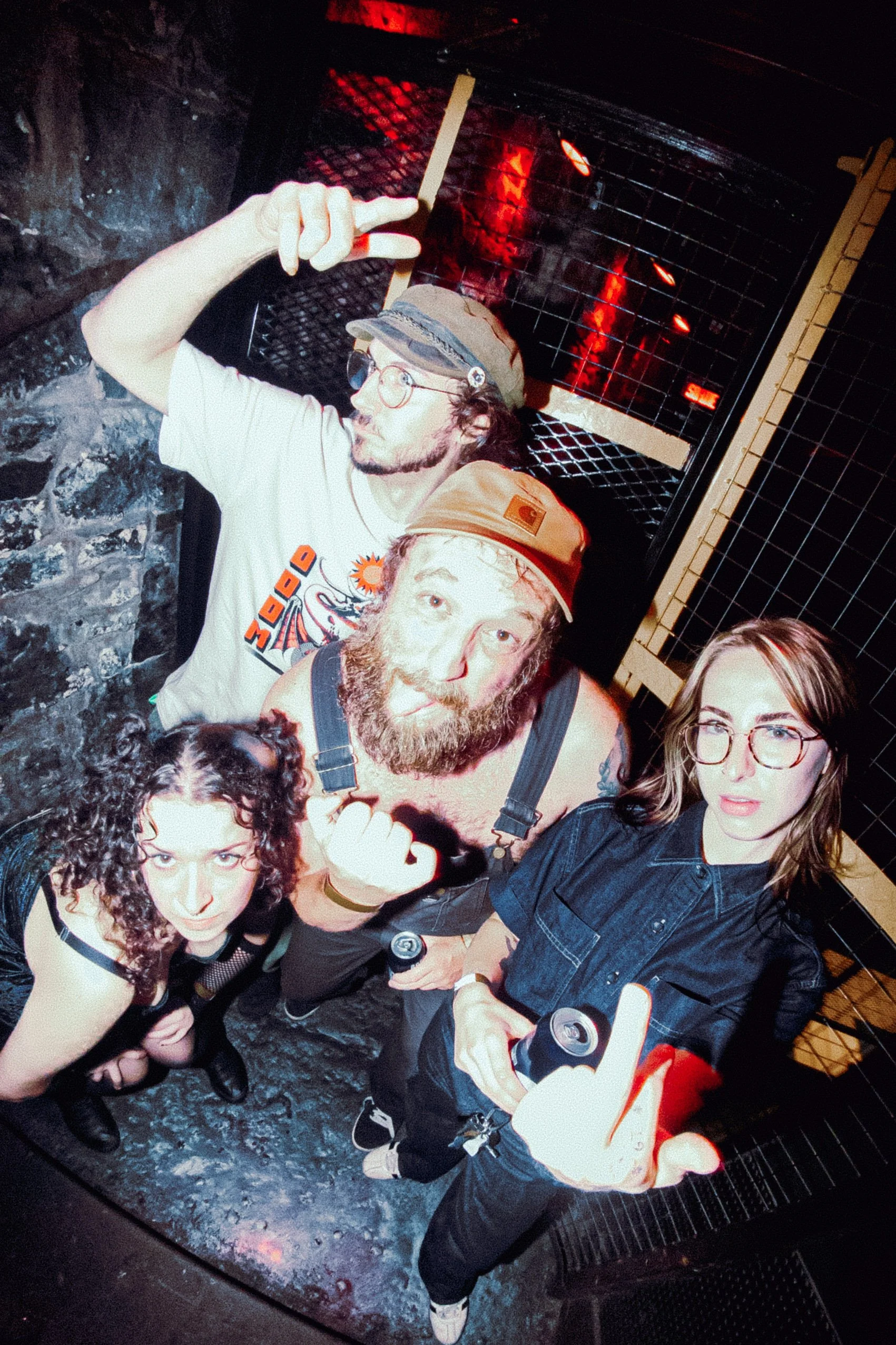
Photo credit: @lazercobrah
REVERIE: Throughout the video, you navigate male-dominated spaces, from skateparks to construction sites. Why was it important to highlight these environments?
MARIA: My formative years of music-making and education were spent in completely male dominated spaces, and it made me realize the lack of equity and silencing that exists in music spaces for women and marginalized people. I wanted that to be a central theme to the video, and to show me breaking out of that mold and reclaiming my power. That's one of the messages I really want women to take away from our music, that even though there are shitty men out there who have put us down, violated us and our friends, used their power for evil, we can use our voice to not be silenced; our words are powerful and carry more weight than they've made us believe.
REVERIE: There's a balance of humour, absurdity and anger throughout the video. How important is satire when addressing serious social and political issues?
MARIA: I think this mix really encapsulates our sound. I'm very influenced by satire as well as the juxtaposition of comedy and drama in all artistic mediums, and how that can make a message come across in a way that sparks conversation, and lets people in who usually wouldn't be listening to our music. Satire is a great way to really zoom in on issues and make us realize how ridiculous and hypocritical society and the world we live in can be, which is what we are addressing in the video.
REVERIE: The song also addresses performative feminism and the role of bystanders. Why was it important to include these themes?
MARIA: I've thought alot about consent and how to encourage conversations revolving around it, specifically promoting these conversations in our live shows and throughout our community. The bystander effect and performative allyship are both issues I consistently have witnessed in almost every artistic space I've been in, and it's made me reflect on times in the past when I didn't have the courage or the words to handle a situation that I felt lacked consent. I wanted to include these themes, so it could make us collectively reflect on ourselves, our actions, and hopefully encourage us to be the one who stands up and speaks up for what is right, even when it's the scary thing to do.
REVERIE: Your lyrics are incredibly direct and confrontational. Do you ever feel pressure to soften your message, or does punk give you the freedom to speak openly?
MARIA: It's interesting because my entire life growing up I was making very gentle music, and was even told my music was too soft or delicate in music school. I only got into Punk around four years ago, and started making heavy music with Thee Soreheads three years ago, when we met. I am not a very confrontational or angry person, I'm much more introverted and reserved, so writing these lyrics, and screaming them regularly, has allowed me to use my voice for the first time, speak up for myself and others, and granted me way more courage in my day to day life. The new music we're writing this winter is somehow even more confrontational than "I'm Not Your Fucking Sex Doll."
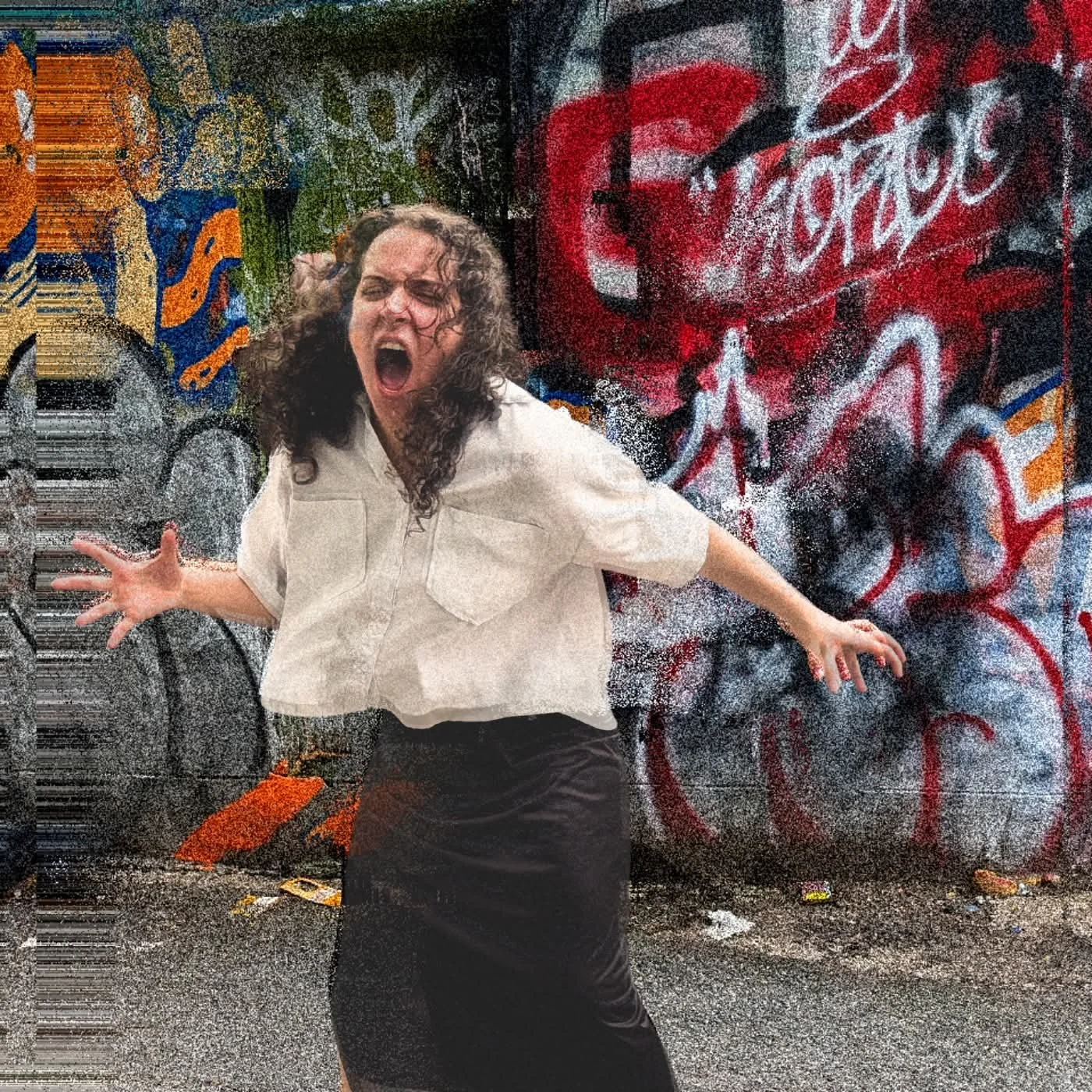
REVERIE: Feminist resistance has a long history in punk! Which artists or movements have influenced Thee Soreheads?
MARIA: The first punk music I ever listened to was Bikini Kill, and this was only around 4 years ago when I even heard punk for the first time! Lambrini Girls, X Ray Spex, and PISS, who we had the pleasure of sharing the stage with back in August, are some big music influences as well that have directly affected my songwriting and the messages I want to share on stage.
REVERIE: Your debut album Deseada arrives in 2027. What can listeners expect, and how does “My Body My Choice” introduce this next chapter?
MARIA: Deseada is going to have many of the same themes from our first EP, but much more direct and intense. At first when writing lyrics for the project, I was afraid of the vulnerability that came with my anger, but now I'm realizing that it is something that allows me to connect with others and even heal parts of myself. “My Body My Choice” shows some of that confrontational voice that connects the whole album together, plus the sonic world that has a much broader spectrum of musical influences than the EP.