Premiere: Eejungmi Flows Through Grief on “Water in Combination”
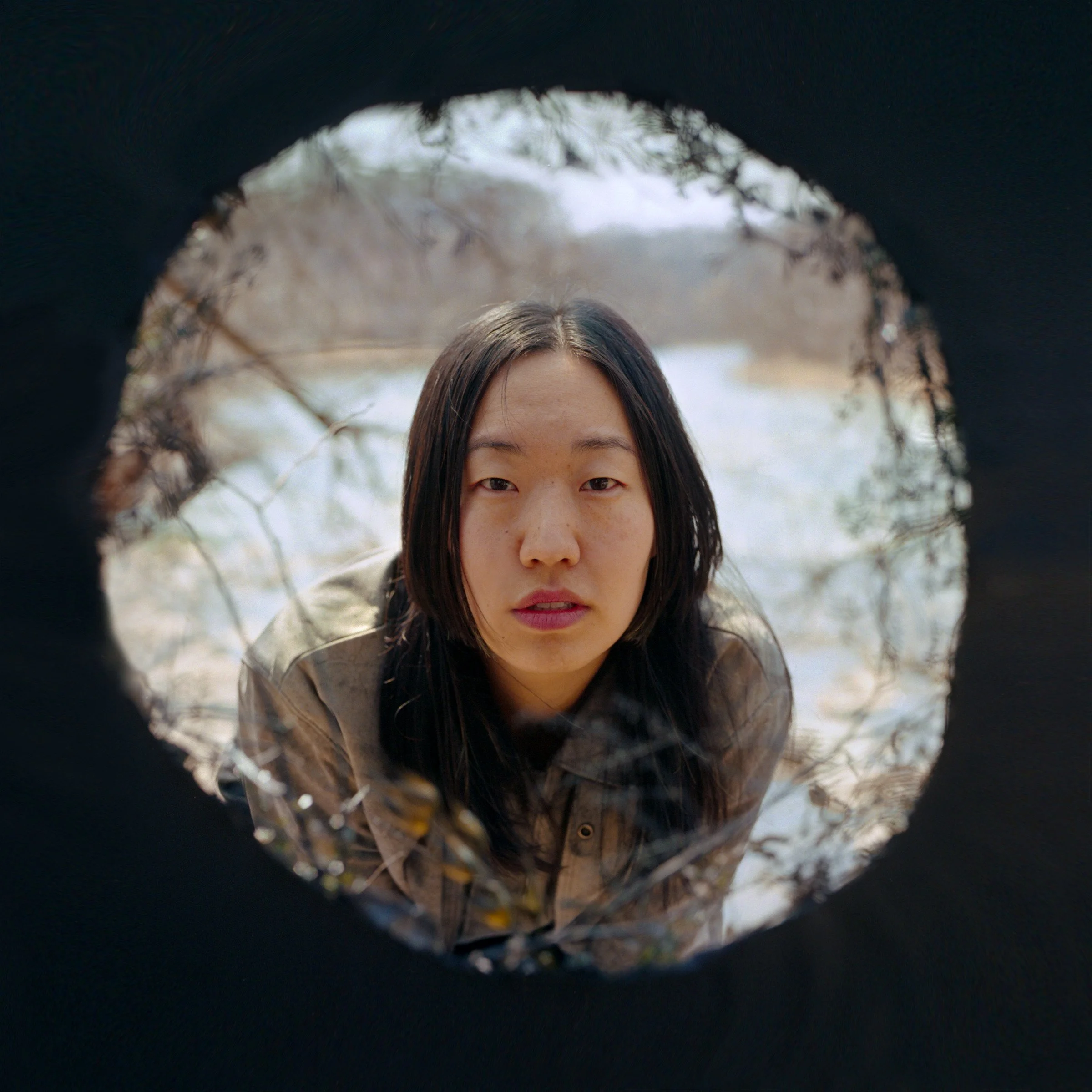
Photo credit: Fatine-Violette Sabiri
With her new single “Water in Combination,” Toronto-based artist and producer Eejungmi (Katie Lee, previously of Braids) opens a vivid new chapter—one rooted in a deepened relationship to the natural world. The track is the first preview of her forthcoming debut album Water is a Shifting Mirror, a project shaped by months spent visiting the riverbanks near her home and learning to write music again on her own terms.
“Water in Combination” captures that practice in motion. Bubbling textures, field recordings, and left-field pop production swirl together, echoing the fluidity at the core of the song. The music video, directed by Fatine-Violette Sabiri, mirrors the flow of the track. Following Lee as she moves along Toronto’s Humber River and through the Oculus Pavilion, it reveals the place where the album began with themes centered on water, grief, and the emotional shifts that shape her debut album.
Below, we speak with Eejungmi about the album’s origins, her evolving connection to community and dance culture, the production techniques behind the single, and the years-long journey that brought her from Calgary’s rivers to Toronto’s dance floors and, ultimately, into the most personal work of her career.
To begin, can you share how the concept of water—and specifically grief—became the foundation of this new album?
So my previous release, Contribution EP, came out in 2019. It was my first release after being in band in 2014 and I kind of stopped playing music for a while and was kind of getting my toes back into the music writing thing that I used to do and it was definitely vulnerable and scary for me and I think I had a lot of sort of…there was a lot of pain there that I was exploring in that EP.
But afterwards, the pandemic hit and there's this I thought that releasing that EP would sort of relieve me of this kind of pain that I was feeling, but then realizing that actually once like I felt like that, it was me identifying the pain and then afterwards came the grief which is really me trying to process and move on from this heavy feeling that I was feeling. A lot of it had to do with trying to find my own identity, especially with music writing and music making, as well as with my creativity. And then with the pandemic as well, there was general grieving with what was going on in the world.
This album came about as a way to kind of create a ritual for me to write music, to learn how to write music again in my own words. And I was able to get funding for it from the Canada Council for the Arts. And so it just helped me to give space to this kind of process. And it was very physical for me. I went to the river every day and recorded it. And its kind of like a conversation between the river and me through the spring season. There was a lot of changes happening in the water, which to me was kind of also poetic in the sense of like death, winter to summer, birth. So it was a way for me to also metaphorically kind of weave in my grief in there.
After your time in a band, did you always envision returning as a solo project, or was that a difficult transition?
Well, I think after the band, I just didn't want to do music really, kind of like shun that out for a bit. I'm also an architect, that's my like day job. But I then I started DJing more and I think that's when I started going back into my love for music and how much I love the way I can express myself through it. And I was inspired by other people's music. And so I started thinking, oh, I should dip my toes back. I have a lot of things to say.
Even though it is my solo project, there are a lot of people who've helped me along the way and it’s hugely collaborative. I co-produced it with my dear friend, Raf, who is also a musician, has played in multiple bands as well. My thank you list goes on forever with this album. This music video also was made with a dear friend. Everyone I've worked with has been a friend. It's not a stranger or someone I've hired, you know.
You’re deeply involved in community DJ events. How does that sense of community intersect with your songwriting?
Yeah, so I think this idea of catharsis, which was sort of the main idea of my first EP about letting go really came about from me exploring by playing these raves and these dance events that I organized and other friends of mine organized. And I think through dance music, I truly was able to kind of experience that feeling of truly like letting go, but also processing grief at the same time. It's just like a jumble of feelings and it's a safe environment to truly be vulnerable and experience that, especially because you're around people that also are feeling similar things as you are, everyone's just sharing space with each other. That feeling really inspired my first EP, but also this album as well.
Originally I was thinking of making a dance record with just instrumentals… but I also thought it would be really fun to eventually make remixes of the songs too. I have so many friends who are amazing producers who could make amazing dance remixes of these songs. So I really just focused on this album on songwriting and not necessarily making edits or dance hits. That was my way of also incorporating, bringing in my community into my music as well, because I want it to also be interpreted by others. And I'm excited to see where that goes and what that leads to.
The single features these incredible bubbling and water-like textures. How did you create those?
Yeah. So a lot of it is some of it's from the field recordings, but a lot of it also was just me and Raf recording different little things from the kitchen essentially. Some were found field recordings that were online too. We need this kind of weird water sound here — so let's record ourselves like pouring water into a bowl or a cup or a bathtub, like that sort of thing.
You’ve mentioned both the Bow River and Humber River as inspirations. How did place shape the writing?
Originally it was the Bow River. That's where I lived next to in Calgary. Then halfway through the year… I left to move to Toronto. So I switched over to the Humber River. So I originally started with the Bow, but then I finished it at the Humber. I lived in Calgary when I was 20 and I wrote Contribution in Calgary. I was there for three years. And so I would say this idea came about in Calgary and then was further explored in Toronto when I moved here.
Were there particular artists influencing your sound during the years you spent writing this album?
I feel like I went through many phases of different kinds of music I was listening to. Always been a fan of Björk obviously and I owe a lot to her. I always say this album kind of feels a bit like her first album Debut. Originally a lot of the songs sounded very different from each other, but I think I'm glad that I took this time to like really work with the album because I wanted it to sound more cohesive.
During the time I was really listening to this ambient artist named Ulla’s Tumbling Towards a Wall. Their music has this kind of like sadness, melancholic feeling that it evokes in me and I would just listen to it looped on end. I think that played a huge influence on me too.
Before we wrap, can you share a couple of tools or instruments that were essential in shaping this record?
I mean my keyboard, my Nord stage has like been with me since my last band days and she’s still here, I use her for everything. I used a lot of VST’s on my computer. I also used my Vermona drum machine (analogue drum synthesizer). That helped me write the beats, the initial beats. But none of that's on the record. But that helped me write the initial demons. I reworked it for years.
Also the CDJs too. I used that kind of as a way to explore how the field recordings could mix in… I would write something and then put it on like a USB stick and then put the field recordings on another USB stick and play it together.