WEATHERELL is soundtracking the late-night comedown
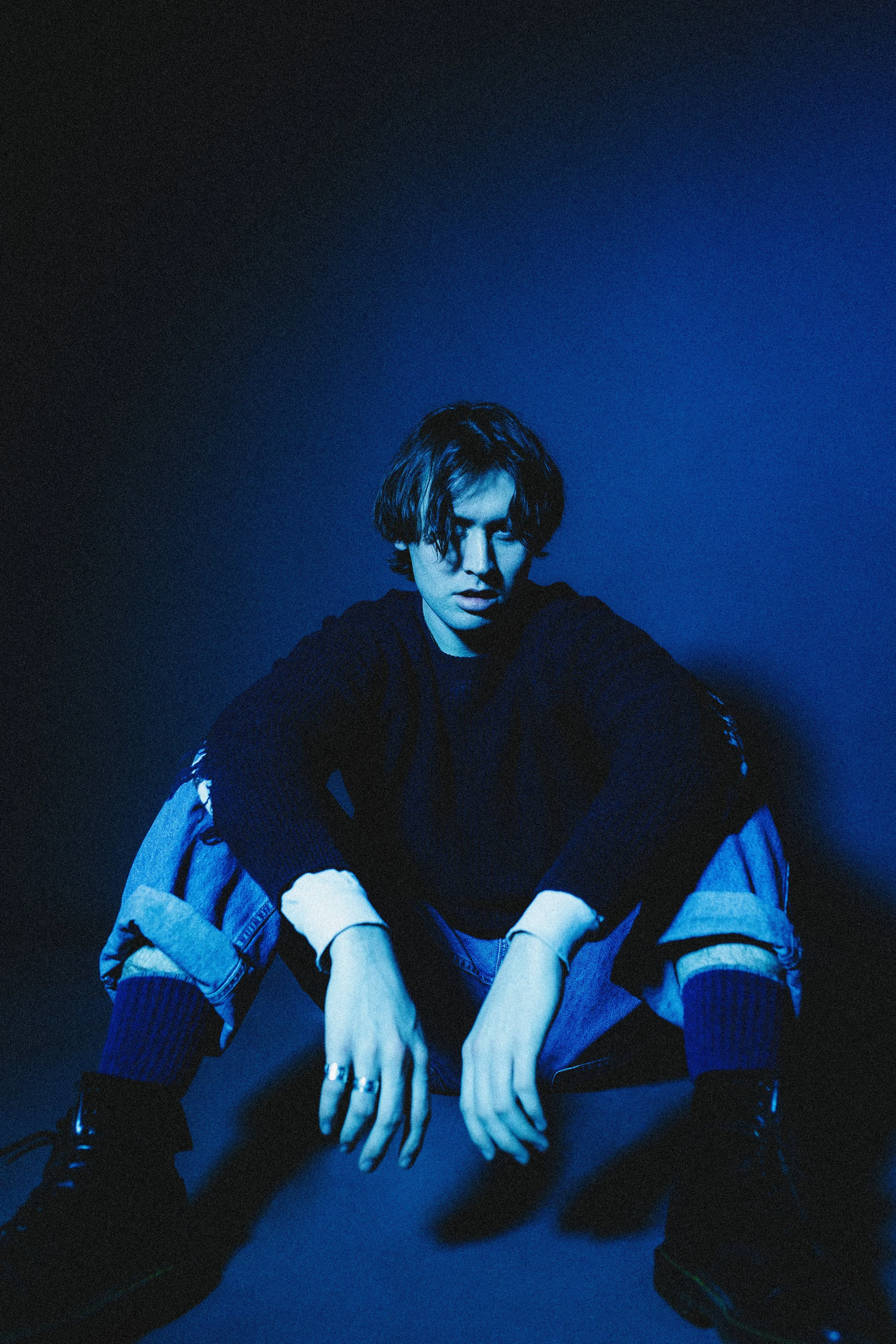
Photo credit: Evie Maynes
On his debut album ‘Lonely Soul’, Toronto musician Sean Hackl, aka WEATHERELL, arrives with swagger and the feeling of stumbling home after a night out, ears still ringing, convinced that your ordinary life might actually be enormous. Pulling from the maximalism of British alternative rock, the haze of shoegaze and the hypnotic pulse of ’90s electronica, the songs feel lived in, like a quick-cut montage caught somewhere between Trainspotting and Vanilla Sky.
Raised on Toronto's DIY rock scene but enamoured with the sounds of The Charlatans, Primal Scream and Oasis alongside The Chemical Brothers and Underworld, Hackl is chasing that feeling: melancholy and triumphant all at once. The Charlatans, in particular, were a relatively recent discovery, introduced to Hackl by his girlfriend's father around 2022. He quickly became enamoured with the band's rolling basslines and groove, qualities that would become a major reference point as Lonely Soul began taking shape. “I always wanted to make really big music,” he says. “Music that sounds massive, that's danceable, people can relate to.”
After the sudden death of a close friend and Fade Awaays bandmate in 2022, he found himself confronting whether he wanted his musical life to continue. The answer became WEATHERELL. By 2023, Hackl had begun pulling together demos, old songs and new ideas for what would eventually become Lonely Soul. WEATHERELL offered the freedom to follow a project as far as he wanted without waiting for anyone else's permission.
“I definitely have a lot of ideas,” he says. “I wanted to be able to not wait around for anybody else... just making demos, making as much music as possible.” Still, Hackl's story has never really been one of going it alone. Hackl has been playing in bands since he was nine and by high school, he had found his way into the city's garage-rock underground, spending seemingly as much time watching his friends play as he did making music himself. At 15 or 16, Hackl remembers becoming immersed in a tight-knit pocket of eight to ten local bands who were constantly putting on shows, with the now-shuttered all-ages venue The Cavern becoming one of their early homes.
“There was this one venue in Toronto in the West End that we would be playing. I was there probably five nights a week,” he remembers. “To see all of my friends' bands and all these touring bands that would come through.”
Before he had even properly left high school, Hackl was touring, hitting Kingston, Ottawa and Montreal with friends. He went on to study music and film at Rosedale Heights School of the Arts, followed by songwriting and performance at Seneca College and Music Industry Arts at Centennial College. Years spent playing in projects including Fade Awaays and BBQ Pope followed, making collaboration an intrinsic part of how he understood music. WEATHERELL, however, began when Hackl found himself confronting what it meant to continue.
“I knew going into it that it was about grief,” Hackl says. Some of its songs predated the loss, but their meanings transformed in its aftermath. “When something that significant happens, obviously everything kind of gets thrown in the air, and then when it comes down, you sort of look around and you realize what it all means now to you.”
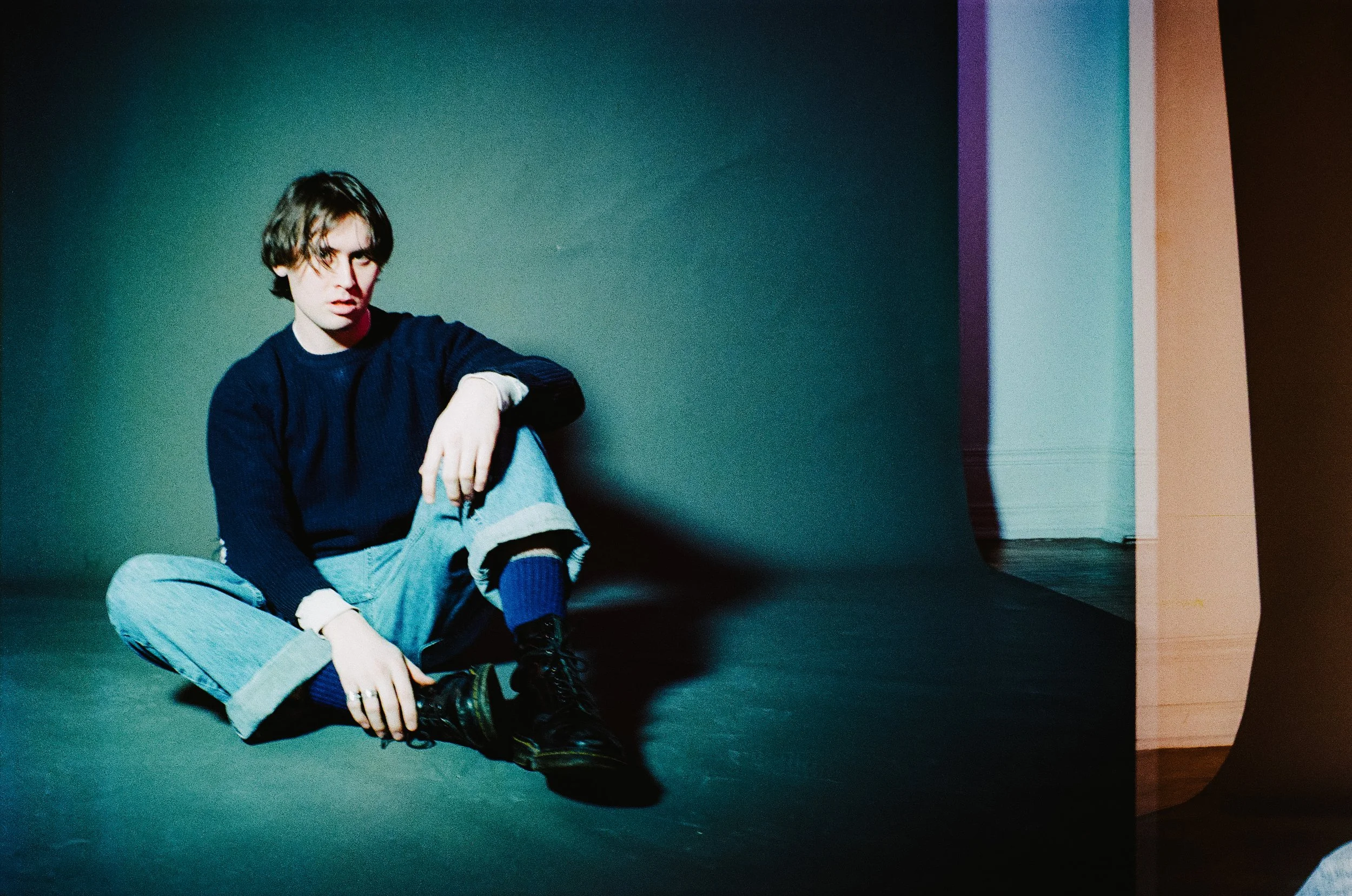
Photo credit: Evie Maynes
Writing became cathartic, but Hackl eventually realized Lonely Soul wasn't exclusively documenting his own experience. “What I didn't really think about at the time was how much I was also writing about other people's grief,” he explains. “Not just about my own perception of it.”
The title reflects that widening perspective. Loneliness isn't presented as an identity so much as an experience that inevitably finds all of us. “I think all of us at certain points feel alone, feel like there are just certain things we're up against that we just don't really know how to face — like how to start over in these instances,” Hackl says. “I was writing about definitely myself, but also just in that sense, about the fact that so many people, I think, feel alone sometimes.”
It's fitting, then, that the moniker carrying these songs traces Hackl back to where everything started. WEATHERELL borrows its name from the Toronto street where he grew up and learned to play music, while simultaneously paying homage to late producer Andrew Weatherall, whose work, particularly Primal Scream's landmark Screamadelica, sits within the musical lineage Hackl draws from.
More importantly, WEATHERELL gave him permission not to worry about how that ambition would translate outside the studio. Rather than stripping ideas down to what four people could recreate onstage, Hackl approached Lonely Soul as a maximalist exercise. “I wasn't holding anything back because maybe I wouldn't be able to figure out how to do it live,” he says.
Despite WEATHERELL being unequivocally Hackl's solo project, Lonely Soul invited longtime friends and collaborators into its construction. Producer Sam Arion, who had previously worked on music from Fade Awaays and releases music as Mute Choir, helped Hackl workshop the initial material. From there, Hackl worked extensively with producer, engineer and Tallies member Dylan Frankland, re-recording the album's live guitars, drums, bass and vocals.
That balance between independence and community is at the core of WEATHERELL. Hackl wanted a project where an idea didn't need to wait for a band practice, consensus or somebody else's availability before it could become a song. He could simply keep creating. But when those ideas needed another perspective, the community he'd spent years building remained around him.
Hackl points to Toronto's 9Million who recently opened for Ethel Cain, along with Tallies, whom he previously toured Europe with, as influences. He shouts out synth-driven Ark Identity, East Coast artist Loviet and, naturally, his other band BBQ Pope — a project he's still actively writing and touring with while WEATHERELL takes shape.
Nowhere is the record's attempt to reach across isolation clearer than “Candy Eyes.” Swirling guitars and a dense, euphoric haze disguise one of the album's heaviest lyrical moments, as Hackl considers addiction and the ways people use substances, or even something as ubiquitous as a cellphone, to avoid sitting with themselves.
The title references the unmistakable redness of stoned eyes, but it isn't delivered as an anti-drug sermon. Instead, he describes the song as something closer to an act of compassion. “It's sort of like a love song. It's sort of like I'm trying to almost reach out, like a tender hand to myself, to anybody in that scenario who feels like they're sort of stuck in that way as well.”
The song's repeated warning — “you can't mask it all” — has taken on greater significance for Hackl after recently stepping away from smoking himself. He speaks candidly about realizing that something can provide temporary comfort while simultaneously putting distance between you and the person you want to be.
“You may feel afraid to put yourself out there as much, or maybe you're not being your most honest, best self in those moments,” he says. “You can't run away from who you are.”
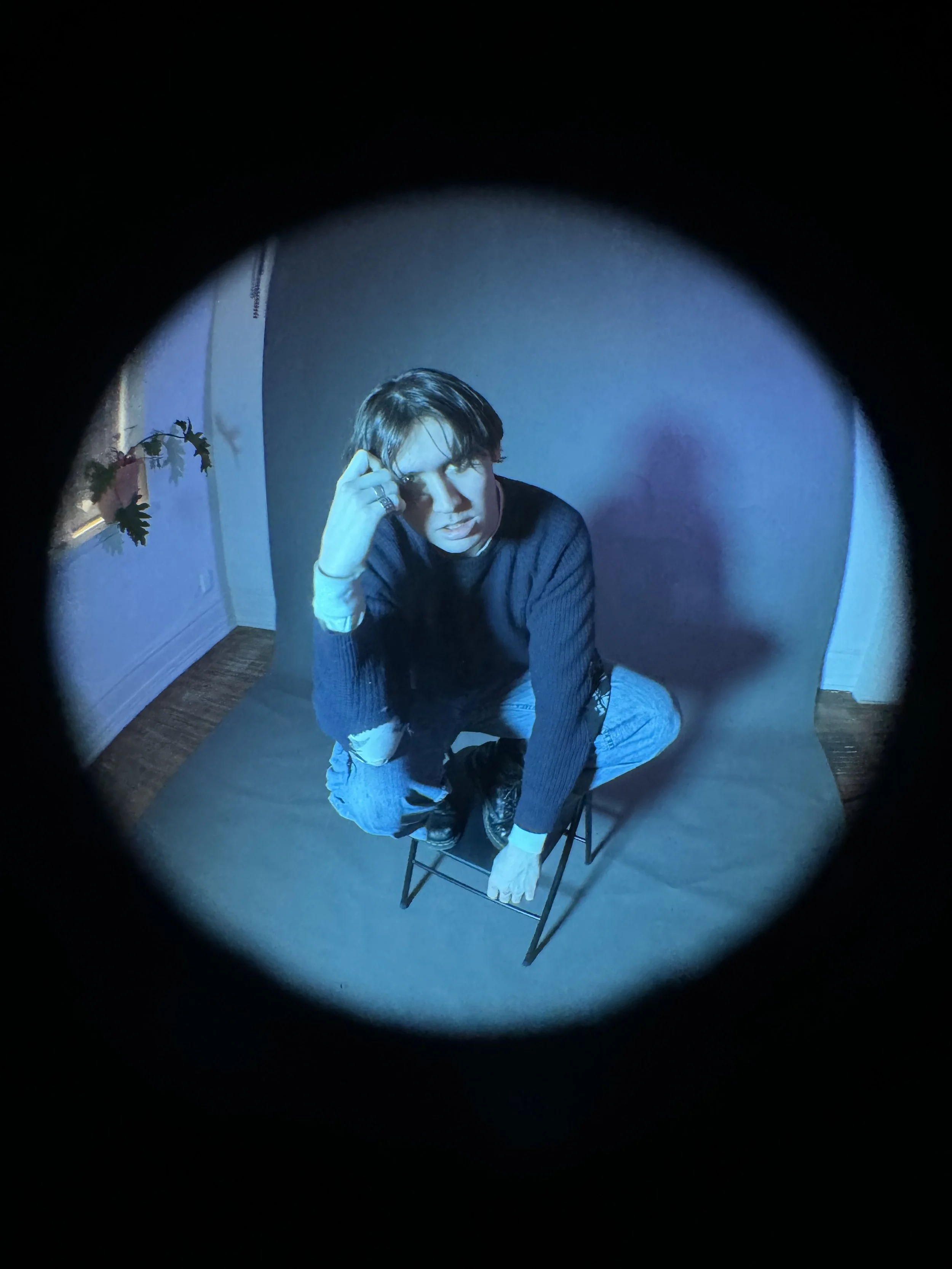
Photo credit: Evie Maynes
That awareness of impermanence and self-preservation carries into “Shelf Life,” another of Lonely Soul's singles. Built from jangling guitars, a driving bassline and hard-hitting drums, the song uses the expiration date of a product as a metaphor for relationships and, eventually, life itself. What begins from the perspective of someone confronting romantic betrayal expands into the recognition that nothing we love is guaranteed permanence. But if Lonely Soul spends much of its runtime reckoning with endings, Hackl also leaves room for the new beginnings.
The album's title track remains particularly close to him. It was one of the songs that convinced him early on that WEATHERELL could become something bigger than a collection of demos. “That was kind of like the heart of this album when I first started working on it,” he says. “I just always had this really strong feeling about it, just knowing that it resonated so much with me, then I think it's gonna resonate a lot with other people.”
He is similarly eager to unleash “What's In Your Heart,” a towering rock song that unexpectedly transforms into a dance outro, and album closer “Get In We're Going Out,” an older composition finally realized in the form Hackl had imagined for it.
And after spending years constructing WEATHERELL, Hackl will take the project into a live environment, assembling a flexible group of musician friends who can help him move the project forward without losing the independence that allowed it to exist in the first place. Touring is already on his mind, with ambitions stretching west across Canada and eventually overseas to the UK, Ireland, Germany, Spain, and beyond. “I kind of joke that one of the main reasons I'm doing this project is so that it can take me to Japan,” Hackl laughs. “So I'm just manifesting that.”
For someone who began touring before he had fully finished high school, the impulse makes sense and Hackl has plans, with no signs of slowing down. Emerging during a period when Hackl was forced to confront grief, finality and what it meant to start again, Lonely Soul isn't interested in finding stillness. It's music for the late-night comedown: when the noise has faded enough for everything you've been outrunning to catch up with you, but the night isn’t over yet.
WEATHERELL’s Lonely Soul is out everywhere tomorrow. Listen here.