Emily Robinson on ‘Ugly Cry’ and the Horror of Being Perceived
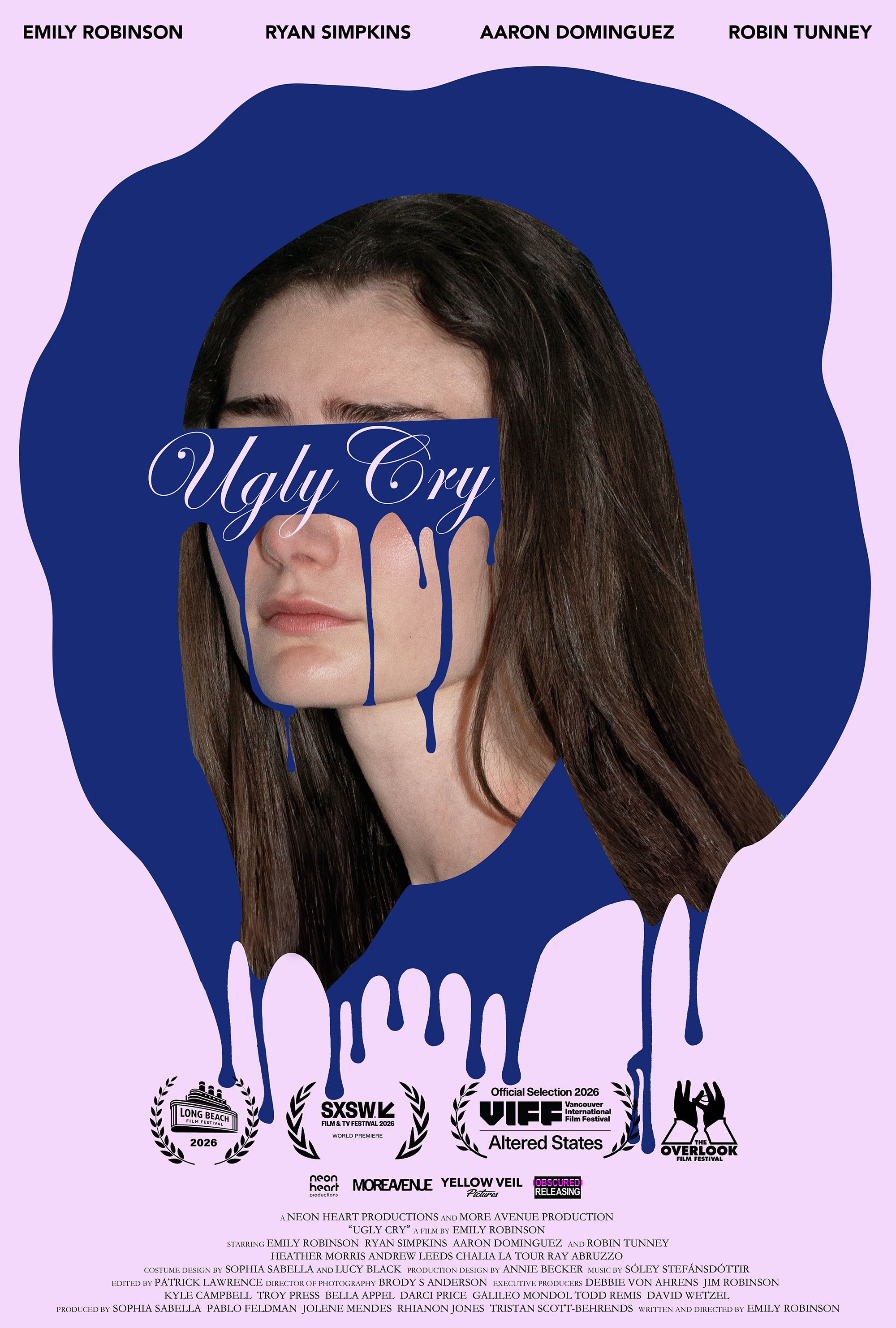
There's a particular discomfort that comes with watching women express emotions that aren't considered conventionally “beautiful”. We're accustomed to seeing vulnerability packaged in ways that are still palatable, whether on screen or through the carefully curated versions of ourselves we share online. But there's nothing particularly glamorous about falling apart, but nor should there have to be.
In her feature directorial debut, Ugly Cry, Emily Robinson explores this tension through a story about perfectionism and the pressures of existing in a world where we're constantly encouraged to put ourselves forward in the best light possible — questioning just how far we're willing to go to achieve a level of self-perfectionism even if it means self-destruction.
Having grown up in the entertainment industry, with credits including the acclaimed series Transparent, Bo Burnham’s Eighth Grade and early appearances on Saturday Night Live, Robinson is no stranger to the complicated relationship between performance and identity. With Ugly Cry, she steps behind the camera while also writing and starring in the film, drawing on years of conversations about beauty standards, social media, and the often exhausting experience of existing in a body.
Following its world premiere at SXSW and Canadian premiere at the Vancouver International Film Festival, Ugly Cry now makes its way to Calgary. Ahead of its screening Off The CUFF on November 9, 2026, REVERIE caught up with Robinson to discuss her transition from acting to directing, the psychological horror of beauty standards, and working alongside Robin Tunney who has appeared in cult favourites The Craft and Empire Records.
REVERIE: You've been acting since you were a child. What first drew you to acting, and how has your relationship with the industry changed as you've grown up?
I was a super shy kid who stumbled into acting because I was neighbors with a model, who thought I should give it a shot. It became a really special way for me to explore taking up space and get out of my shell. It started as my afterschool activity, my soccer, if you will, and eventually I realized, yeah I want to try to do this for the rest of my life.
REVERIE: Looking back at your experiences, is there anything you wish you'd understood about the industry earlier?
I think I trusted the opinions of other people over my own too much when I was younger. My biggest work regret is not doing a feature I loved because my team didn’t want me to do it. At the time, I felt I had to keep my then agents happy, not realizing quite the ways in which their priorities were so vastly different from my own. I loved the script. I love the film it became. I love the director. My agents, at the time, didn’t care about it because it had a tiny budget. I still think about it and regret not doing what I wanted and making something cool with people I respect.
REVERIE: What inspired you to step behind the camera and pursue writing and directing?
When I was a teenager, I was on the Amazon show Transparent, and it was the first time that I really felt like I was invited to be a collaborator. There was space carved out for improvisation and discovery. Even the camera department, helmed by Jim Frohna, danced alongside the actors, finding their marks in the moment along with us. I always knew I loved stories, but working on that set was the moment I realized how collaborative and special film and TV can be in the right hands, and it made me want to work to create set environments built upon mutual respect and curiosity, not hierarchy, with a focus on play and discovery.
REVERIE: Where did the initial idea for Ugly Cry come from? Was there a particular experience that sparked the story?
I wanted to film something relatively contained that I could make with my friends, and friends of friends. And I have long-since been preoccupied with performativity and aesthetic pressures, alongside the translation of the internet and its pressures. The premise came somewhat organically from those thought spirals and conversations.
REVERIE: I loved how the film explores people's discomfort with women expressing emotions in ways that aren't considered beautiful. How much of your own experience in the entertainment industry informed Delaney's character?
The issues and themes at the core of the story are all things I’ve been thinking about and talking about with my friends for years. However, the plot is very much composed to push these conversations in ways I wanted to explore. I guess I think of it as an emotionally close cautionary tale.
REVERIE: You describe Ugly Cry as a film about the horror of having a body, rather than traditional body horror. Can you expand on that distinction? Were there any filmmakers/films in particular that inspired you?
So many films and filmmakers. Irma Vep! Black Swan! Maps to the Stars! Videodrome! Crimes of the Future! Sunset Boulevard! Cleo from 5 to 7! Sick of Myself! Raw! Blackberry! Didi! We’re All Going to the World’s Fair! I could go on. We very much play with genre--comedy, horror, psychological thriller—but don’t cleanly land in one category. Our tone walks a tightrope, which I find very fun and rewarding, but it doesn’t exist in a cleanly legible way. I always thought of the project as a horror film, but wanted to challenge myself to make the real world experiences and pressures the scariest part of the film. I’ve spent so much time thinking about what is actually scary…and to me, it’s what can actually happen. It could happen to you or me, to any of us. But we have to sit and watch Delaney go down this spiral.
REVERIE: The film explores perfectionism and the pressure to constantly improve ourselves, especially in the age of social media. How has your relationship with social media evolved as someone working in the entertainment industry, and what helps keep you grounded?
Honestly, Instagram feels like LinkedIn to me. I like it for keeping in touch with people, meeting new creatives, and, of course, the memes. But I do try to limit my time online, and remember that it’s all a performance.
REVERIE: You wrote, directed, and starred in the film -- what was it like juggling those three roles, especially while portraying a character experiencing such an intense psychological spiral?
It was so fun! I loved it and wish I could live on set forever and ever. But it was only possible (and enjoyable) because of the unbelievable team I was surrounded and supported by. More Avenue was our on the ground production company, and they were also wearing a bunch of hats. They made sure that I had the space to focus on the things that needed my attention. It really was just a lot of prep, very little sleep, and an incredible crew, cast, and creative team.
REVERIE: Icelandic musician Sóley Stefánsdóttir composed the film's score. How did that collaboration come about, and what were you hoping to capture musically?
I first became familiar with Sóley’s work through the short film, Mother Melancholia, which stars Chalia La Tour, who plays the Casting Director in Ugly Cry. Her work is so haunting and layered and gorgeous. We had a lot of recurring themes that we wanted to iterate on, to help tie together some of the through lines and tones. I had wanted to collaborate with her for a while, so it was extremely exciting to get to be her first feature score.
REVERIE: I loved the mother-daughter dynamic between your character and Robin Tunney's. How did that relationship take shape, and what was it like working with Robin on your directorial debut?
Working with Robin has been such a dream. She’s just such a legend and pro, and she’s so willing and open to play and get actor-y, or get technical as the moment requires. We emailed and chatted a lot about the mother-daughter dynamic, as well as the grandma-mother-daughter dynamic. We thought a lot about the ways in which the generations pass down baggage and accidentally cause harm, only realizing when it’s too late. She is such a champion of women in film / indie film / all the juicy, good things. Every day Robin was on set was a better day.
REVERIE: Following premieres at SXSW and VIFF, Ugly Cry is now making its way to Calgary. What has the audience response been like so far, and what's next for you?
It's been unbelievably rewarding getting to share it with people. Having conversations afterwards has felt like building the community I wish Delaney had. Talking about things is really helpful and important and makes me, at least, feel less alone. So, I hope this film opens conversations, and quells more competitive and isolating feelings. Now I’m working on putting together my next feature, which leans a bit more intensely into genre, which should be a fun time.
‘Ugly Cry’ premieres in Calgary at Off the CUFF at Globe Cinema on November 9, 2026. Find tickets here.