Drook Are Jumping Towards What Comes Next
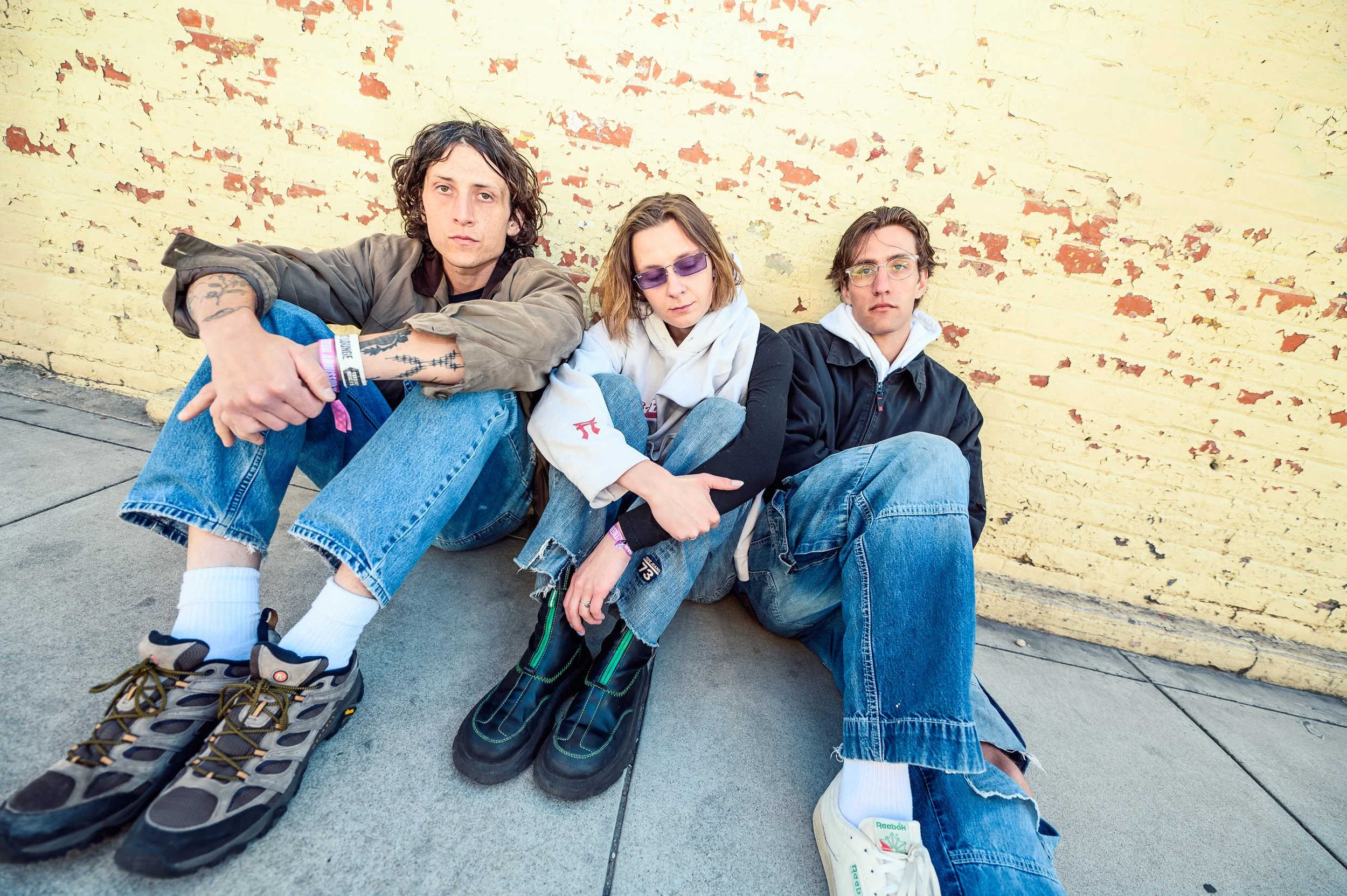
Drook. Photo credit: Shannon Johnston (@me_onlylouder).
There are bands you admire on record and then there are bands who make sense in full once you see them move in a live music venue. I first caught Richmond trio Drook upstairs at Pianos during New Colossus Festival, walking in with only a vague sense of the buzz around them and leaving fully converted. There was something in the restless elasticity of their set — shoegaze haze mutating into an electronic groove; guitar music suddenly slipping its leash. It felt familiar in the best way, recalling the kind of discovery that shaped my Tumblr-era generation raised on The Japanese House, The 1975 and Wolf Alice, while still sounding entirely their own. They felt like a band that could sit comfortably on a label like Dirty Hit, but with a wirier, more unpredictable sound.
That first encounter made Drook one of my most anticipated sets at SXSW, where their show at Hotel Vegas only deepened the obsession. Touring behind 2024’s The Pure Joy of Jumping, the band has built a reputation for turning songs that already feel expansive on record into something even more volatile and tactile in a live setting. By the time I caught them again at Treefort Music Fest — this time at Neurolux, under a nervy, erratic light design run by the same lighting designer working with Flipturn at the festival — the performance had taken on another dimension entirely. Strobe-like bursts and fractured colour heightened the urgency in the music, while also illuminating a euphoric feeling like being in a rave. Just as striking was the way the band seemed to perform toward one another while the crowd interacts around them — Matthew Shultz (guitar, bass, keys) often partially turned away, Liza Grishaeva (vocals/guitar) angled side-stage, and Tyler Smith (drums, percussion, keys) taking it all in, while holding the rhythm together.
Their songs seem built to destabilize themselves, always threatening to lurch into a new shape. It’s something the band themselves point to in conversation, describing how their live show has begun feeding back into the writing of their next material, refining rather than taming the wide-ranging impulses heard on The Pure Joy of Jumping. That evolution feels especially timely as the trio prepare for a run of dates with Victoryland who are also touring with LCD Soundsystem — one of the most exciting young bands operating right now out of NYC.
Ahead of those shows, we caught up with Drook in Boise, Idaho to talk Richmond’s fertile DIY scene, the shape-shifting instincts behind their debut, and how the live show is already pointing toward what comes next.
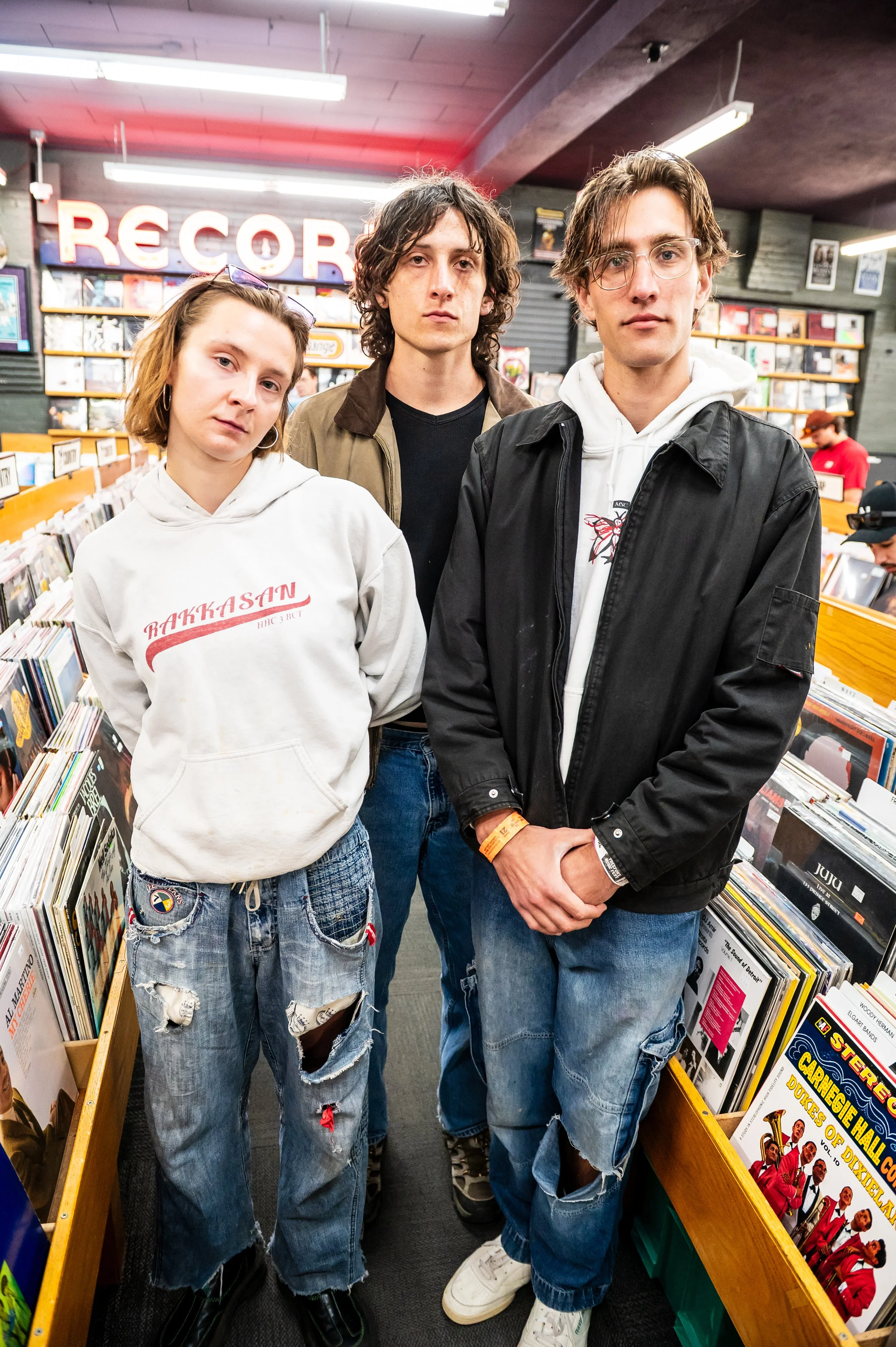
Photo credit: Shannon Johnston (@me_onlylouder).
Drook can be hesitant to pin down their sound in fixed terms. Asked to describe it, Tyler Smith jokes simply: “Active music.” It’s a glib answer, but not an inaccurate one. Their music pulls from indie rock, electronic experimentation and shoegaze textures, but resists settling too comfortably in any of those categories. That elasticity is central to the band’s identity, and perhaps most pronounced on The Pure Joy of Jumping, a debut written over four years that the trio describe as a document of broad-ranging taste and formative influence, shaped as much by relationships and personal upheaval as by restless musical curiosity. “It takes your whole life to write your first record,” one of them offers, invoking the old adage, before laughing at how true it feels. Among the touchstones they cite is Big Thief, while moments of breathless, rhythmic vocal phrasing across Jumping carry a pop elasticity that occasionally recalls early The 1975 — catchy, tumbling melodies that flirt with spoken cadence. As Liza chuckles at one point, “I am literally rapping on Jumping”.
That sprawl was intentional. Rather than establish a singular sonic lane, Jumping embraces contrast — songs lurch between textures, moods and genres, tracing the band’s willingness to follow instinct rather than coherence for coherence’s sake. Yet, as they explain, the material taking shape for a second record feels less scattered and more distilled. “It goes just as many places,” Liza says, “but it feels more tied together.”
What emerges repeatedly in conversation is how profoundly Drook’s live show has fed back into their writing. The performance isn’t simply a translation of recorded material, but an active compositional force. “Honestly, the thing that defines the second album right now is probably our live show,” they say. Touring as a three-piece has sharpened their attention to what feels tactile, dynamic and human in a song. They talk about resisting over-sequencing, favouring sampled elements performed by hand, and chasing a balance where songs remain precise.
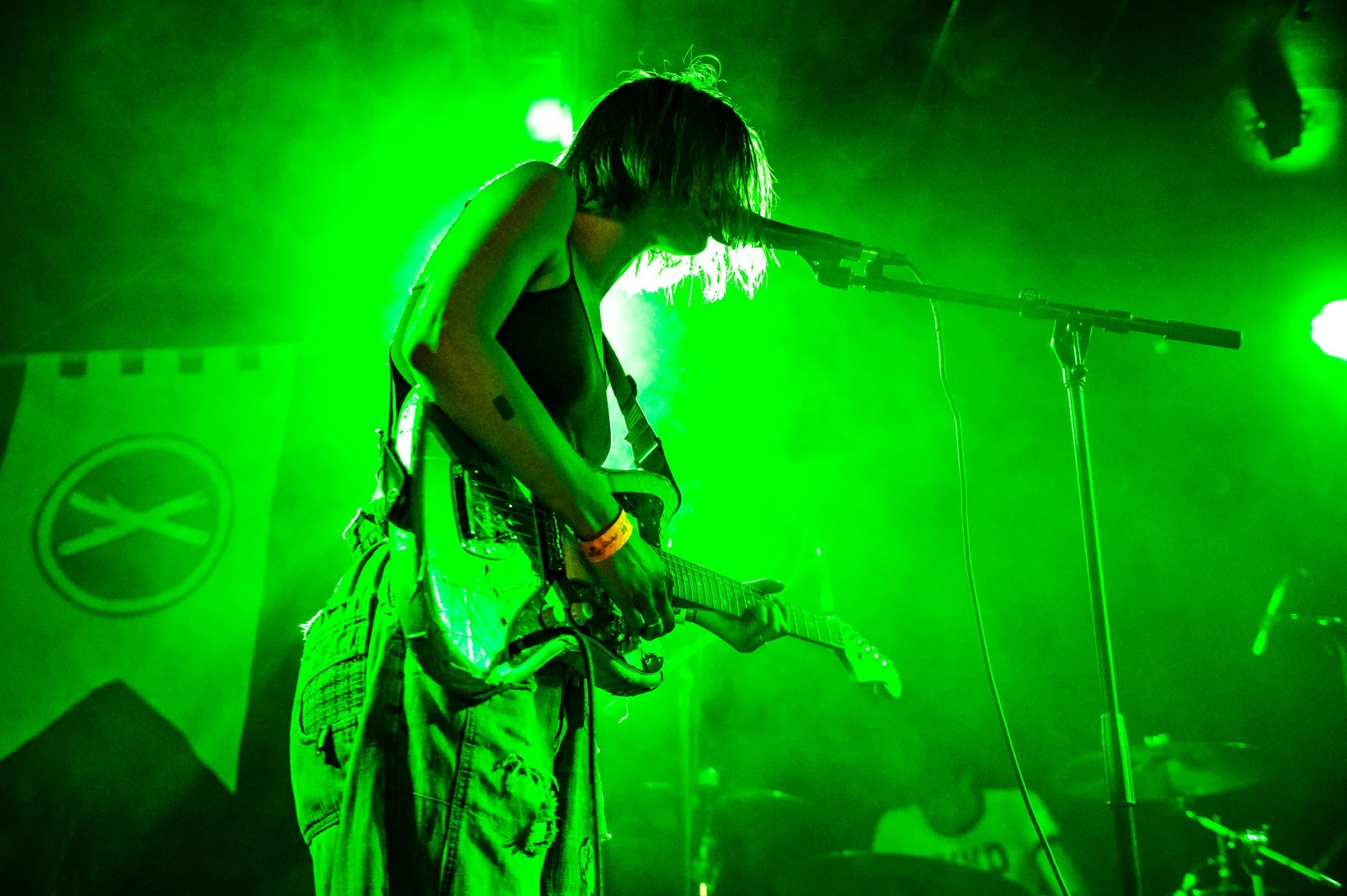
Photo credit: Shannon Johnston (@me_onlylouder).
It also helps explain why seeing Drook live feels so different from hearing them on record.
The band acknowledges that tension themselves. “It’s the battle of our fucking existence to translate these songs live,” Liza says, laughing, before explaining how live arrangements often push the material into new forms, which in turn complicates the recording process. Songs remain porous and nothing is ever entirely fixed.
That philosophy extends beyond the studio. Even the band’s origin story feels shaped by contingency and adaptation. Formed by musicians from Richmond’s famously fertile DIY ecosystem, the trio describe finding one another through mutual bands and shared sensibilities, then later weathering an unwanted name change — from She to Drook — with enough humour to make a shirt memorializing the ordeal. “We made a shirt about having to change our name,” Tyler laughs, describing an Exit She tee printed with every alternate name they considered before reluctantly settling on Drook — a slightly misspelled Russian word for “friend,” chosen almost by accident. Beneath the jokes, though, they speak seriously about Richmond as a city whose small size has fostered unusual resilience, sustaining punk, screamo and experimental communities despite venue losses and shifting infrastructure.
That sense of community also seems to inform the band’s orientation toward touring, where even conversations about future recordings circle back to what happens in rooms. Even offhand anecdotes carry that warmth in our conversation as Matthew recounts a stop in Montréal and laugh about being mistaken for Albertans because, as a stranger told them, they seemed “nice and polite.”
Though the next record is still taking shape — with hopes for new music by year’s end and an album in the spring — the band are already road-testing much of it live. In fact, they admit they’re playing so much unreleased material that some fans have begun asking for songs from Jumping instead. It’s a nice problem to have.
And maybe a telling one. For Drook, songs do not seem to arrive as finished objects so much as provisional forms, altered by performance, audience, light, limitation and repetition. They keep becoming.
Which is perhaps why their pairing with Victoryland feels so intuitive, and why Drook continue to feel exciting in a moment when so much guitar music can seem overdetermined. They still leave room for surprise.
Or, as they put it more simply: movement.