

Inside the Glow of TRON: Ares with Cinematographer Jeff Cronenweth
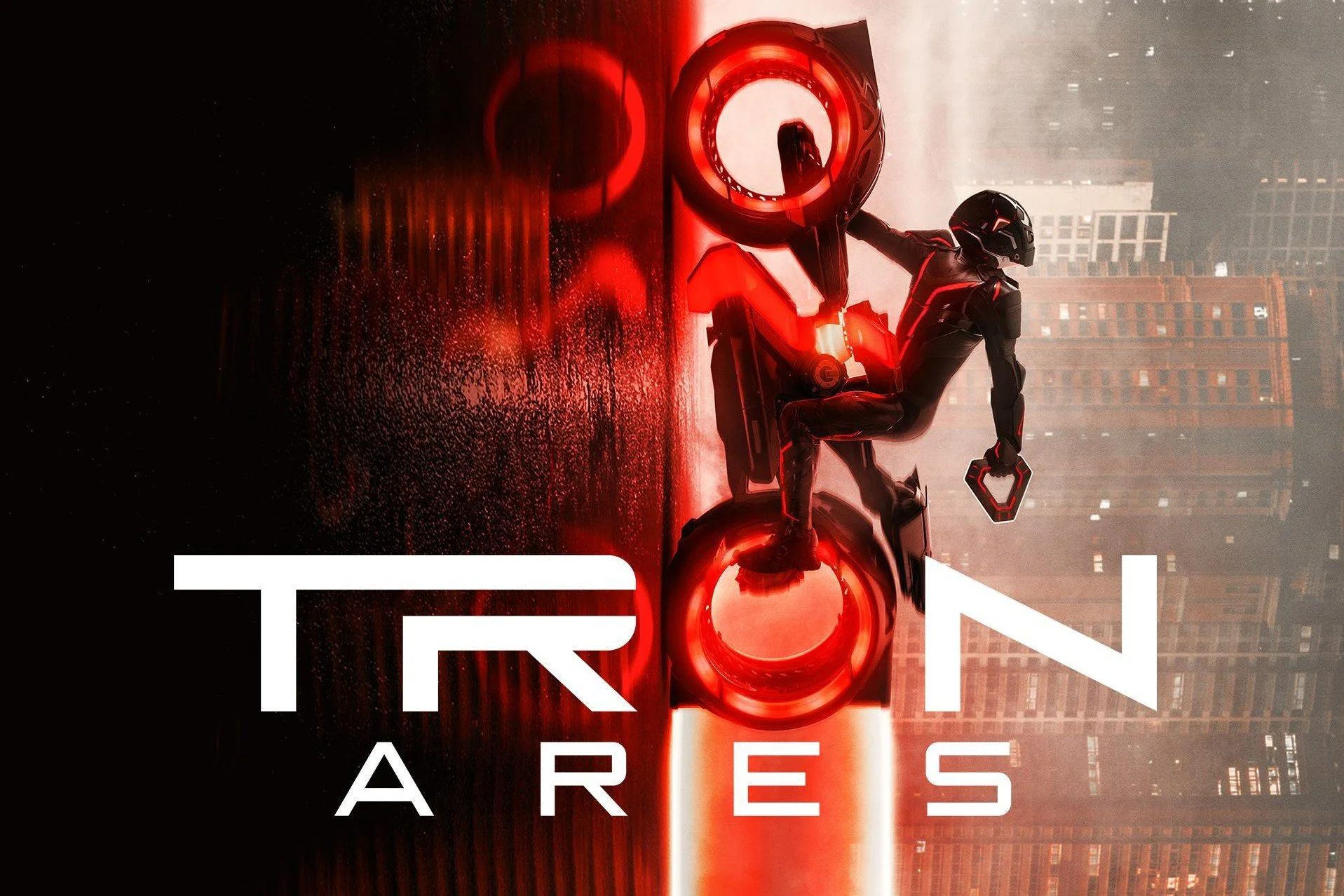
TRON: Ares is the third film of the revolutionary sci-fi franchise TRON and the first since 2010's TRON: Legacy. Fans of the first two films will certainly enjoy TRON: Ares, as it offers some great nostalgia, while also expanding upon the universe in fascinating ways.
The film follows two mega-tech companies, ENCOM and Dillinger Systems, who are in a race to acquire the Permanence Code, which would bring digital entities and constructs into reality. Without the Permanence Code, these digital entities and constructs are only able to last 29 minutes in the real world. ENCOM, led by CEO Eve Kim (played by Greta Lee), wants to use the Permanence Code to make life better for humankind, such as making food and curing diseases. Meanwhile, Dillinger Systems, led by CEO Julian Dillinger (played by Evan Peters), wants to use the Permanence Code to build super weapons and super soldiers. Julian sends a highly sophisticated Program named Ares (played by Jared Leto) from the digital realm to reality, which marks humankind's first encounter with artificial intelligence.
With an exhilaratingly intoxicating score by Nine Inch Nails (one of the year's best scores), breathtakingly mesmerizing neon-drenched cinematography from Jeff Cronenweth, immersive world-building, and dreamy visual effects, TRON: Ares is a fantastic addition to the TRON series. Recently, REVERIE chatted with Cronenweth about his work in TRON: Ares.
TRON: Ares marks the first time Cronenweth has done a sci-fi film. Previously, he was a bit hesitant to do that genre. “I always feel like something needs to have a human connection, some kind of humanity in it, and so many sci-fi films are absent of that,” he says. His wife was the one who actually influenced him to take the job. "She was like, 'You have to get out of your comfort zone. You have to do something new. You have to go into a genre that keeps you progressive, excited, and challenges you.’”
Cronenweth is a fan of the TRON franchise, highlighting how the previous two films were incredibly groundbreaking. “Each time they pushed the boundaries of technology,” he says. “Back in ‘82, you think about that film, and some people might say it looks dated, but what people forget is that it was one of the first CGI movies. They had to figure out how to create a language so that programmers and computers could communicate with filmmakers and understand each other, allowing them to accomplish their goals. There was a whole lot of breaking down walls and introducing new technology, including shooting in black and white, and hand-painting the glowing effects. That was an enormously progressive film. When Legacy came, they embraced a lot of technology that hadn’t been used yet. They shot with 3D camera rigs, used a lot of fluorescent tubes built into the sets, and had a lot of really beautiful CG.”
What excited Cronenweth about TRON: Ares was that it featured multiple Grids and that the real world played a more significant role in the film. “We got the Dillinger Grid, the ENCOM Grid, Flynn's old Grid… and we got the real world, which no one really has had the chance to do,” he comments. “Of course, there are bits of the real world in the first one and the second one, but never have the programs got out into the real world and had to deal with the grit and reality of the human experience.”
Since the film involves multiple Grids and the real world, it was important to differentiate between the two. “The Grids are all machine languages – they’re ones and zeroes,” Cronenweth comments. “You have to visualize that; the lines of the sets, the tonality of the light, and the reds broken up by the whites. The whites were the constant because I feel like from day one, if everything was one colour, you kind of lose perspective on finding that colour because you're so saturated with it. Just as a TV has a black border where you can see the difference between black and white, I felt that you needed a colour to balance it out. We put white accent marks in all the sets.”
Additionally, the camera was used in a different way to distinguish between the Grids and the real world. “We used the motion control rig sometimes to have more precise and determined camera movements and perspectives when it was programs like Ares or Athena," Cronenweth states. "That helped define the difference between the Grid worlds and the reality of the real world. The camera was more fluid in the real world and was not as structured as it was in the Grids.”
Cronenweth shares that working on TRON: Ares was vastly different from any other film he had done before. This is due to the extensive use of technology in the film and the multiple departments that overlapped. “Almost every aspect of every shot used all of us all the time,” he explains. “The sets are all built, but they all have LED light strips and panels, and visual effects extend some of those sets and have cities that don’t exist beyond the windows of those sets. Very early on, we all have to know what we’re doing, see it, and understand what our contributions are going to be. There was a huge collaboration, more so than most of the time. Everything had to be correlated together with the production design, with my lighting rigs, with the visual effects, and so on.”
The light suits, in particular, involved lots of departments working closely together. “They had like over 120 channels in each suit, and each strip could change colours on its own, weirdly,” Cronenweth explains. “You'd have to constantly adjust it, and the brightness would change. Sometimes you’re inside, outside, in a building, in a room, at night, or during the day, all those things [made a difference]. That’s wardrobe, costume design, production design, and props with the discs, the weapons, and helmets. [Then you have] visual effects with the shields and the reflections.”
One of Cronenweth’s favourite parts of TRON: Ares was Flynn’s Grid, which was a homage to the original TRON. For Flynn’s Grid, they added a lot of grain, desaturated it, and used the colour blue. These things give Flynn's Grid a ‘retro feel.’ “The ramps, the journey, and the transfer beam that existed in the middle were all things that we played around with, knowing later that we’d build the structures around them to light that,” he says. “Having that interactive light and the moments that [Ares and Flynn] share together were super fun.”
One of the most challenging aspects to shoot was the Light Cycle chases, as the cycles were very fast and covered large areas of the city at night. “You had to keep it all looking similar even though you are on different streets with different practicals and different buildings,” Cronenweth says. “We had to keep it kind of congruent so it felt like it was a literal chase scene in the same city.”
Another reason the Light Cycle chase scenes proved so challenging was that multiple different bikes were used to film them. “We had Light Cycles that were scaled and built that were photographable and were the real ones, but they were so complicated they couldn’t drive them, of course,” Cronenweth shares. “They got towed on short, little three-inch above the ground systems, and those proved to be the best because the actors could actually ride them. They could go fairly fast, you get all the interactive light, and it's just an honest performance. Then, we had proxy bikes, where we had to take a motorcycle frame and elongate it so that it filled the same kind of space as the Light Cycles, and put lights on it that resembled the lights on the Light Cycles. We had those weave in and out of traffic, and they would later get covered in CG if needed, or just use them as light sources to reflect what would be happening if the Light Cycles were there. Then, of course, we did processed stuff on stage against blue screens and all those things. It kind of took every technical avenue we had to get those scenes to fit seamlessly together.”
TRON: Ares allowed Cronenweth to work alongside Trent Reznor and Atticus Ross (Nine Inch Nails) again. Cronenweth worked on the music video for Nine Inch Nails' "The Perfect Drug" before Ross was part of the band. Cronenweth and his brother Tim directed a commercial for the video game Batman: Arkham Knight in which Reznor served as a musical consultant, and Nine Inch Nails' "The Wretched" is featured in the commercial. Reznor and Ross also contributed the score to the David Fincher movies, The Social Network, Gone Girl, and The Girl With The Dragon Tattoo, all of which Cronenweth was the cinematographer for. Cronenweth has become close friends with Reznor and Ross. “When [Trent and Atticus] came to visit the set, they came right over and gave me a hug,” he smiles.
Cronenweth shares that once Disney signed Nine Inch Nails to do the score for TRON: Ares, it was going to be more aggressive, darker, and grittier than previous installments in the franchise. “We wanted to differentiate ourselves from Legacy and wanted an opportunity to get into the real world, and the real world is going to have to be very different from the Grids. Once they signed Trent and Atticus – Nine Inch Nails, it was like ‘It's got to be gritty. It's got to be dark. It's got to be these things.’ The big difference between a Trent and Atticus score compared to a Nine Inch Nails score is that you just knew there was going to be more reverb, more bass, and that you would really feel the music.”
Overall, Cronenweth is incredibly proud of how TRON: Ares turned out. “It was a really rewarding experience,” he states. “Joachim [Rønning] is a very clever director who really had a story in his mind. The shots we came up with, along with the application of some of the camera moves, were really fun. It was a lot of work, a lot of nights, a lot of challenges, and a lot of elements, but I had a great team.”