

Designing Dystopia: Production Designer Nicolas Lepage on Building the World of The Long Walk
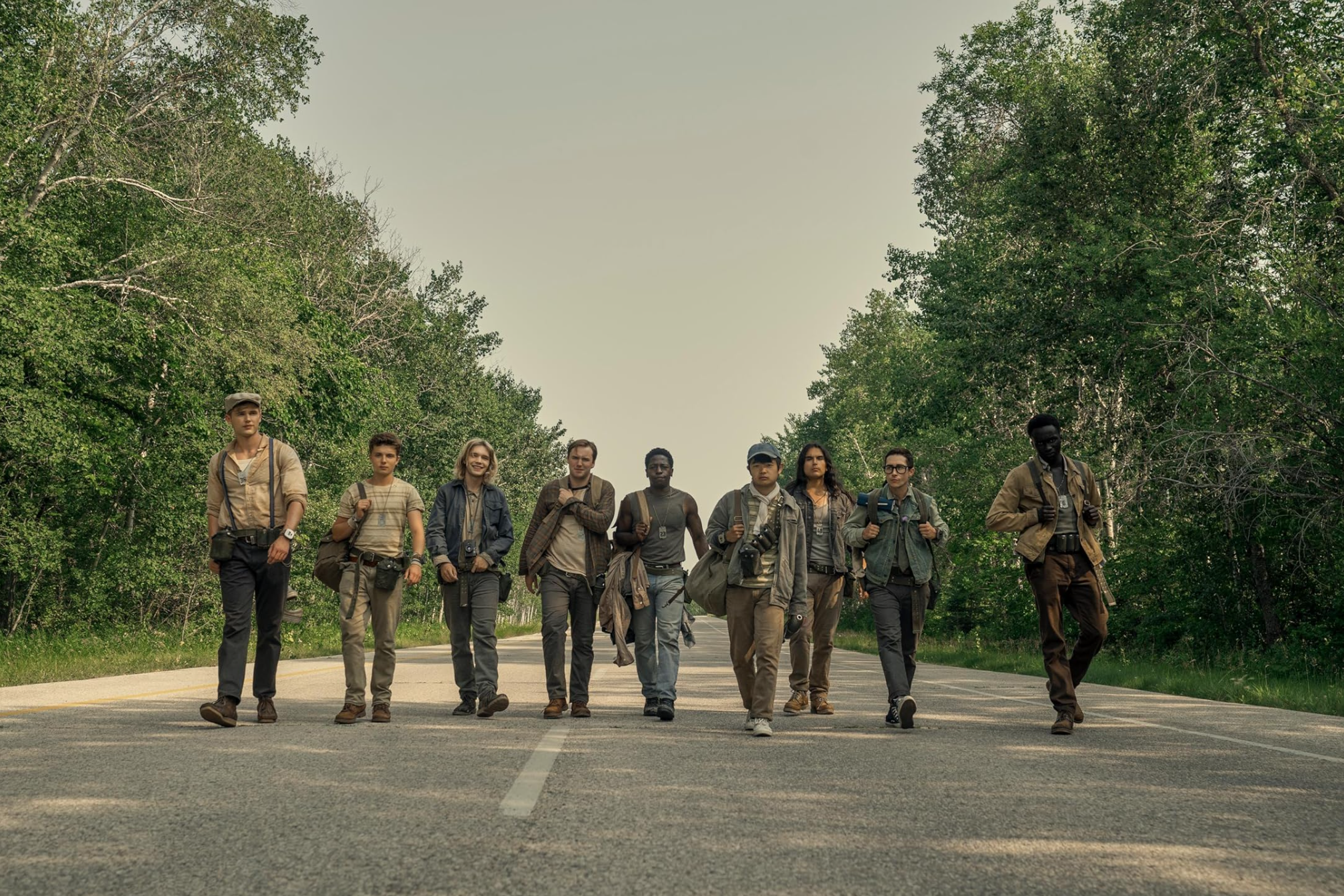
The Long Walk. Photo by Murray Close/Lionsgate.
Almost every year, there are multiple adaptations of works by Stephen King. Some of them are excellent, like The Shawshank Redemption, Doctor Sleep, and The Green Mile. Others like The Dark Tower, Firestarter (2022), and Cell totally miss the mark. His 1979 novel, The Long Walk, is the latest to be adapted into a film and is one of the best. The film, directed by Francis Lawrence and from a screenplay by JT Mollner, is set in a dystopian alternate America ruled by a totalitarian regime. It follows a group of 50 teenage boys competing in "The Long Walk," a gruelling and deadly contest where they must maintain a minimum pace or will be killed by a member of the military escort. Featuring an emotionally powerful script, masterful performances by David Jonsson and Cooper Hoffman, fantastic world-building, and a stunning score, The Long Walk is one Stephen King movie adaptation you definitely need to watch.
Recently, REVERIE chatted with production designer Nicolas Lepage about his experience working on The Long Walk.
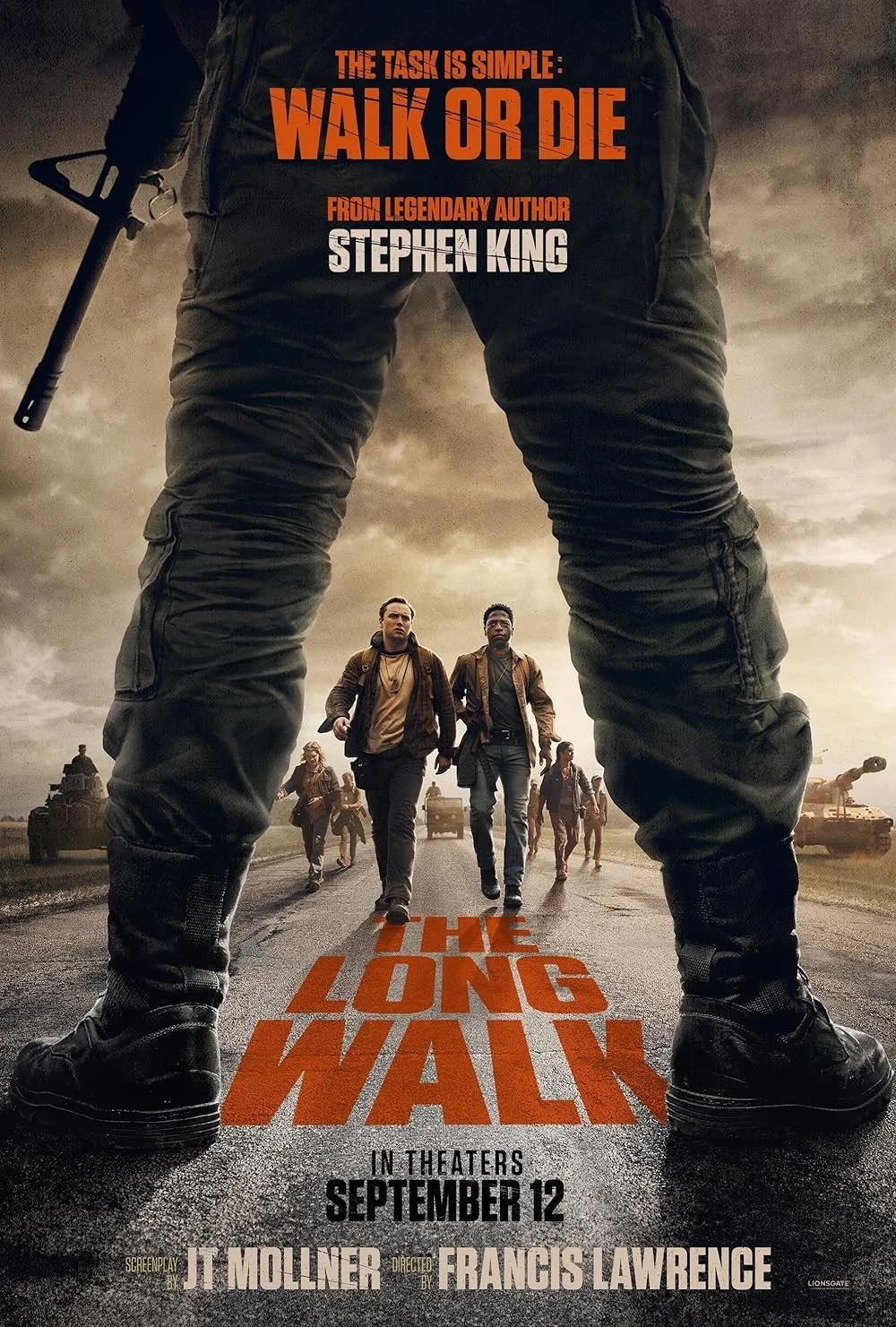
The Long Walk theatrical poster.
What exactly led to Lepage joining The Long Walk as the production designer? “One it was offered, which is great, and two, how can you go wrong, when you’ve got Francis Lawrence, you’ve got Stephen King, you’ve got somebody whose movie I had just seen the week prior to getting the call, which is Strange Darling, from JT Mollner, plus you’ve got Roy Lee [producer],” he says. “You’re stacking up the options in the right directions.”
Lepage shares that staying true to King’s novel, while also updating it with a new and unique vision, was an important thing to do. “I like the [Stephen King books] where you get attached to the characters more than the gore, the monsters, or the scariness of it, and this one tapped into that appreciation for the humanity and how he develops characters,” he says. “Stephen King is a wonderful initiation into the world, and yes, we are trying to depict that story, but that story has evolved in a way that what you see on screen is not necessarily on the page in the book. That translation that JT and Francis brought to the story, that new iteration to the story is just totally appealing.”
As the production designer, Lepage’s first point of contact is with Lawrence and Mollner, as that is where the story starts. From there, he works closely with Lawrence and cinematographer Jo Willems, holding several meetings to discuss various aspects before filming begins. “My job is to collaborate with the director as much as I can to get as much information as I can in the beginning,” explains Lepage. “Once we start seeing it in our heads, my job by the time Francis gets to the set is to have it all laid out because you don’t want to lose time. You want to make the most out of shooting.”
Laying everything out involves working closely with the entire crew, including collaborating with the art director Kathy McCoy, the art department, and set decorator Scott Rossell. “We basically sit in a room, talk about it, and come up with crazy ideas,” comments Lepage. “What we do is build worlds… A lot of times, it’s just new idea after new idea and new possibility after new possibility. I like the position of being able to be in those conversations and help stir them up.” Another example of close collaboration with the entire crew is working on the military vehicles, which Lepage notes “required everyone to chime in” from grips, set dressers, the stunt team, illustrators, and more. A lot of teamwork went into making those vehicles appear and function the way they do.
Although The Long Walk might look like it takes place in the ’70s, Lepage mentions that it is not a period piece or meant to be based on one specific era. “Francis wanted it to feel outside of time; it could happen today, and it could happen tomorrow,” he comments. “All the comments that I read, I have a smile every time like ‘Oh, this is early ’80s, or this is totally ’70s, or this is late ’60s,’ because everybody is right, but nobody is right.” Lepage shares that Lawrence referenced Havana, Cuba, as inspiration for the film to not be a period piece. “Havana, there are all these beautiful new buildings, and still amongst them are these old cars, and it's not because it is a period city; it’s a modern city, but these people have had nothing for the last many, many years and they have had to make due with what they had so that was the goal of merging different eras. The military vehicles are Canadian military vehicles from the ’50s, which we thought was hyper comical because if the States lost [the war], well, maybe they needed Canadian help to survive,” comments Lepage. “That was one thing, ‘cause the military was supposed to be a thing of the past. Somewhere in the script, it says this is the 19th iteration of the walk. So, that war must have happened at least 19 or 20 or more years before. For the ’60s to identify that time frame, we went for the cars. They are just absolutely gorgeous, but [we picked them] with the mindset of the Cuba reality, in that it’s not that we wanted them for the graphic appearance that they had. Yeah, they are sexy as hell, but the purpose was to blur the lines between the different time frames.”
The Long Walk was filmed chronologically. This was an idea Lawrence had right from the beginning. “Francis wanted to see the effects of fatigue, stress, and the lack of sleep on these guys,” explains Lepage. “These guys were walking a hell of a lot. If they’re working 15 miles a day, 5 days a week, that’s 75 miles a week. You’re bound to get tired by week one. You came back in week two with blisters and calluses. Francis wanted to see them age with the walk. We were looking at pictures of soldiers leaving for Vietnam for reference. On one side, it has the picture of the kid when they were young and left for war. On the other side, it has a picture of the same kid, who came back three years later, and he looks twenty years older. We knew we couldn’t get twenty years of aging in there, but that wasn’t the point. Francis really wanted the boys in real life to feel what the characters are going through in the book.”
The Long Walk was put together in a very specific way and required certain criteria to stress the technicality and physicality of the film. “A big challenge for us was having to pick the locations to start off with, like how do you go from one mood or one environment to the other,” comments Lepage. “Some of these locations are pretty easy to find because we’re looking for very generic woods to get from point A to point B. They don’t need to be specific. But because we are shooting chronologically, we have to find those pieces that match it, and it’s not just the actors walking, it’s the entire crew… Every set is a kilometre long of continuous visual occupation. What you see on screen it lasts that long. Another challenge for us was finding the locations that would be beautiful looking, left, right, up, down, it doesn’t matter where you point the camera. The goal was to find places that would layer on top of the emotional beat of the characters or just act as their own independent thing in the background and just drive a different emotion… [We tried to] find locations where you can envision yourself putting things together that will make a difference and give it a little flavour and bring back a little dystopia within that realm.”
The scene where the title card comes in is the location that took the longest to find, driving plenty of roads to find the perfect spot. The location is one of Lepage’s favourite. “Visually, it’s stunning; it’s just this big, massive yellow field with one singular tree in the middle,” states Lepage. “We really wanted something beautiful, as we just saw the most horrible way of dying, which is getting shot in the head. To contrast it with this sort of placid look, of the major giving his little speech, and he starts getting aggravating because at that point the major is not on your side, he’s not a good guy; finding that kind of contrast was what we kept looking for… We spent months looking for sunflower fields, trying to spot sunflower fields, and you have to understand, I land there [in Manitoba] and it's mid-May. We’re going to be shooting this end of July. Mid-May, they’re hardly planting, so you don’t know what field is what. You can't figure out what the environment is going to be because you haven’t seen it. As the seasons evolved, I kept going back to locations like ‘Ok, I picked it with no leaves. What does it look like with leaves?’”
Finding the house for the Garraty flashback scene is another standout for Lepage. “We picked that location because of what was happening right outside the location, with the juxtaposition of having a worker's house and right in front of it is this big industrial building.” “That is the connection we wanted to make. People are back to working in manufacturing jobs. His dad works just across the street, and then he comes home; that’s their entire universe. They don’t go anywhere. No holidays in Palm Springs or whatever. That’s their life.”
Although The Long Walk is incredibly dark, grim, and harrowing, it also manages to be hopeful, somewhat optimistic, and full of heart. Many of the boys participating in the walk form close friendships and look out for one another, conveying a very positive tone on an otherwise bleak film. “We were leaning heavily on the actors to actually bring to the table that sort of character binding and bonding that they have,” states Lepage. “When it comes to figuring out what actually needs to be behind them… It is just trying to find a secondary narrative to support what is there or to contrast what is there, and by there, I mean what's on page, what's on script, what the guys are going to be talking about… After that, it is just trying to get out there and see how it fits onto the camera. Three miles an hour is quick when you walk it, but when you see it on the screen, it is not actually that fast, so we needed these spaces to stretch and have enough emotion in the beginning, the middle, and the end to tie into those sequences.”
Overall, Lepage had a wonderful time working on The Long Walk. “I would do it over again in a heartbeat,” he smiles. “It was a beautiful experience. Francis is one of those human beings behind a camera; he is not just a director. That entire team are just good people.”