

Celebrating the Legacy of Canadian Cult-Classic My Bloody Valentine
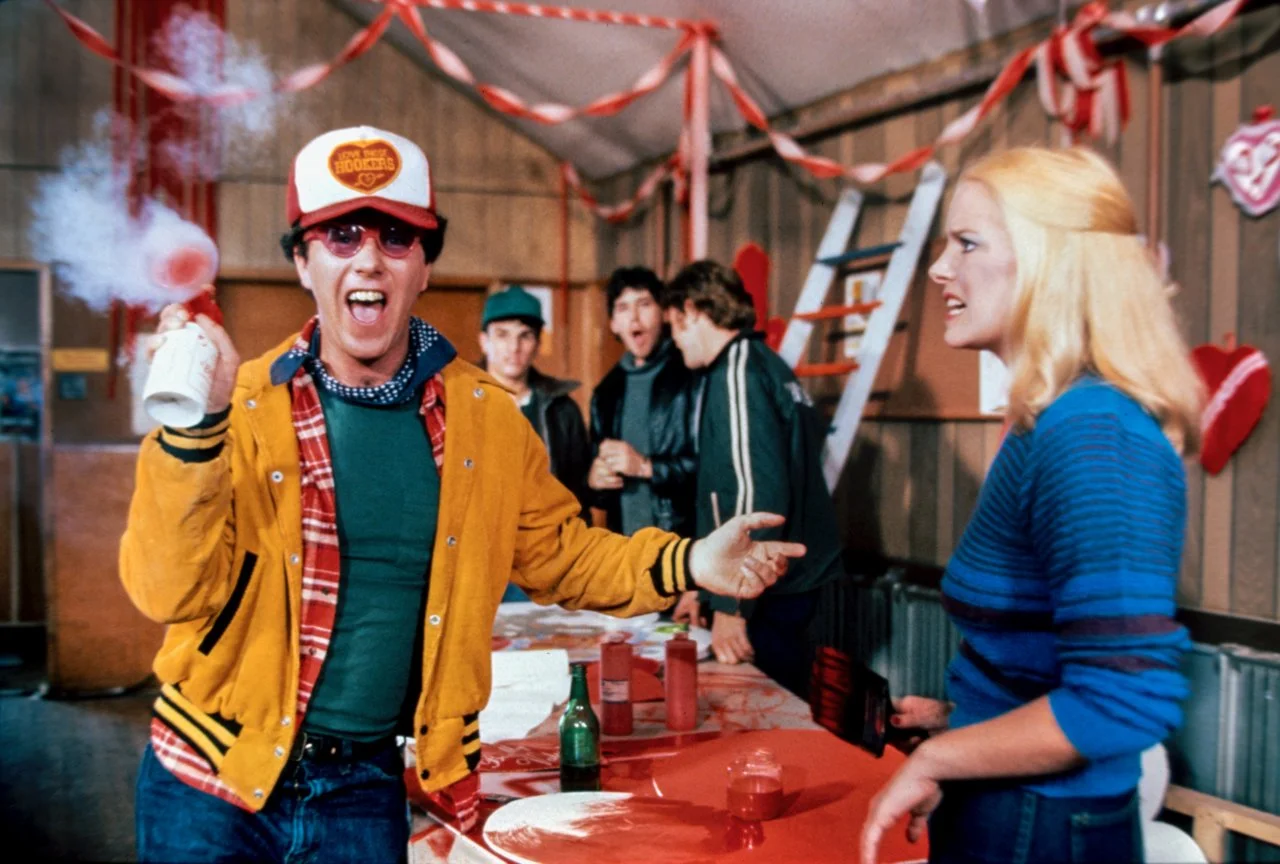
Still from My Bloody Valentine. Photo courtesy of the Calgary Underground Film Festival.
My Bloody Valentine (1981) is one of the most iconic Canadian horror movies of all time, chock-full of blood, gore, kitschy set design, and an actual storyline that director George Mihalka says still resonates with modern audiences. In the late 1970’s and all through the 1980’s there was a slasher craze, a boom caused by films like Halloween (1978) and Friday the 13th (1980), and My Bloody Valentine has solidified its place within the genre, still holding onto its relevancy alongside the other greats that came from the slasher era. Plus, who doesn’t love a scary movie that revolves around the holiday of love? In my mind, My Bloody Valentine is the only Valentine's Day horror movie that matters. You’ve got Black Christmas for the snowy Christmas season, and My Bloody Valentine to get your heart beating for the international day of love.
The film is draped in red, the colour of passion and death, a signifier of what will befall the quaint mining town of Valentines Bluff, Nova Scotia. One of the best parts about this film is how quintessentially Canadian it is, you’ve got the Canadian tuxedo, plaid, and the unmistakable accent that pierces through every line the same way the murderous miner’s pickaxe pierces through the skin of the unaware teens who are fatefully partying on Valentines Day, despite warnings from their elders. My Bloody Valentine isn’t just a hollow mass produced slasher film, what sticks out is the storyline, with a love triangle that is more complex than death, and a battle between those who clearly remember the fateful, murderous Valentines Day 20 years ago and those who don’t — the complicated dynamics breed tension that spreads up from the mines like methane, and have dire consequences for Valentines Bluff.
Every small town has its tragedies and secrets, the reopening of old wounds proves to be fatal for the small Nova Scotian coastal community. The murderous miner, Harry Warden has returned to exact his revenge on those who don’t care to heed his warnings of Valentine's boxes that contain human hearts and ominous notes like “Beware the 14th if you value your life.”
Filmed on location in Sydney Mines, Nova Scotia with a full cast of Canadian actors, My Bloody Valentine is a testament to the power of Canadian cinema. Working on location had its downsides though, as they filmed a big chunk of the movie in an abandoned mine in the small town, which meant working long days in low light 2,700 feet underground.
The original theatrical cut of My Bloody Valentine spared audiences from what, at the time, was viewed as intense gore by the Motion Picture Association, formerly the Motion Picture Association of America (MPAA), with Mihalka saying that the film had been “destroyed by the MPAA” and its merciless cuts. Yet there is hope, because now, 45 years later you can see the director's cut of My Bloody Valentine in all its gore and glory — featuring a very special Q&A with the director himself after the film.
A very special screening put together by the Calgary Underground Film Festival, My Bloody Valentine was made to be seen on the big screen, with an even bigger audience, and a ginormous bag of buttery popcorn. As John Dodd, a film critic for the Edmonton Journal, wrote upon My Bloody Valentine’s release “all this perverted gore is brought to you thanks to the financial help of the Canadian Film Development Corp,” so come on down and support some truly Canadian cinema, there are still tickets available, snag them while you still can!