

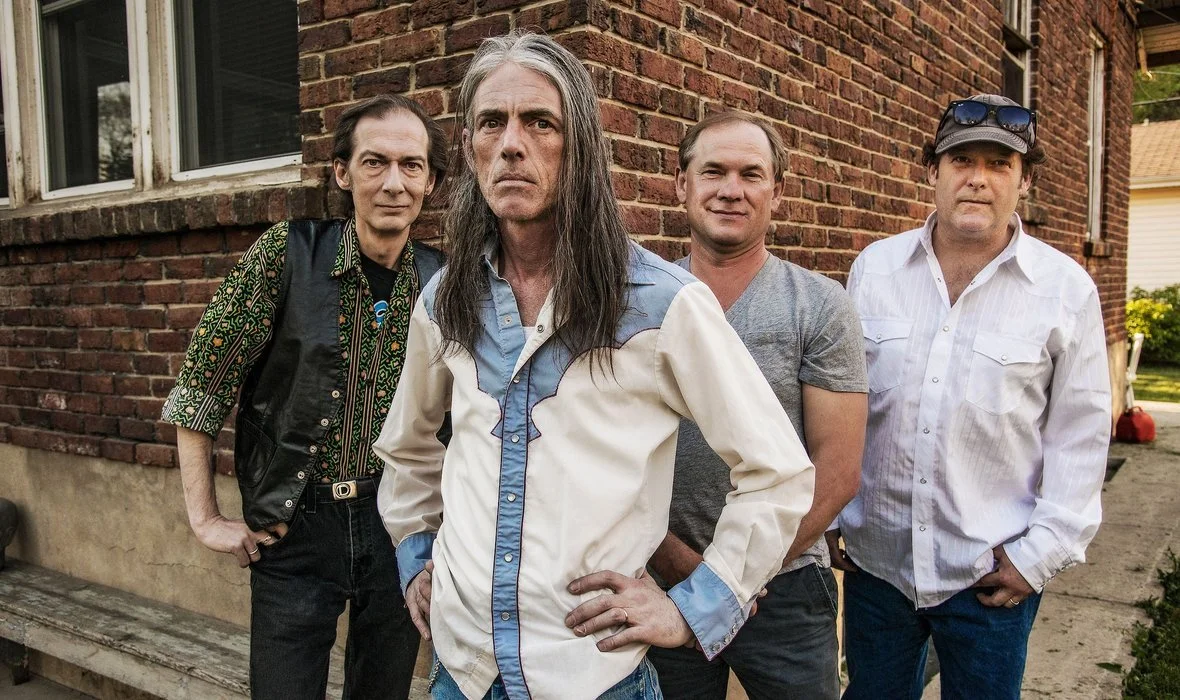
Jr. Gone Wild. Photo courtesy of Calgary Underground Film Festival.
Despite having “more miles than money,” Jr. Gone Wild’s impact on the Canadian music scene is truly one-of-a-kind. A country-punk rock band from Edmonton, Alberta, the band carved their way with noteworthy lyricism and distinct style, all while dealing with financial hardship and interpersonal conflicts leading to frequent lineup changes and their eventual disbandment in 1995. Having since reunited in 2013, theirs is a story of broken-down tour vans and growing pains, met with the refusal to stop making art you believe in; and it is far from a simple one to tell. NTT Films and director Eden Munro chronicles this story for the first time in More Miles Than Money: The Story of Jr. Gone Wild, which will be screening as part of this year’s CUFF.Docs Documentary Film Festival. Days after a very successful hometown premiere in Edmonton, we spoke with Munro about the decade-long process that became the film, and a lifetime of loving the music.
REVERIE: How long have you been following Jr. Gone Wild’s music?
Eden Munro: I was always aware of Jr. Gone Wild. Their second album was an independent cassette that they had released, and I remember finding that at the Edmonton Public Library. I saw them perform a few times over the years in various places in Edmonton, and then they broke up, and I moved away. When I came back I started working for Vue Weekly, and Mike Siek [later the co-founder of NTT Films] was the production manager. We started out together filming stuff there. That was actually where this whole film began, without us knowing that it had begun.
REVERIE: You eventually co-founded NTT Films with Mike Siek, but without knowing that this film had begun, how did it progress from there?
Munro: Well, Jr. Gone Wild reunited in 2013, and at that point Mike and I thought that somewhere in the future there could be a documentary about the Edmonton music scene. So if there was anything going on that was important in the scene, we decided we should film it. [Jr. Gone Wild] was a massive band here, very, very important to the Edmonton scene, Alberta scene, and the Canada scene. So we talked to Mike McDonald [of Jr. Gone Wild] and went to go film this reunion. When we got there, there was another camera crew filming. It was another guy who was going to make a documentary about the reunion. We filmed it. He filmed it. We filed our footage away and didn't think about it again.
We ended up making a series called Dead Venues, about six different music venues that were very important to the Edmonton scene, and had gone out of business. We got in touch and interviewed Mike McDonald for that. Tons of great stories. He's an incredible songwriter, but he's also a really great storyteller, just as a person. We had a lot of stuff where we went, this is great, it's just too bad that doesn't fit in this one. So again, we filed it away.
REVERIE: After all this footage was filed away, was there a moment you both knew you had a film on your hands?
Munro: After [Mike Siek and I] had both left Vue Weekly, Mike McDonald posted something online about Jr. going back to the studio for the first time in a couple decades. Again we thought, oh, we should film that. So we talked to Mike and asked if we could come film in the studio. He said sure, we're playing a gig this date, why don't you pick us up after, and then we all drive to Nanton together. So we went and filmed the show, and then we all jumped in the car. We spent the weekend thinking, well, I bet there's a short film here. By the end of the weekend, we knew this might be something more. We talked to Mike again, and he said, let's do it, but make sure you, you don't make it a puff piece. Make it real. Talk to the people who don't like me. Let's make a real thing, you're in charge of it.
REVERIE: The story of the band is quite tumultuous at times. There were interviews in the film at least a dozen band members that had come and gone. Alongside this, there was tons of posters, newspaper clippings, and archival video helping tell the story. How did you go about crafting a narrative from those bits and pieces?
Munro: Well we first sat down with Mike and Dove, who are kind of the core of the band. They worked out a timeline of trying to remember everything that happened to them. They also brought us boxes of print material and archival video, including some home videos they had filmed while recording albums and while on tour, which they had never watched. It was just old little mini tapes that we had to transfer over to make this.
At that point, we thought we'd just talk to the four guys currently in the band. We didn't think a lot of the other band members would talk, because Mike had said a lot of people left on not-so-great terms. But we started sending out requests, and to our surprise, almost everyone said yes. Even some who hadn't talked about the band in many, many years. So once we started we said, now that all these people want to talk we’ve really got to ask everyone.
REVERIE: What were the reactions like from those former band members when you reached out? Was there any hesitancy towards talking to you, or were they generally excited about the project?
Munro: There was a lot of enthusiasm. I think there were a couple that were a little more hesitant, but Mike McDonald reached out to them, and he was the one who said to them, you know, tell your truth. I've got mine, you've got yours, just be real with it. Once everyone heard that, everyone was very forthcoming. With all the good things and the difficult things they remember from being in the band.
REVERIE: I really admire how well the film captures all those different perspectives. Especially during the start of the film, where you put in an audio montage from these interviews, where everyone says saying some version of the phrase “I don’t remember.”
Munro: We were laughing about this the other day during the Q and A at the premiere. I was constantly sending questions to Mike and Dove, saying things like “you said this happened here. But I found a newspaper article that says that there was a whole other tour in there that got left out.”
REVERIE: With so many stories from past band members, sometimes you’d have memories that would contradict each other. How did you choose what to represent and what not, especially with how much you’d filmed?
Munro: We had so much interview footage. I think my stack of transcriptions and scripts is close to two feet high. We talked to some people who didn't make it in to the film, but everything informed the next step. Being from a journalism background, it was really a joy to do longer interviews and come back and talk to people more times, it was just a very, very hard process of of cutting down the film. When we got a 6 hour cut and it was easy to make it a 4 hour cut, but once I hit around two and a half hours, it got harder. I was literally going, how can I take five seconds out? How can I take four frames out? Once you're sitting close to 90 minutes, you start getting a little harsher and have to take out some great stories, and some other perspectives.
That's why we put in that opening montage of people saying “I don't remember.” Suzanne Duperon, the band’s friend and tour manager, put it really well when she said, “well this is how I remember it, and this is how that person remembers it, but there’s got to be a little bit of truth to everybody’s stories.” It was important to set that up in the film, especially because there were viewpoints that didn't make it in. When I was starting to chop things out, I also made an oral history companion book. It's sixty pages of the things that didn't make it in. There’s some great stories there that just didn't fit in the movie.
REVERIE: What a beautiful thing to have alongside the film. I love the idea of having this oral history written out to really honour people's stories. Are you selling the books anywhere?
Munro: I made a hundred of them and sold out and the premiere in Edmonton. I ordered another one-hundred that will be for sale on NTTfilms.com and I’ll probably have a few with me in Calgary.
REVERIE: Thinking back to when you first filmed Jr. Gone Wild’s reunion, how long of a process was it to get here?
Munro: The filming of this reunion was in 2013. By early 2015 we went into the studio with them, and I believe early 2016 is when we did our first official interview for the film. So just over 10 years, but also kind of a lifetime, going back to finding that cassette in the public library. I mean, I loved their albums. That’s when I realized that this story is Edmonton. You know? You can do this stuff, and make something here.
REVERIE: As a fellow Albertan, I tend to feel really passionate about telling local stories, especially in the arts and other avenues that people don't necessarily associate with the province. I thought this documentary really captured a bit of that spirit. Is there anything you hope audiences might take away most from this cultural document?
Munro: The story is is so important, I mean, they were an important band, to the point that in Bruce McDonald's mockumentary Hard Core Logo, they show a map going into Edmonton and call it Mike McDonald highway. We also interviewed Ron Hawkins from Lowest of the Low for the film. It was one of those interviews that didn't make it in, but he talked about how discovering Jr. Gone Wild and Mike's songwriting completely changed him. His words were “Lowest of Low would not exist without Mike McDonald and Jr. Gone Wild.” Mike is an important songwriter, but the thing that kept me going while telling this story was the band’s refusal to stop trying to make art. You’ve got to do what you’ve got to do to get it out there, and even if it's not going out very far, you got to still make it. That’s the heart of the film.