

Modern Whore: Inside Nicole Bazuin And Andrea Werhun’s Decade of Collaboration
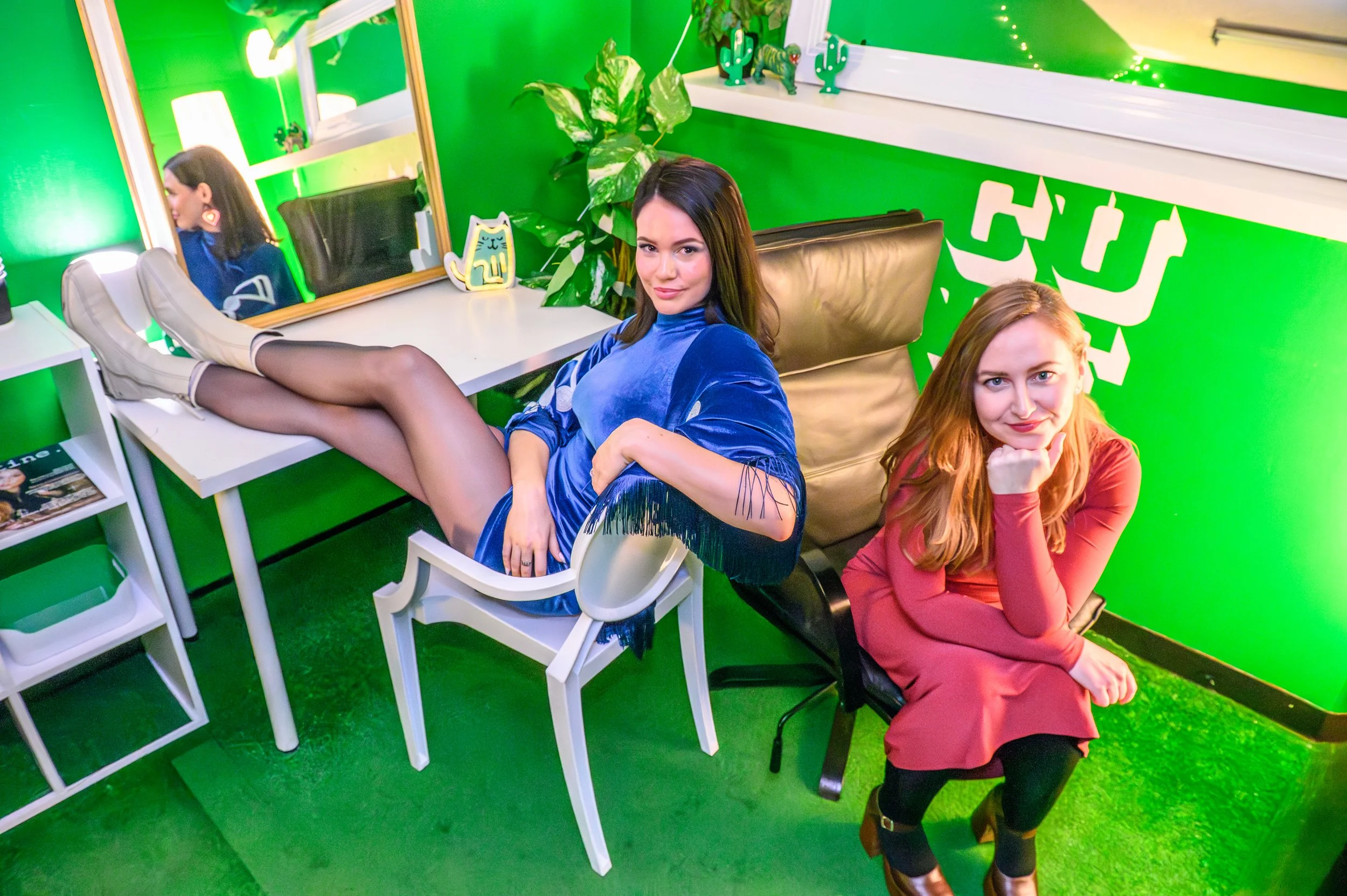
Photo credit: Shannon Johnston (@me_onlylouder)
Collaborators Nicole Bazuin and Andrea Werhun met on the set of a music video. More than a decade ago now, Bazuin was leading a ’60s-inspired shoot for Toronto band Broken Bricks, and was in desperate need of a go-go dancer. While Werhun arrived ready for the camera, the second dancer never showed, leading to Bazuin joining Werhun and dancing alongside her.
“That was our meet-cute,” Bazuin recalls. “We go-go danced our butts off in this passion project music video. And I think it set the tone for our relationship.”
Their relationship has spanned music videos, short films and books, and has now arrived at their latest release, Modern Whore, a hybrid documentary feature that had its Alberta premier at CUFF.Docs Documentary Film Festival in 2025. The film reimagines how sex work is depicted on screen using Werhun’s lived experience as a writer, performer, and sex worker. Directed by Bazuin and executive produced by Sean Baker (Anora, The Florida Project), the film blends documentary interviews and highly-stylized visual storytelling to produce something rare: a fifi lm about sex work that is completely controlled by the subject herself.
The film centres on Werhun’s memoir Modern Whore, which began as a self-published art book combining her writing with Bazuin’s photography, funded through Kickstarter. When the book sold out, the duo expanded and republished the book with Penguin Random House, and it has now evolved into a broader creative project spanning formats: “the Modern Whore literary and cinematic universe,” Bazuin jokes.
The same title has stuck with the project throughout their shift in formats and Werhun shares she’s grown attached to the title, “I think there’s a kind of delight in forcing people to say the word whore, to have that word in their mouth, to have it in their head, and for them to wrestle with that term because it is so loaded… I think what we’re trying to do is push people to think about why they feel that way, how they’ve used the word before, and why someone like me might want to reclaim that word and identify by it.”
The duo’s shared literary and cinematic universe is shaped by a deep sense of trust. Bazuin describes their partnership not as director and muse, but as a reciprocal creative relationship. “I don’t see it as this classic one-sided muse scenario,” she says. “We’re collaborators. I think that’s what makes it special is there’s a friendship, collaboration, and complimentary nature to what we do.”
Their friendship reads through the screen, though Bazuin remains behind the camera now. Visually, Modern Whore is striking, each set is drenched in saturated colours and every outfit leans into high-femme stylization. Bazuin traces this approach back to the visual language they developed for the book. “The notion with the book was that it was Playboy if it were run by the bunnies,” she says.
That aesthetic inspiration is now inseparable from the world the two have built together. “Playful femme sexuality is so rarely afforded to sex workers because the depiction of sex workers is often so dark,” says Werhun. “It’s just not true to my experience.”
She adds: “I think that that’s what we have the ability with Modern Whore to be able to bring to the forefront. It’s that genuine expression of gleeful creative sexuality that is just never afforded to us.” This reframing feels particularly timely. In recent years, films like Paying for It, Anora and the recent Calgary International Film Festival selection, Fucktoys have signalled a growing cultural appetite for sex worker narratives that are shaped by lived experiences.
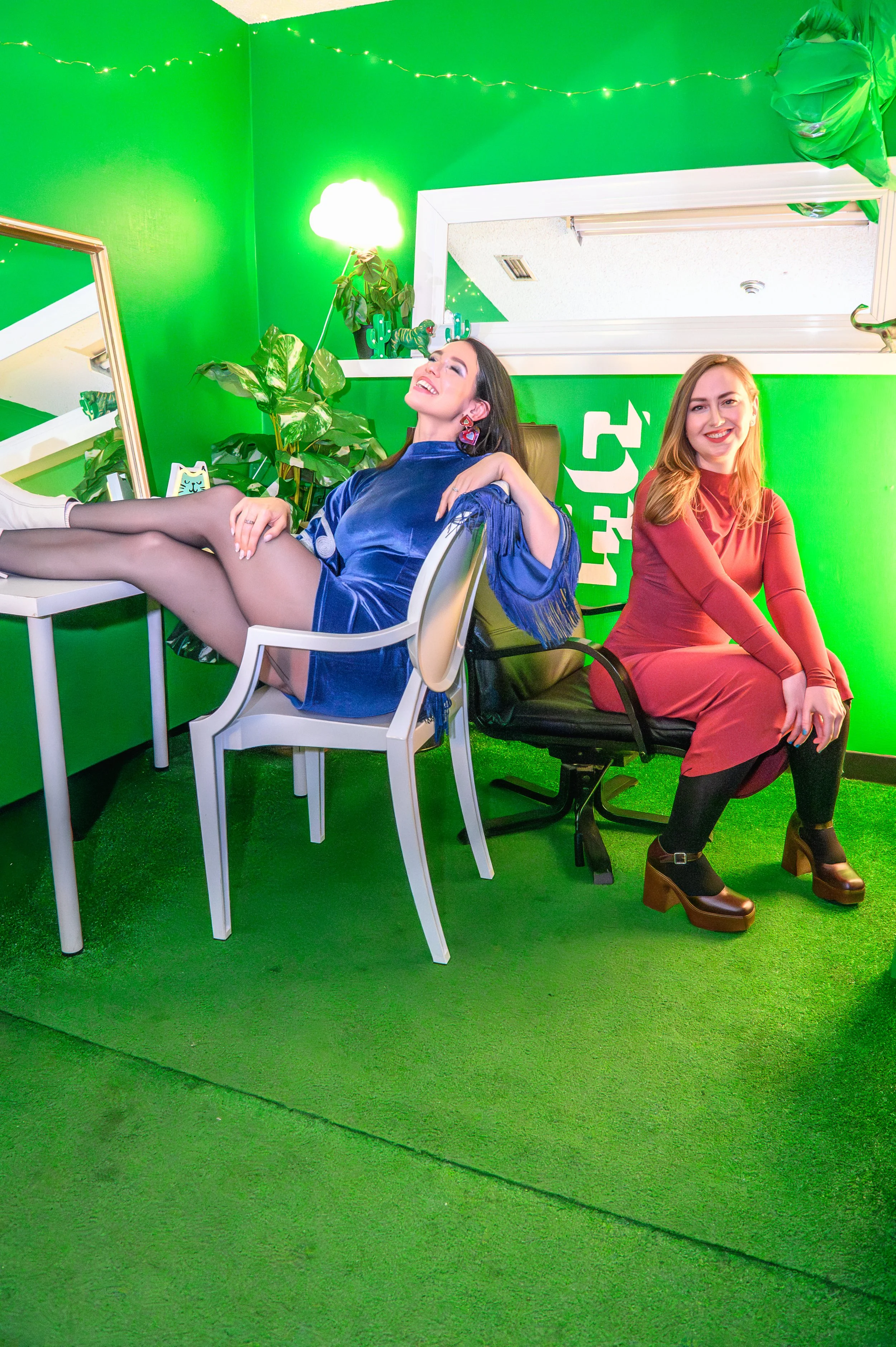
Photo credit: Shannon Johnston (@me_onlylouder)
Werhun, who was in front of the camera as Yulissa, one of the pivotal sex worker relationships for the protagonist Chester in Paying for It, and was behind the camera as a script consultant for Anora, highlights the need for sex workers to be in these positions of power on sets.
“It’s not a little thing to be able to perform hotness, because you need to feel safe to be hot,” says Werhun. Modern Whore created this safe environment by involving Werhun from the scripting stage, Bazuin storyboarding the fifi lm by hand to give Werhun a holistic idea of the scenes being shot, and by hiring intimacy coordinators and trauma-informed counselors to be on set.
“It’s moving beyond sex workers as consultants, or even just as actors, but as people who have decision-making roles on these sets, and people who are in control of the way that sex work is being depicted on screen,” Werhun says. “The only way we’re going to be able to provide [truthful representation] as artists is by giving opportunities to sex workers to tell our stories ourselves.”
Throughout their work on Modern Whore they emphasize that, “It’s seeing not only the representations of sex work evolve, but see the policies evolve to actually protect the health and safety of sex workers... We can’t have healthy representation without healthy conditions for sex workers,” Bazuin says.
While that idea runs throughout the film, it is perhaps most affecting in the sequences involving Werhun’s mother, who appears onscreen to speak openly about her daughter’s work. Werhun explains that her mother ultimately came to understand sex work through the lens of labour rights.
“She was deeply involved in her union,” Werhun says. “I knew that that was where I was going to get her… there’s just no emotional tension when it comes to the fact that people shouldn’t be harmed in the workplace, period. Regardless of what you’re doing. And that desire to keep me safe grew into a desire to see sex work decriminalized. So, she really has become like my biggest fan.”
It’s a radical presence in the film, a parent not merely tolerating but actively supporting her child’s autonomy. “It was a tremendous gift to have her involved,” Werhun said. She shares that it wasn’t difficult to convince her mother to be onscreen, her mother wanted her presence to be an example of unconditional love, and hopefully inspire other parents to start similar conversations with their own families.
Her desire to expand the conversation beyond sex work while still centring it, connects directly to Werhun’s broader vision for the film. She shares she is becoming increasingly interested in how the word “whore” is being reclaimed not only by sex workers but by anyone who expresses themselves sexually without shame. The archetype, she suggests, is becomes something that transcends sex work itself. Modern Whore “is not just about sex workers, and it very much is centered on sex workers,” Werhun says. “But I think it’s a project that’s for anybody who has been shamed for being who they are.”
Watching Modern Whore feels like seeing the beginning of a broader cultural shift, hopefully it’s the spark that lights the fifi re, and begins the push for more narratives to be put into the hands of those with lived experience to truly share them.