

What Happens After the Legend Ends? The Death of Robin Hood Film Review
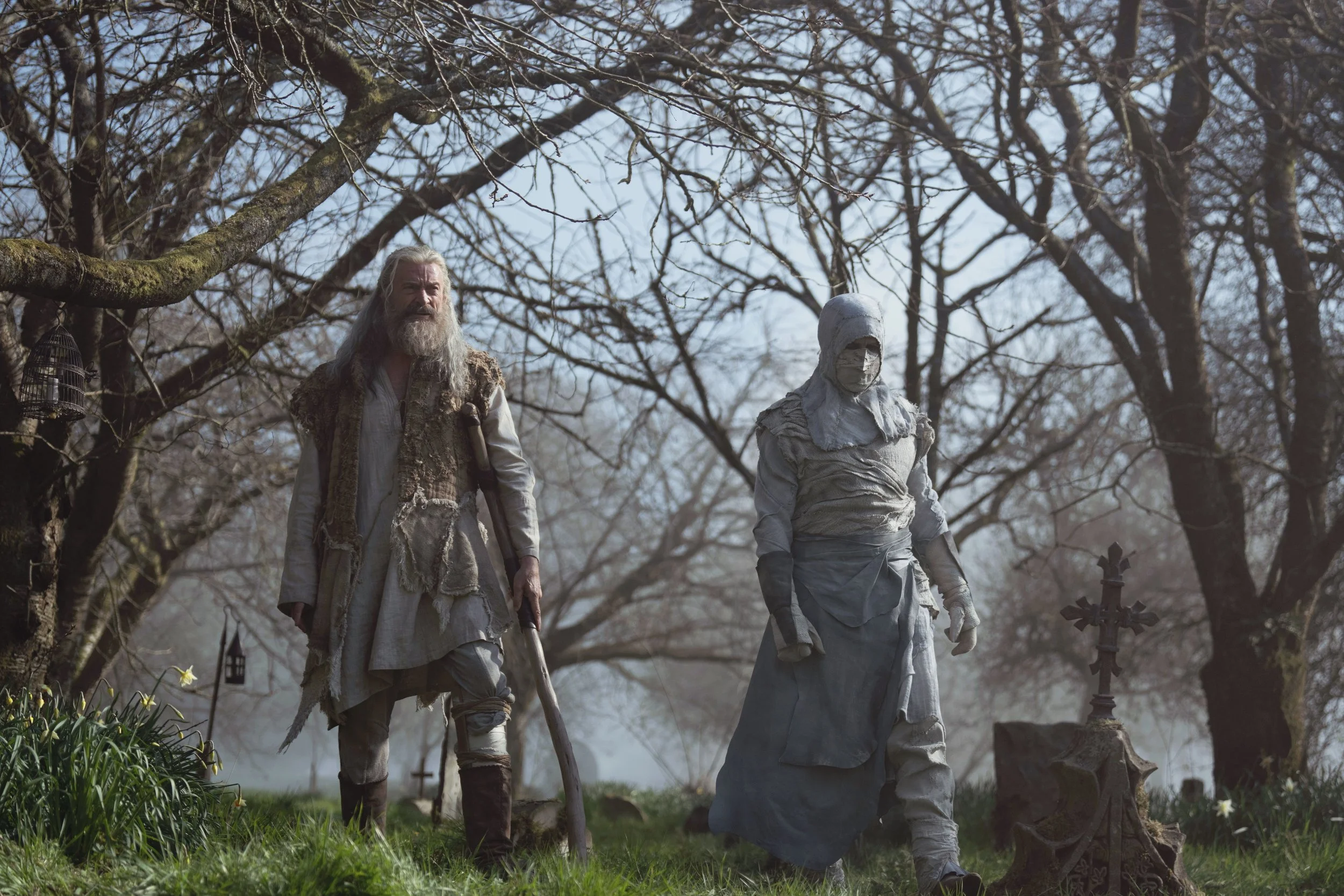
Still from The Death of Robin Hood. Photo courtesy of Elevation Pictures.
Adaptations of the legend of Robin Hood are well-trodden territory. The folktale hero first appeared on screen in 1908 in the silent short Robin Hood and His Merry Men, and since then, the legendary outlaw has been revisited time and time again. Even the trailers before before my screening of The Death of Robin Hood made reference to the character, as the upcoming heist-comedy How to Rob a Bank, referenced the character as shorthand for stealing from the rich. More than a century later, the myth remains almost inescapable.
Director Michael Sarnoski's The Death of Robin Hood, however, has little interest in repeating the familiar family-friendly beats. His bleak medieval take has more in common with Robert Egger’s 2022 film The Northman than the anthropomorphic Disney tale that audiences may have grown up with. Rather than dwelling on the outlaw's exploits, Sarnoski focuses on a bloodied, aging Hugh Jackman in the last days of his life, as he grapples with his death wish.
Sarnoski appears to have a fascination with morally-grey, down-trodded men, and despite the films taking place centuries apart, Robin Hood feels in lockstep with Sarnoski's debut feature Pig, where viewers followed Robin Feld (a bearded Nicolas Cage) on his own revenge quest. Trading Cage for Jackman, we still have a lonesome protagonist caked in blood and haunted by his past.
Robin Hood strays from recapping the outlaw’s exploits, but when violence does become the film’s focus, it is staged impressively. Visceral might be an over-used descriptor at this point, but the film's willingness to depict indiscriminate violence against children makes the adjective feel painfully accurate. Swords are wielded against backdrops of burning villages and even amongst the violence, the film is visually stunning. The landscapes often resemble the hand-painted backdrops from a classic adventure films and add an almost storybook quality to the film. Sarnoski shines with his ability to create some truly beautiful visuals.
If the film has a weakness, it's that its ideas are rarely subtle. Characters repeatedly discuss the nature of legends and how stories survive after death. The prioress tending to Robin’s health repeatedly returns to the process of bloodletting, which as a metaphor for releasing the “bad blood” between them, might be a touch too literal.
Robin Hood is at its best when it grapples with its central questions less overtly. How does one make peace with the suffering they have caused? Does redemption come through vengeance, mercy, or charity? For Sarnoski's answer, you'll have to watch the film and find out.