

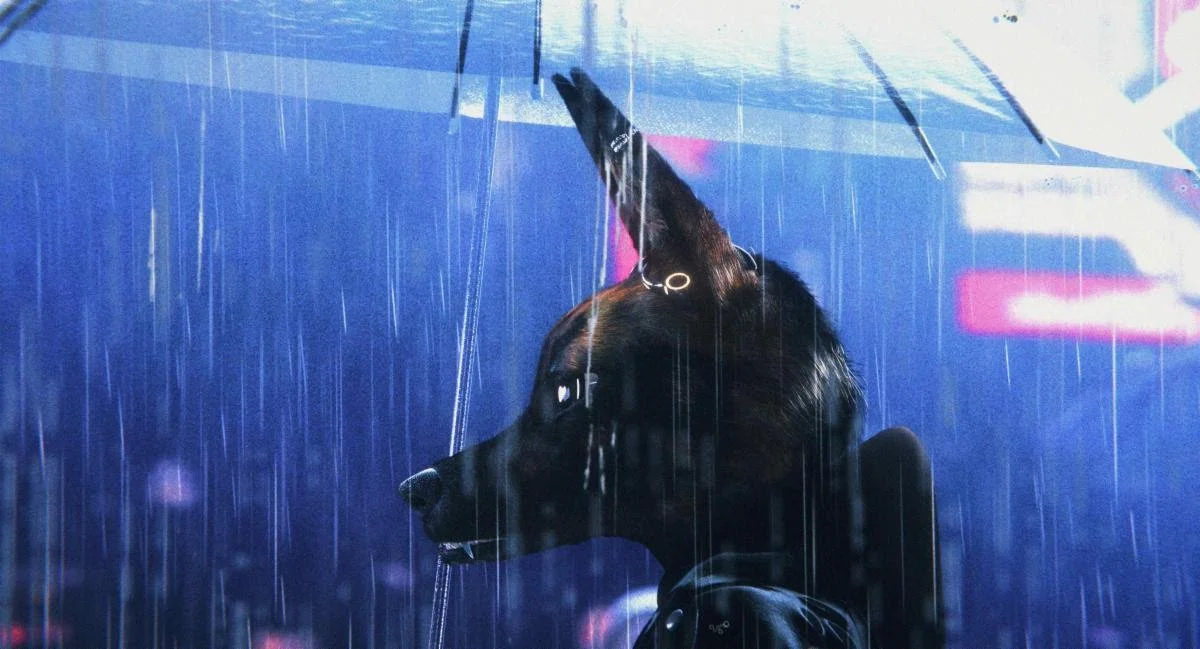
Still from Bouchra. Photo courtesy of Film Movement.
Inspired by their own lives, Meriem Bennani and Orian Barki weave animation, documentary, and family drama into a visually stunning debut feature. Bouchra is a queer, coming-of-age, animated film following the titular character’s efforts to make a film about her relationship with her mom, and attempt to heal their relationship.
Also, all the characters are anthropomorphic animals.
Flora Bews had a chance to talk with directors Meriem Bennani and Orian Barki, directors of BOUCHRA, about their debut as it leaves the festival circuit and arrives on streaming platforms.
REVERIE: I like that we're talking over Zoom, just after watching the film, because so much of it is over time and space, it's a bunch of telecommunications. I had the chance to watch the 2 LIZARDS web series afterwards too, which was really cute. It brought me back to that weird time of being in COVID and not knowing what you're doing.
I’m very curious about how it started for you, to start representing yourselves and the rest of your friends and family as animals, because it seems to have become a recurring activity for you guys.
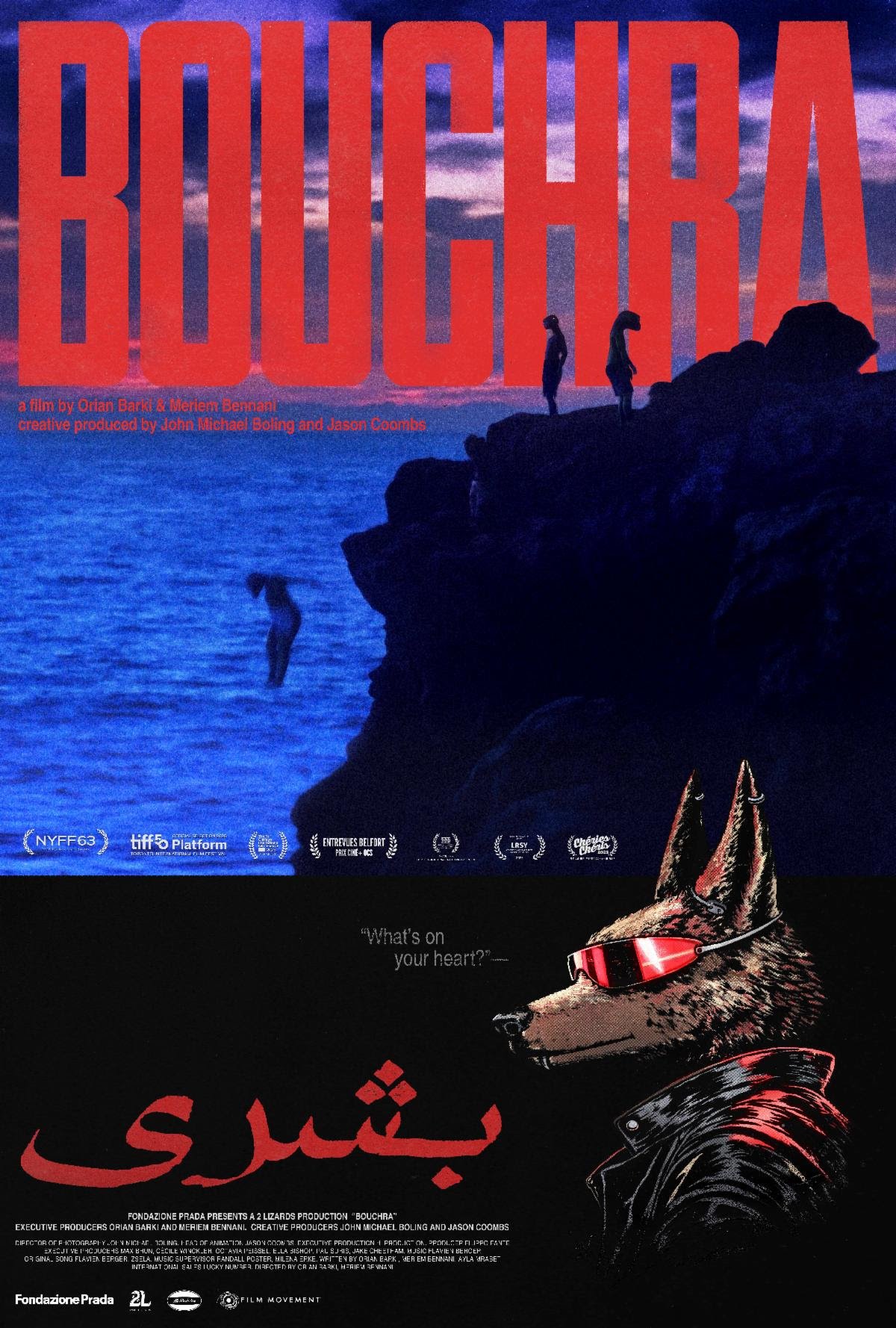
Meriem Bennani: On my end, it's something I've been doing for a long time. I'm an artist, so I make videos and animation and all kinds of things and more in the art world. I studied animation and I would draw, and I think that when I started, I’ve always liked to draw animals or anthropomorphic animals for people intuitively, not so much as a strategy, but I would naturally draw that. I think I always felt like it's easier to draw animals than to get a style for how faces look in an illustrative style, you know? I just never quite could.
When I started making videos, where I would film real people, of family members, I made a bunch of kind of documentary art videos. I found that when I would start editing, it would be kind of really helpful to bring a narrator and using animation to have a voice, to add a layer to the documentary, and I naturally started bringing these animated animals. They represent maybe fable characters or something like that. And so I had like a crocodile, a fly. And then I would superimpose them on live action. And I think this is the origin of how that style started, of live action backgrounds and animals.
During COVID, I had downloaded these 3D animals for an art project, and then everything shut down, and we (Orian and I) were hanging out, and I asked her, as she comes from documentary filmmaking, and we were always involved in each other's practice without working together. I asked her if she wanted to make a video just for fun, using some of the animals I downloaded, and she chose the lizards. We filmed with our phones. The streets were empty because of COVID, so you didn't have people. We started filming the streets and putting the lizards on them, and just recreating these conversations or scenes from what was happening around us, just animated. So, this is how the style came about.
REVERIE: The technical aspect of COVID allowing for blank streets to put your stuff over never occurred to me. That's fascinating. Did that become like a problem when you were making BOUCHRA if you're shooting scenes in New York or Casablanca?
Orian Barki: I mean, Bouchra has way less video backgrounds, but it was also because, stylistically, we mostly used them for the exteriors—but it became easier to actually build the 3D sets that are interior, and then film inside of them in a way that's more spontaneous, where if you film with a video background, and you have to commit to that angle and track the video background, and then insert the the characters. Video is really, really effective for exteriors, because in animation, you have to create everything from scratch.
So when you're trying to capture the richness of a city, there's nothing like the actual existing ‘set’ of the city, and the randomness and the graininess of it. But for interiors, it became easier to have it made, imagine like in a video game. Then, you can literally place the camera and shoot from every angle and you don't have to be as precise, which suits the styles of Bouchra and 2 Lizards, since they’re very ‘documentary’, in a way, and dry, and have the dialogue and everything feel very fluid.
REVERIE: I really liked that part of it. The dialogue is so natural, and it's very ‘documentary’ because you're even using videos that you guys already had, and animating them into the film as almost, I want to say, cute, montage-y, non-sequitur moments that ease the pressure off the film a bit. That's really nice.
I'm even just thinking, regarding recreating the sets, the best thing about Blender is that you can put the camera anywhere. If you had a drone in real life and you had it flying around your room that would be just a nuisance. That wouldn’t be good at all.
Barki: Exactly. And I think that for this film, it was almost the challenge, or, not challenge, but because we wanted to go for a very naturalistic approach and for a feeling that feels like a live action movie, even though the camera can pass through a wall and give you you an extreme wide shot. We wanted to go for a feeling of a camera that is literally on someone's shoulder in the film. We were inspired by Chungking Express, for example, which is a film that Wong Kar Wai made while working on another film and had this spontaneity and freedom. It's like films where the camera is very run-and-gun, something like that. You fill the room with the cam, the characters, and it's something that's being created within the means of the production. And, even though in 3D, you can create shots as if you had a crane or insane production, we wanted it to feel like we're there in the room.
REVERIE: I was struck by how lovingly it tries, and succeeds, to recreate the world, but with this twist, which is the animals, right? That is at the heart of it. It got me thinking a lot about how the movie is very much about itself being made. There's an actress playing the main character, and the director is also the main character, and you guys are both in the film, and it's all kind of tangled up in that. But: also you are anthropomorphic animals.
I was wondering how you guys felt about history, inherited culture, things that we deem natural, real, and more grounded versus something artificial, or created, like the internet. People are creating completely fabulous, different worlds and representing themselves as half human, half cyborg. There's furries, the entire furry community, which, as much as it's one subculture, there's like a lot of “cyborg” thinking on the inside of that. So this movie got me really thinking about the reactions and the relationships between the characters: they're all negotiating their received backgrounds and how those might feel more natural, but at the same time, they're being represented in this sort of like more abstracted way. This sort of meta thinking is at the heart of your movie.
I would love to hear you guys' thoughts about that and speak to it, and was it something that kind of emerged over the process or was it something that you had been preoccupied with before?
Bennani: I think there's a distinction between online and offline. There’s the distinction between perceived self, like a mediation of self, and a self that is more direct and not mediated for spectatorship. I don't think that started with the internet. If anything, it's always been there.
Even in art history, you look at painting, portraits were mediations of self, for very specific reasons: for political reasons, or courtship reasons—there's so many reasons you paint someone and how you paint them, and influencers are doing the same thing today, or being a furry. Those are all these prosthetic selves. For a reason. It didn't start with the internet. Documentary is that anyways, because it is a bunch of decisions that are made, even though they can be geared towards an aesthetics of being sincere and real, that doesn't mean that it's sincere and real, it's constructed. So, we have these animals and it's clearly a constructed reality, you're looking at 3D, you're looking at a collage of different digital techniques. I don't think that means that it's less true or sincere. If anything, the film is more clear about what it's doing, that is, we are here as directors and we have constructed the reality.
However, I think when it comes to truth, it has nothing to do with reality or all these versions of self, I think it's just an emotional truth. That's really what we were trying to hit with this. I don't think that's something you can necessarily explain or strategize around. It's something that you hit at some point. And for us, that's always what we look for. We look for emotional truth and we won't stop editing, even if it's animation, and so much work and we have to go back. We won't stop writing. Not until we get that to that thing that feels true. I think here the truth in the film has to do with specificity. Anything specifically about my mom and I, or, a version of my mom and I, and not trying to represent anything else.
REVERIE: That feels very IN THE MOOD FOR LOVE, I feel like you're echoing that a bit.
Barki: I think that, like Miriam said, even the decision to make the film meta, to make the film about filmmaking is, again, addressing what we're seeing. The film it's about processing, but it's also like showing you that it's, That it's a, that it's about, Processing. You're reminded that you're watching a film, while you're watching it constantly. So, Bouchra wants to connect with her mom, on a deeper level. She wants to understand her mom. The trigger to that is she knows, in order to complete her film, that's what she needs to do. But it's the chicken and the egg, where it’s like “is she making the film? Is the film just like an instrument to having these conversations, or do these conversations need to happen so the film can be completed?” It doesn't matter.
Once the conversations are made, the film is completed, that's where it stops in the movie. In real life, there were so many moments after we finished the film where I was looking at reality and being “Oh my god, this would have been another scene”. For example, at the premiere of the film, Miriam's mom came, and she hadn’t watched it at the premiere first. She watched it before, because Miriam wanted to share it with her, and it's intimate, and she didn’t want the first time being the premiere, even like the conversations that they, or even me and Miriam, or our friends, would have about the film. We felt like parts or scenes could still be included. But it also just needed to end.
REVERIE: Seeing as we're almost at the end, I was wondering if you guys had any messages or thoughts about the fact that it’s an internationalist kind of project, due to the nature of both the production and the subject matter. Now it has screened in this place, this cowboy town. So it's a very different sort of landscape, and demographic than where it was produced. I was wondering how you guys felt about the fact that this film has now gotten so much attention and it's able to be screened in places all over the world.
Barki: It's been cool for us because we're travelling with the film, and it's interesting to see how in each place people really pick up and relate to different things, because the film does have different different themes of diaspora and queerness and also mother daughter relationships. It's interesting to see how when we screened it in France, people were picking up on certain themes. When we when we screened it in New York, because it's such a New York film, people would really pay attention to, and ask us more questions about, the New York scenes and how we depicted New York and stuff like that.
Bennani: Also, to someone who's watching a cowboy film in Morocco, that's international too.
Bouchra is now available to stream on VOD and on MUBI in Canada.